



Published: September 24, 2025
MONROVIA — The University of Liberia has partnered with the Liberia Water and Sewer Corporation (LWSC) to renovate bathrooms across its Capitol Hill, Fendall and Health Sciences campuses, a long-overdue step to address chronic sanitation problems.
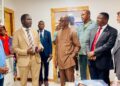
The announcement came Tuesday during a high-level meeting between UL President Dr. Layli Maparyan and LWSC Managing Director Mo Ali, joined by Deputy Director for Technical Services Patrick Sandikie.
While the initiative is being welcomed as critical, it comes amid a faculty strike that has brought teaching to a halt. The University of Liberia Faculty Association (ULFA) continues to demand unpaid allowances, salary harmonization and improved welfare benefits, leaving students out of classrooms as negotiations with the government drag on.
According to a university release, LWSC presented the final report of a comprehensive water and sanitation assessment for Capitol Hill and Fendall campuses, with the Health Sciences campus still under review.
“This is the collaboration we have been waiting for,” Maparyan said. “We can see a light at the end of the tunnel. UL’s students, faculty, staff and guests will, at long last, have dignified facilities worthy of the nation’s flagship university.”
Under the partnership, LWSC will rehabilitate existing wells, construct new boreholes, install modern storage systems, repair plumbing and replace outdated toilets and sinks.
UL will supply bathroom renovation materials financed through a recent allocation from the Ministry of Finance and Development Planning. LWSC will absorb costs tied to connecting Capitol Hill to Monrovia’s main water and sewer grid and constructing wells at Fendall.
Labor will be shared among LWSC’s technical staff, UL’s Plant Operations Department (POD) and a newly formed joint technical team.
Interim Vice President for Administration Sehmah R. Jallah directed POD chief Jefferson Walker to prioritize site preparation, ordering bathrooms to be cleaned so crews can work in “a clean and clutter-free space.”
Ali, the LWSC managing director, pledged the agency’s full support, calling the university’s rehabilitation a national priority.
“LWSC is well-positioned to collaborate with UL to improve both the water and sanitation conditions on UL’s campuses,” Ali said. “We can work together, and we will.”
Despite optimism over the renovations, the strike by ULFA has overshadowed the effort. Faculty members have boycotted teaching for weeks, pressing the government to settle arrears, address salary disparities and improve research and teaching facilities.
Students remain idle, voicing frustration that infrastructure improvements will mean little if classrooms stay empty. “New bathrooms are good, but we need teachers in the classrooms,” one student outside the Capitol Hill campus said. “That’s the real crisis.”
The bathroom renovation is seen as a long-overdue response to years of student protests over sanitation. But without a resolution to the faculty dispute, observers say the university’s credibility will remain clouded by instability.




Discussion about this post