

Published: June 9, 2026
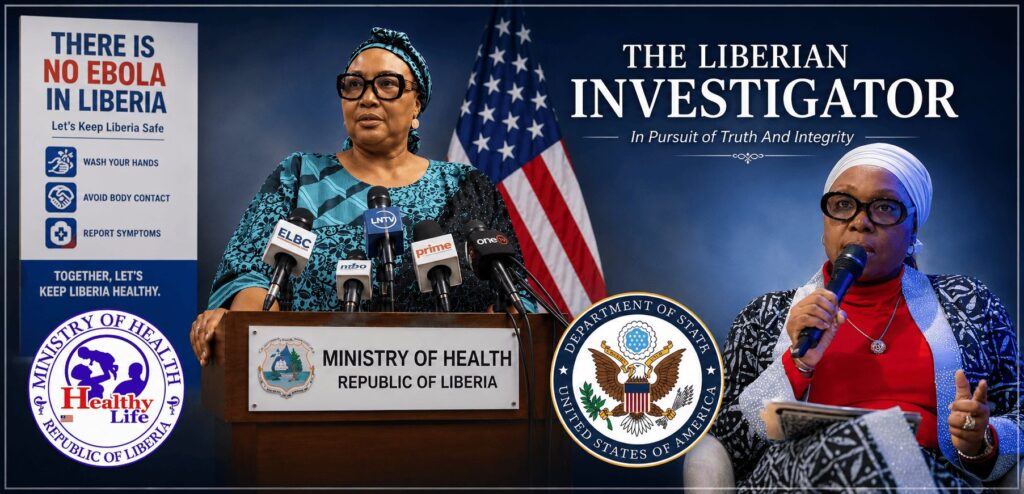
MONROVIA – Liberia has granted the United States the power to audit its clinics, demand access to patient health data, and walk away from all funding on 180 days’ notice under a $124 million health agreement that the government never released to the public, according to an assessment published Monday by Human Rights Watch.
The memorandum of understanding, signed in Monrovia on Dec. 9, 2025, by Foreign Minister Sara Beysolow Nyanti, commits Washington to roughly $124.4 million in health support between 2026 and 2030 and requires Liberia to put up about $50.7 million of its own money over the same period. In exchange, Liberia accepted a series of monitoring, data and compliance conditions that the rights group says could place the health care of millions at the mercy of US decisions.
Human Rights Watch examined seven bilateral health agreements the United States struck in late 2025 with Liberia, Ethiopia, Kenya, Mozambique, Nigeria, Rwanda, and Uganda. The group said the deals condition lifesaving assistance on terms that threaten privacy and undercut more equitable access to medicines.
“The agreements show the US intends to condition vital health assistance for millions of people on acquiescence to troubling conditions,” said Julia Bleckner, a senior health researcher at Human Rights Watch. She said governments are being pressured to accept the terms after Washington’s abrupt withdrawal of aid in 2025.
Liberia’s pact was among those never officially disclosed. Human Rights Watch said the Liberian and Rwandan agreements became public only through leaks, while five other countries’ deals were briefly posted to a US State Department transparency library in March before being pulled days later. The group called on Washington to publish all of the agreements and to disclose any parallel negotiations over access to natural resources, citing a New York Times report that the United States had tied a $1 billion health package to access to Zambia’s minerals.
The document obtained by Human Rights Watch sets out in detail what Liberia agreed to give in return for the money.
Under the audit provisions, Liberia committed to provide US officials with data access, on-site access or other information needed to inspect health indicators in up to 5 percent of randomly selected or specifically targeted facilities, clinics, laboratories or programs. A separate clause requires Liberia to grant access needed to confirm that no US funds are used to perform abortion as a method of family planning, in line with the Helms Amendment, the US law that bars foreign assistance for abortion services. The agreement states that failure to provide the requested data could result in changes to the planned assistance or discontinuation of the deal altogether.
The pact also obliges Liberia to negotiate a data sharing arrangement that both governments expect to run for 10 years, covering performance data the agreement says is owed to the US Congress as a condition of the appropriated funds. It commits Liberia to roll out electronic medical records across all public health facilities by 2030 and to penalize or reward providers based on how quickly patient encounters are entered into the system.
Other terms reach into Liberian regulation and revenue. The government agreed to exempt US funds from customs duties, import duties and value-added tax, and to modify its rules by Dec. 31, 2026, so that approval by the US Food and Drug Administration satisfies the requirements of the Liberia Medicines and Health Products Regulatory Authority. Either government may end the cooperation at any time, with a best effort to give 180 days’ notice.
Notably, Liberia’s agreement does not contain the specimen sharing clause that Human Rights Watch flagged in the deals with Rwanda, Ethiopia, Uganda, Nigeria and Mozambique, which the group said could hand the United States biological samples for pharmaceutical development without guaranteeing those countries fair access to the resulting diagnostics, vaccines or treatments.
Liberia accepted outcome targets that include cutting confirmed malaria deaths among children under 5 from 171 to 100 a year, lowering the maternal mortality rate from 116 to 70 per 100,000, and reducing measles cases from 1,283 to 100 by 2030. If Liberia fails to hit those benchmarks or to meet its rising co-investment commitments, the document says the United States may substantially decrease or eliminate funding for one or more areas of cooperation.
The deal carries an unusual legal caveat. Section 6.9 states that the memorandum is not an international agreement and does not create legal rights or obligations under international or domestic law, language that frees either side from binding enforcement even as Liberia takes on detailed multiyear commitments.
The agreements were negotiated after the United States dismantled the US Agency for International Development in early 2025, abruptly severing supply chains and shuttering health programs worldwide. Human Rights Watch said the cuts stripped more than $800 million in health aid from the seven countries, including Liberia, and threatened decades of progress against HIV. The fallout was visible across rural Liberia last year, where clinics in Bong County and elsewhere reported empty shelves and suspended services after funding stopped.
Liberia signed even as other governments balked. Human Rights Watch noted that Ghana withdrew from negotiations in April over data access demands, Zimbabwe pulled out entirely, and more than 60 civil society organizations wrote to African heads of state in December warning that the draft terms were dangerous.
The Ministry of Foreign Affairs and the Ministry of Health had not issued a public response to the Human Rights Watch assessment as of press time.




Discussion about this post