


Published: July 15, 2026
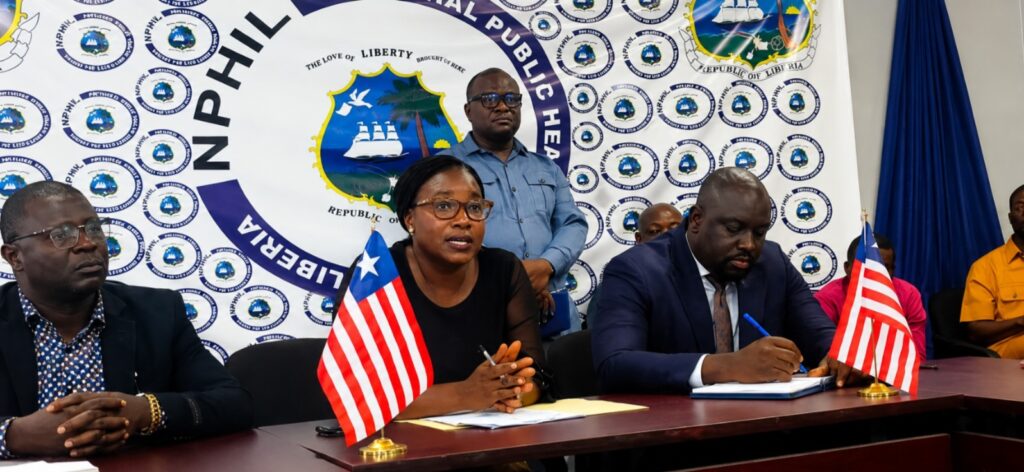
MONROVIA – The National Public Health Institute of Liberia (NPHIL) says Liberia remains free of Ebola, but is urging immediate investments to strengthen the country’s preparedness, warning that weaknesses at border entry points, including inadequate screening infrastructure, limited personnel, poor referral systems, and the lack of functional ambulances, could undermine the nation’s ability to respond swiftly if the virus enters the country.
Presenting findings on Monday from a nationwide Ebola preparedness assessment, Acting Director General Dr. Sia Wata Camanor said Liberia has maintained many of the systems established after the devastating 2014-16 Ebola outbreak, but stressed that significant operational gaps remain and require urgent attention.
Over the past month, Dr. Camanor led a multidisciplinary team that assessed Liberia’s readiness across all 15 counties in response to the ongoing regional Ebola outbreak.
The team evaluated surveillance systems, emergency operations centers, laboratories, isolation facilities, and 15 official points of entry, including 9 land border crossings, 4 seaports, and 2 airports. It also assessed three regional laboratories and the National Public Health Reference Laboratory.
“Our surveillance systems remain functional,” Dr. Camanor said. “We have a trained cadre of workforce at all levels of the health system, including 98 Disease Surveillance Officers, 17 County Surveillance Officers and 22 Zone Surveillance Officers. These surveillance officers remain vigilant and actively conduct case searches and reports.”
She said the officers have received training in field epidemiology, Integrated Disease Surveillance and Response, and rapid outbreak investigation and response.
However, she cautioned that sustaining those gains will require additional logistical support.
“The need to be more equipped and always ready to fight cannot be overemphasized,” she said. “Our findings showed challenges with logistics, including transportation and rain gear, as surveillance officers continue outbreak investigations and public health activities in last-mile and hard-to-reach communities.”
Dr. Camanor said Emergency Operations Centers continue coordinating preparedness efforts nationwide but require stronger communication systems, additional computers, backup electricity, furniture, and other operational resources to function effectively.
She acknowledged support from partners, including the U.S. Centers for Disease Control and Prevention (CDC), which helped furnish the National Public Health Emergency Operations Center and supplied computers and printers to all 15 county emergency centers.
She also credited the World Bank for approving funding to install solar power systems and Starlink internet connectivity at all county emergency operations centers.
Since the World Health Organization and the Africa Centers for Disease Control and Prevention declared the regional Ebola situation a Public Health Emergency of International Concern and Continental Security on May 17, 2026, Liberia has screened 987 asymptomatic travelers, most of whom recently returned from the Hajj pilgrimage in Saudi Arabia.
According to Dr. Camanor, 966 travelers, representing 98%, have completed the mandatory 21-day monitoring period, while the remaining 21 individuals continue to be monitored.
“None are showing any signs and symptoms,” she said.
While describing collaboration among Port Health Services, the Liberia Immigration Service, Customs, the Liberia National Police, the National Port Authority, the Liberia Maritime Authority and County Health Teams as strong, Dr. Camanor said border infrastructure requires urgent improvements.
“Several border facilities require improvements, including better screening infrastructure, holding areas for symptomatic travelers, improved referral systems, including the deployment of functional ambulances, communication equipment, and additional infection prevention supplies,” she said. “Findings from the assessment also highlighted human resource gaps at the various points of entry. There are limited staff assigned and those assigned are mere volunteers.”
She added that Liberia’s laboratories remain technically capable but require sustained maintenance, uninterrupted reagent supplies and continued investment. She noted that infection prevention and control materials, waste management supplies and cold-chain equipment remain available, while quality management and bio-risk management systems have been partially implemented.
Dr. Camanor also thanked the World Health Organization for donating Ebola specimen collection kits, testing reagents and other laboratory supplies to strengthen national testing capacity.
Reassuring the public, she emphasized that the assessment was conducted strictly as a preparedness exercise.
“To the people of Liberia, I want to assure you that there is currently no Ebola outbreak in Liberia,” Dr. Camanor said. “Kindly note that this assessment was conducted as part of our commitment to preparedness and not because we have detected Ebola in the country.”






Discussion about this post