


Published: February 4, 2026

MONROVIA — Liberia’s finance minister says President Joseph Nyuma Boakai’s administration is pressing ahead with an economic reset rooted in infrastructure expansion, fiscal discipline, and institutional reform, brushing aside opposition criticism as part of the cost of governing.
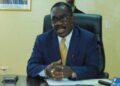
Appearing on the CLASS Reloaded radio program, Finance and Development Planning Minister Augustine Kpehe Ngafuan described Boakai as an intensely engaged leader focused on what he called “big and consequential plans” to confront Liberia’s long-standing structural weaknesses.
“President Boakai is animated. He is always thinking — thinking deeply about what Liberia should become,” Ngafuan said, adding that the administration is deliberately applying lessons from past failures rather than repeating them.
Infrastructure at the center
Ngafuan said road connectivity remains a central pillar of the government’s development strategy, describing Liberia’s fragmented transport network as a historic anomaly.
“Liberia is a small country, yet we are still not fully connected by paved roads,” he said, noting that the condition persists more than 177 years after independence.
The government, he said, is working toward completing a continuous paved road corridor from Monrovia to Harper, Maryland County, and another linking Gbarnga, Bong County, to Mendicorma in Lofa County.
If realized, the projects would mark the first time Liberia’s capital is connected by paved road to the southeastern region, a development analysts say could significantly boost trade, mobility and national integration.
Infrastructure experts estimate that only a fraction of Liberia’s roughly 11,000-kilometer road network is paved, leaving large swaths of the country inaccessible during the rainy season.
Budget stability improves
Ngafuan acknowledged that the administration faced fiscal turbulence during its first year in office but said the current budget cycle shows signs of improved stability.
“This year, there is more certainty. We are in better shape,” he said, citing improved upfront financing that has reduced delays in project execution.
He urged ministries and agencies to strengthen coordination between procurement, technical and administrative units to accelerate delivery.
“There should be a ‘get set, ready, go’ mindset across government,” he said.
According to the Finance Ministry, tighter alignment between revenue collection and expenditure has helped prevent budget shortfalls. Ngafuan also pointed to rising bank deposit levels as an indicator of growing public confidence in the economy.
Salaries and governance
Ngafuan said the government has begun reversing aspects of salary harmonization affecting key integrity institutions, including the Liberia Anti-Corruption Commission, the General Auditing Commission and the judiciary.
The adjustments, he said, are intended to reinforce institutional independence without imposing unsustainable fiscal pressure.
He added that personnel of the Liberia Drug Enforcement Agency are expected to receive salary increases this year, a move aimed at boosting morale and operational effectiveness.
Business growth, job pressure
On job creation, Ngafuan cited Commerce Ministry figures showing more than 8,000 new businesses registered in 2025, pointing to renewed private-sector activity.
While employment figures were not provided, economists note that each registered business can create multiple jobs in a country grappling with high youth unemployment and underemployment.
“International trade is increasing, deposit rates are up, and there is no budget shortfall,” Ngafuan said. “We are not where we want to be, but we are certainly not where we used to be.”
Answering critics
Ngafuan said opposition criticism has not distracted the administration and may, at times, serve a useful purpose.
“Sometimes, the opposition puts fire under our rocket, and that helps,” he said. “We are not arrogant. When we slip, we rise, we learn, we implement, and we execute.”
He disclosed that the Finance Ministry has installed suggestion boxes at its offices to collect feedback from staff and the public, part of broader efforts to improve efficiency.
Ngafuan also warned that Boakai has little patience for unjustified bureaucratic delays.
“When there is a real cash crunch, mandated delays can happen,” he said. “But when there is no reason for delay, and people still delay, that is unacceptable. At that point, they are not delaying the minister; they are delaying the president, and we will act.”
As Liberia continues its postwar recovery, the administration is betting that infrastructure investment, fiscal discipline, and institutional accountability will anchor long-term growth.
“Although we gained independence in 1847,” Ngafuan said, “we must sprint now. History should not anger us; it should motivate us to do better for our people.”




Discussion about this post