


Published: September 7, 2026
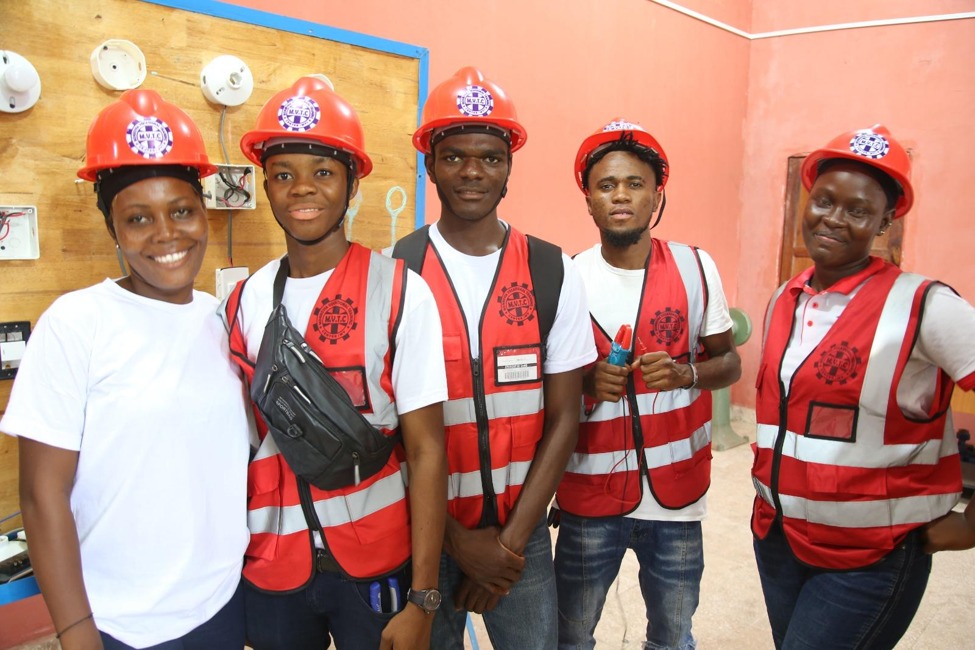
MONROVIA — When Faith Wilson enrolled at the Monrovia Vocational Training Center, she knew almost nothing about electricity. She had never connected a circuit, installed a receptacle, or worked with electrical tools.
Today, she can perform basic electrical installations on her own — a transformation she credits to the practical training she is receiving at MVTC.
“I never had any knowledge of electrical work,” Wilson said. “But in MVTC, I’ve learned so many things. On my own, I can fix a single-pole circuit. I can connect a single-pole circuit, receptacles, switches, and other things.”
Wilson’s experience reflects efforts to strengthen technical and vocational education in Liberia by moving students beyond certificates and equipping them with practical, job-ready skills.
At MVTC, that effort is being supported through the Strengthening Integration through Vocational Education, or STRIVE, Project, a 10 million euro initiative funded by the Agence Française de Développement and implemented by the European Institute for Cooperation and Development.
One of the major changes has been the introduction of a structured electricity curriculum.
Stanley S. Karmo, MVTC’s assistant director for training, said electrical training previously operated without a dedicated curriculum.
“We were running our electricity training in the absence of curriculum,” Karmo said. “The STRIVE project brought on board the curriculum, which shifted our training quickly and made it more impactful.”
Karmo said practical training is now structured so students understand what they must learn and demonstrate before advancing.
“It has brought more quality to the learning,” he said. “The guy was doing practical then, but now the practical is structured to the extent that the learner knows exactly what he or she must do and how they must do it to reach the next stage.”
For Wilson, the training has also challenged assumptions about women entering traditionally male-dominated technical fields.
“I got to know a lot of things that men can do, and women can also do,” she said. “The STRIVE project has shifted my mind from limiting people to certain things and put me on the right track.”
Graduate and STRIVE-IECD beneficiary Reuben J. Donkpain has taken another route — entrepreneurship. After noticing that residents in his community traveled long distances to purchase electrical materials, he saw a business opportunity.
“I observed the need for electrical devices and other electrical materials,” Donkpain said. “So I decided to venture into such a business.”
The intervention is also changing how instructors teach.
Ecarus K. Douglas, an instructor and head of MVTC’s Electrical Shop, said STRIVE-supported pedagogical and technical training has strengthened lesson planning, curriculum implementation and learner-centered teaching.
“Before it was just a trainer standing, talking, talking,” Douglas said. “But this trend is like the trainer demonstrates; the student also does, with group learning and participation.”
Electricity instructor December McCooper said competency-based training similarly places greater emphasis on students demonstrating their skills through hands-on exercises.
“But from the competency-based training, I realized that you are not there to do more, but you allow the trainee to do the hands-on,” McCooper said.
Beyond MVTC, STRIVE has supported several vocational institutions, including LOIC Monrovia, Maryann Cheeseman, AVTP, Booker Washington Institute, LOIC Buchanan, Tumutu Agricultural Vocational Training Centre and LOIC Gbarnga. It has also equipped and furnished the National Hospitality Training Center at the Ministry of Youth and Sports.
Karmo said the next challenge is expanding training into industrial electricity, solar technology, programmable logic controllers and other systems increasingly demanded by industry.
The ultimate goal, he said, is to produce not only job seekers but entrepreneurs capable of creating employment.
“I expect that learner to be able to start a small electrical business,” Karmo said. “He will have to do his entrepreneurial skills so that he can create employment, not only wanting to be employed, but he can also create employment for himself and other people.”
For Wilson, the transformation is already personal: She entered MVTC with no electrical knowledge and is leaving with practical skills and growing confidence that those skills can become a livelihood.
“I already know that I am an electrician, and I already know that I am able to do this job,” she said.






Discussion about this post