Saturday, September 26, 2026
THE LIBERIAN INVESTIGATOR
No Result
View All Result
  • Home
  • Investigations
  • Cocaine Case
  • News
    • General News
    • National News
    • County News
    • Health
    • Human Interest
    • Press Release
    • Media
    • Environment
  • Politics
  • Business
  • International
  • Opinion
    • Opinions
    • Letters from the Editor
    • Letters to the Editor
    • Editorial
    • Commentary
  • Fact Checks
  • Lifestyle
    • Entertainment
  • Sports
  • Women & Grit
THE LIBERIAN INVESTIGATOR
  • Home
  • Investigations
  • Cocaine Case
  • News
    • General News
    • National News
    • County News
    • Health
    • Human Interest
    • Press Release
    • Media
    • Environment
  • Politics
  • Business
  • International
  • Opinion
    • Opinions
    • Letters from the Editor
    • Letters to the Editor
    • Editorial
    • Commentary
  • Fact Checks
  • Lifestyle
    • Entertainment
  • Sports
  • Women & Grit
THE LIBERIAN INVESTIGATOR
No Result
View All Result
Home Fact checks

Misleading, Liberia Does Not Import 88% of Its Fish Stock

by Local Voices Liberia
August 29, 2026
in Fact checks
Reading Time: 3 mins read
0

Published: June 15, 2026

Last updated: August 29, 2026
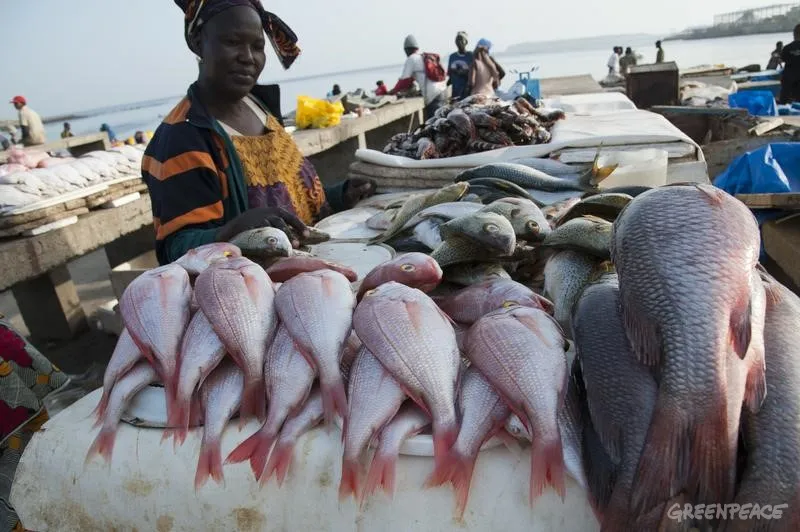
On June 10, Simeon Freeman, Political Leader of the Movement for Progressive Change (MPC), claimed on the OK Morning Rush on OK FM that Liberia imports 88% of its fish stock. Mr. Freeman made the claim while discussing the economic potential of Liberia’s fisheries sector.

According to him, Liberia has significant opportunities to increase domestic fish production and reduce reliance on imports.

The Claim

An excerpt of Mr. Freeman’s statement reads: “Liberia imports 88% of her fish stock.”

Rating Justification

To verify the claim, we reviewed data from the National Fisheries and Aquaculture Authority’s (NaFAA) 2025 Research and Statistics Annual Technical Report.

NaFAA is Liberia’s autonomous fisheries management agency, established in 2017 to oversee the sustainable development, regulation, and conservation of the country’s fisheries and aquaculture resources while promoting food security, economic growth, and community participation in the sector.

According to the report, Liberia’s average annual fish consumption stands at 45,549 metric tons.


Imports

Of the country’s average annual fish consumption of 45,549.39 metric tons, the report indicates that the average annual imports stand at 19,999.85 metric tons.

This means about 44% of the total annual consumption of the 45,549.39 metric tons was imported.


Domestic

The report also showed that average annual domestic fish production accounts for 25,549 metric tons, representing 56% of the total annual consumption demand.

This shows that Liberia’s domestic fish production exceeds what it imports for consumption.

Conclusion

Based on these findings, the claim by MPC Political Leader Simeon Freeman that Liberia imports 88% of its fish stock is misleading.

The latest data from NaFAA show that imported fish accounts for nearly 44% of national fish consumption, while domestic production accounts for approximately 56%.


Tags: Local Voices Liberia
ShareTweetSend
Local Voices Liberia

Local Voices Liberia

Next Post

Unproven: No Evidence Liberian Government Plans To Shut Down Facebook Over US$19 Million Cocaine Investigation

MONROVIA – The Liberia Electricity Regulatory Commission (LERC) and the University of Liberia (UL) have signed a Memorandum of Understanding (MoU) to develop an Energy Auditing curriculum at the University of Liberia, marking a significant step toward strengthening national capacity in energy efficiency and energy management. The partnership aims to equip current and future professionals with the knowledge and skills required to promote efficient energy use and support Liberia’s growing electricity sector. The signing ceremony took place June 15, 2026, at the University of Liberia Fendell Campus. Under the agreement, the University of Liberia will develop a comprehensive curriculum covering energy audit standards, compliance requirements, energy efficiency practices, and related regulatory frameworks. The University will also provide recommendations for periodic updates to ensure that the curriculum remains aligned with evolving energy policies, technological advancements, and applicable laws and regulations. The MoU was signed by Dr. Layli Maparyan, President of the University of Liberia, on behalf of the University, and Hon. Claude J. Katta, Chairman of the Board of Commissioners of LERC, on behalf of the Commission. The signing ceremony was attended by faculty members of the University of Liberia, as well as members of the LERC Board of Commissioners, the Managing Director, and staff of the Commission. Speaking at the ceremony, UL President Dr. Layli Maparyan described the agreement as the beginning of a new era for both the energy sector and the University of Liberia. “This is the beginning of a new dawn in the energy sector and for the University of Liberia,” Dr. Maparyan said. “This initiative will create a network of trained professionals in a specialized area that is critical to national development. We are honored that the University of Liberia has been selected to undertake this important task among the country’s higher education institutions.” She reaffirmed the University’s commitment to ensuring the successful implementation of the agreement and expressed optimism about expanding future collaboration with the Commission. The signing of the MoU with the University of Liberia comes just days after LERC entered another strategic partnership with IECD Liberia aimed at strengthening the licensing and certification of electrical professionals and contractors across the country. In a related development, on June 12, 2026, LERC and IECD Liberia signed a Memorandum of Understanding to support the implementation of the Certified Liberia Electrical Professionals and Contractors Registration (CLEPCR) Program and other initiatives designed to enhance the competence and professionalism of Liberia’s electrical workforce. Under that agreement, IECD Liberia will support key activities including the development of practical laboratory infrastructure at the LOIC Gbarnga Satellite Campus, the establishment and convening of an Examinations Development and Evaluation Committee, the finalization of interview panel guidelines, the development of certification examination blueprints, and the conduct of mock examinations. The partnership will also support the scheduling and administration of regional written and practical certification examinations, application reviews, examination printing and security arrangements, deployment of examination personnel, evaluation of examination results, and regional interviews for certification candidates. Speaking during the IECD signing ceremony, Mr. Alexander Vial, Country Director of IECD Liberia, emphasized the importance of international cooperation in supporting workforce development initiatives in Liberia. “If we are all here together today, we also have to thank the Agence Française de Développement, whose support through the STRIVE Project has enabled us to operate in Liberia over the years,” Vial said. “As the project approaches its conclusion, it is gratifying to see us reaching this important stage of collaboration with LERC. The certification initiative is a critical and impactful project, and we are very pleased to be part of it.” Mr. Vial reaffirmed IECD Liberia’s commitment to supporting LERC through workshops, technical assistance, and other activities outlined in the agreement. In separate remarks, LERC Board Chairman Hon. Claude J. Katta expressed appreciation to both the University of Liberia and IECD Liberia for their partnerships with the Commission. He noted that the two agreements demonstrate a shared commitment to building the technical and professional capacity needed to support a safe, reliable, and sustainable electricity sector in Liberia. The partnerships form part of LERC’s broader efforts to strengthen regulatory compliance, improve professional standards within the electricity industry, and develop a skilled workforce capable of meeting the country’s growing energy needs.

LERC, University of Liberia Sign MoU to Develop Energy Auditing Curriculum

Discussion about this post

Search The Investigator

No Result
View All Result

Recommended

Eddie D. Jarwolo, executive director of Naymote Partners for Democratic Development, announces a regional push on cybersecurity, civic tech, and artificial intelligence at the PEMO Conference in Pretoria, South Africa

Cummings demands govt “Go after the big fish” in drug war

1 year ago

NIR highlights key achievements, signs MoUs to boost service delivery

2 years ago
  • Liberian academic Robtel Neajai Pailey, who has challenged the government’s U.S. deportee agreement

    Robtel Pailey Says U.S. Deportee Deal Is Unconstitutional

    0 shares
    Share 0 Tweet 0

Home

About Us

Investigations

News

Politics

Business 

Editorial

Contact Us

Privacy Policy

Advertise with us

Stay updated with the latest news by subscribing to our WhatsApp Channel

Click Here to Subscribe

© 2025 THE LIBERIAN INVESTIGATOR, All Rights Reserved and subject to Terms of Use Agreement. Developed By: Klariba Holdings, Inc

No Result
View All Result
  • Home
  • Investigations
  • Cocaine Case
  • News
    • General News
    • National News
    • County News
    • Health
    • Human Interest
    • Press Release
    • Media
    • Environment
  • Politics
  • Business
  • International
  • Opinion
    • Opinions
    • Letters from the Editor
    • Letters to the Editor
    • Editorial
    • Commentary
  • Fact Checks
  • Lifestyle
    • Entertainment
  • Sports
  • Women & Grit

© 2023