Monday, September 28, 2026
THE LIBERIAN INVESTIGATOR
No Result
View All Result
  • Home
  • Investigations
  • Cocaine Case
  • News
    • General News
    • National News
    • County News
    • Health
    • Human Interest
    • Press Release
    • Media
    • Environment
  • Politics
  • Business
  • International
  • Opinion
    • Opinions
    • Letters from the Editor
    • Letters to the Editor
    • Editorial
    • Commentary
  • Fact Checks
  • Lifestyle
    • Entertainment
  • Sports
  • Women & Grit
THE LIBERIAN INVESTIGATOR
  • Home
  • Investigations
  • Cocaine Case
  • News
    • General News
    • National News
    • County News
    • Health
    • Human Interest
    • Press Release
    • Media
    • Environment
  • Politics
  • Business
  • International
  • Opinion
    • Opinions
    • Letters from the Editor
    • Letters to the Editor
    • Editorial
    • Commentary
  • Fact Checks
  • Lifestyle
    • Entertainment
  • Sports
  • Women & Grit
THE LIBERIAN INVESTIGATOR
No Result
View All Result
Home Featured

Mechanized Rice Harvest in Gbedin Heralds a New Era for Liberian Agriculture

by Gibson Gee | The Liberian Investigator
December 2, 2024
in Featured
Reading Time: 2 mins read
0

Published: December 2, 2024

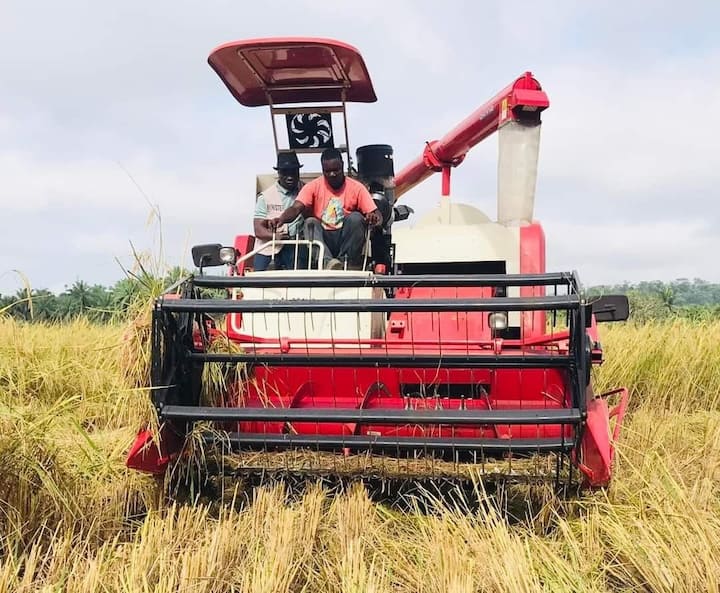
Gbedin, Nimba County – A groundbreaking 300-acre rice harvest in Gbedin is being celebrated as a pivotal moment in the push to transform Liberia’s agriculture sector. With the use of a state-of-the-art combined harvester capable of reaping three bags of rice in under 10 minutes, Agriculture Minister Dr. Alexander Nuetah underscored the revolutionary role of mechanization in modernizing farming practices and bolstering food security.

“Farming is a business, and it’s time we treat it that way,” Dr. Nuetah declared to an assembly of farmers, stakeholders, and local leaders at the project site. He emphasized that mechanization not only boosts productivity but also reduces the physical strain of traditional farming methods, particularly benefiting women who often bear the brunt of manual agricultural labor.

The initiative, backed by plans to expand cultivation to 50,000 hectares within six years, is part of a broader strategy to overhaul Liberia’s agricultural sector. Key infrastructure developments, including the construction of a second irrigation dam and a warehouse in Gbedin, are set to support increased production and improve post-harvest management.

For local farmers like Samuel Brown, the introduction of mechanized farming offers newfound hope. “With this kind of support, farming no longer feels like a struggle. We’re already planning to add another 200 hectares next year,” he said, reflecting the optimism shared by many in the farming community.

The project encompasses a holistic approach, combining the provision of improved seed varieties, fertilizers, and tractors for land preparation. This model aims to shift agriculture in Liberia from subsistence-based survival to a profitable and sustainable economic activity.

Dr. Nuetah was candid about the government’s role, framing it as a catalyst rather than a crutch. “Farmers need to reinvest in their operations,” he noted. “The resources we’re putting in are meant to provide a foundation for growth, not to create dependency.”

To sustain momentum, plans are underway to establish a mechanization center in Gbedin, enabling farmers to rent machinery at affordable rates. Additionally, efforts to streamline the marketing process by connecting farmers with buyers are expected to enhance profitability.

Despite the enthusiasm, questions linger about the long-term viability of the project. Critics caution that scalability and sustained support are critical to ensuring its success. Concerns also center on whether small-scale farmers can fully adapt to the rapid changes without consistent technical assistance and financial backing.

Still, the mechanized harvest is being hailed as a significant step forward in addressing the challenges that have long plagued Liberia’s agricultural sector. For many farmers, it represents a turning point.

“This is a new beginning for us,” said one farmer at the harvest celebration. “If we can keep this momentum, farming will truly become a business.”

Tags: Alexander Nuetahmechanized farming
ShareTweetSend
Gibson Gee | The Liberian Investigator

Gibson Gee | The Liberian Investigator

Gibson Gee is a Liberian journalist, born and raised in Zwedru, Grand Gedeh County. He began his journalism career in 2017 at Flash FM 102.2 and has since developed a reputation for incisive reporting on governance, politics, and national affairs. He currently serves as The Liberian Investigator’s assigned reporter at the House of Representatives, delivering timely and in-depth coverage of legislative developments.

Next Post

Starz University Celebrates Graduates, Launches Cybersecurity Program

Grand Kru Politicians Accused of Sowing Divisions and Neglecting Communities

Discussion about this post

Search The Investigator

No Result
View All Result

Recommended

Hosts Cape Mount suffer 2-1 defeat to Nimba

2 years ago

LBS Director Fahngon accused of taking bribe in ‘fake torture’ allegation case

2 years ago

    Home

    About Us

    Investigations

    News

    Politics

    Business 

    Editorial

    Contact Us

    Privacy Policy

    Advertise with us

    Stay updated with the latest news by subscribing to our WhatsApp Channel

    Click Here to Subscribe

    © 2025 THE LIBERIAN INVESTIGATOR, All Rights Reserved and subject to Terms of Use Agreement. Developed By: Klariba Holdings, Inc

    No Result
    View All Result
    • Home
    • Investigations
    • Cocaine Case
    • News
      • General News
      • National News
      • County News
      • Health
      • Human Interest
      • Press Release
      • Media
      • Environment
    • Politics
    • Business
    • International
    • Opinion
      • Opinions
      • Letters from the Editor
      • Letters to the Editor
      • Editorial
      • Commentary
    • Fact Checks
    • Lifestyle
      • Entertainment
    • Sports
    • Women & Grit

    © 2023