


Published: July 15, 2026
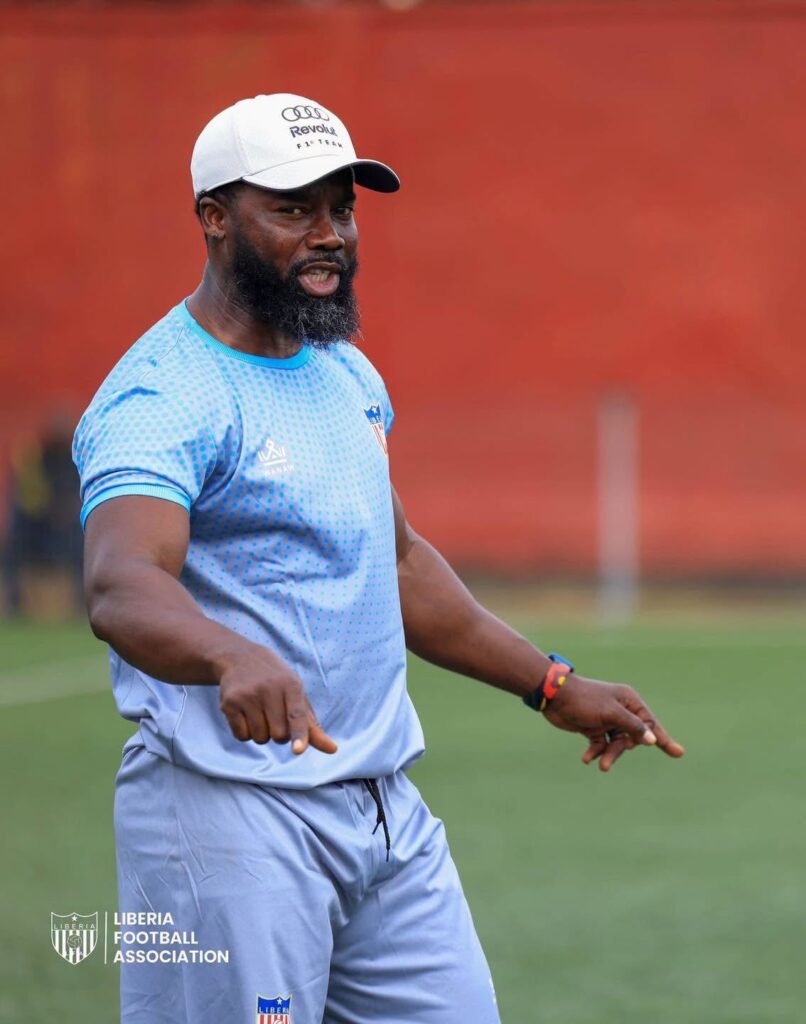
MONROVIA — For decades, Liberia has produced gifted footballers capable of competing on the international stage. Yet despite the country’s rich talent pool, its youth national teams have often struggled to consistently translate potential into sustained success.
The Liberia Football Association believes it has found a leader to help change that narrative.
With the appointment of Marcus Polo Laquie as Football Programme Lead for the Liberia Under-17 boys national team, the LFA is betting on more than an experienced coach. It is investing in a football architect tasked with building a development system that stretches beyond one age group and one tournament.
Laquie, who holds UEFA A and UEFA Elite Youth A licenses, insists his role is fundamentally different from that of a traditional head coach.
“I’m not here to be the traditional head coach,” he said. “I’m here to build a system, and doing so needs to go with a title that reflects the actual job.”
His appointment signals a shift in philosophy for Liberian football—from focusing primarily on winning the next match to building an integrated pathway capable of producing elite players for years to come.
A System Instead of a Team
As Football Programme Lead, Laquie is responsible for far more than selecting players and preparing match tactics.
His mandate includes establishing the Under-17 team’s playing identity, developing player pathways, overseeing technical staff, implementing scouting structures and creating a high-performance environment.
In football’s leading development nations, programme leads are responsible for ensuring continuity across age groups rather than operating isolated national teams. That is the model Laquie hopes to introduce in Liberia.
His vision is simple: every national youth team—from Under-10 through Under-20—should play the same style of football.
“The integration is one thing that is lacking,” he said. “Everything should come from your game model.”
Such an approach would allow players moving through the national team ranks to develop within one football philosophy instead of adapting to new systems every time they graduate to a higher age category.
Bringing International Experience Home
Laquie arrives with more than two decades of coaching experience in Canada and Scotland.
His résumé includes roles with Toronto FC Academy, Motherwell FC Girls Academy, Gartcairn Women’s FC, AFC Southampton Academy in Canada and the University of Stirling in Scotland.
Along the way, he has helped develop players who advanced to professional clubs, earned university scholarships and represented their national teams.
His academic credentials are equally impressive, including master’s degrees in Advanced Performance Football Coaching and Applied Sport Psychology.
Yet Laquie says his greatest motivation is not his qualifications but the opportunity to give back to his country.
“I’ve done this abroad,” he said. “I know what it takes. Now I want to do it for my country.”
Changing How Talent Is Identified
One of Laquie’s immediate priorities is overhauling Liberia’s player identification process.
Rather than relying solely on short national team trials, he wants continuous scouting throughout the season.
“You have to get a follow-up system in place, and that has to do with a scouting system,” he said.
Under his vision, national team coaches would maintain regular communication with clubs, sports science staff and player development personnel to monitor fitness, injuries, tactical progress and overall performance.
Instead of selecting players based on brief camps, decisions would be informed by year-round evaluation.
For Laquie, successful football nations don’t simply identify talent—they continuously monitor and develop it.
Building Leaders Alongside Players
While tactics and technical ability remain central to player development, Laquie believes Liberia’s biggest challenge extends beyond football skills.
“Liberia’s situation is about managing people emotionally well,” he said.
“Clarity, standards and consistency are what we are struggling with in Liberian football.”
Drawing on his background in sport psychology, he plans to place equal emphasis on mental preparation, leadership and accountability.
His philosophy centers on creating disciplined environments where players understand expectations, embrace responsibility and develop the confidence needed to compete internationally.
A Long-Term Vision
Liberia has qualified for major youth competitions only sporadically in recent decades, despite producing internationally recognized players.
The LFA hopes Laquie’s appointment marks the beginning of a more sustainable approach.
His success ultimately will not be measured solely by wins and losses at the Under-17 level, but by whether Liberia can establish a consistent pipeline of players prepared to progress to the Under-20 team and eventually the senior Lone Star.
That requires patience, investment and institutional support.
If the football association fully backs the programme, Laquie’s appointment could represent more than the hiring of another youth coach.
It could become the foundation of a new era in Liberian football—one built on structure instead of improvisation, continuity instead of constant change, and long-term development instead of short-term results.
For a country rich in football talent but still searching for a sustainable development model, the challenge facing Marcus Polo Laquie is significant.
So is the opportunity.






Discussion about this post