


Published: November 23, 2026
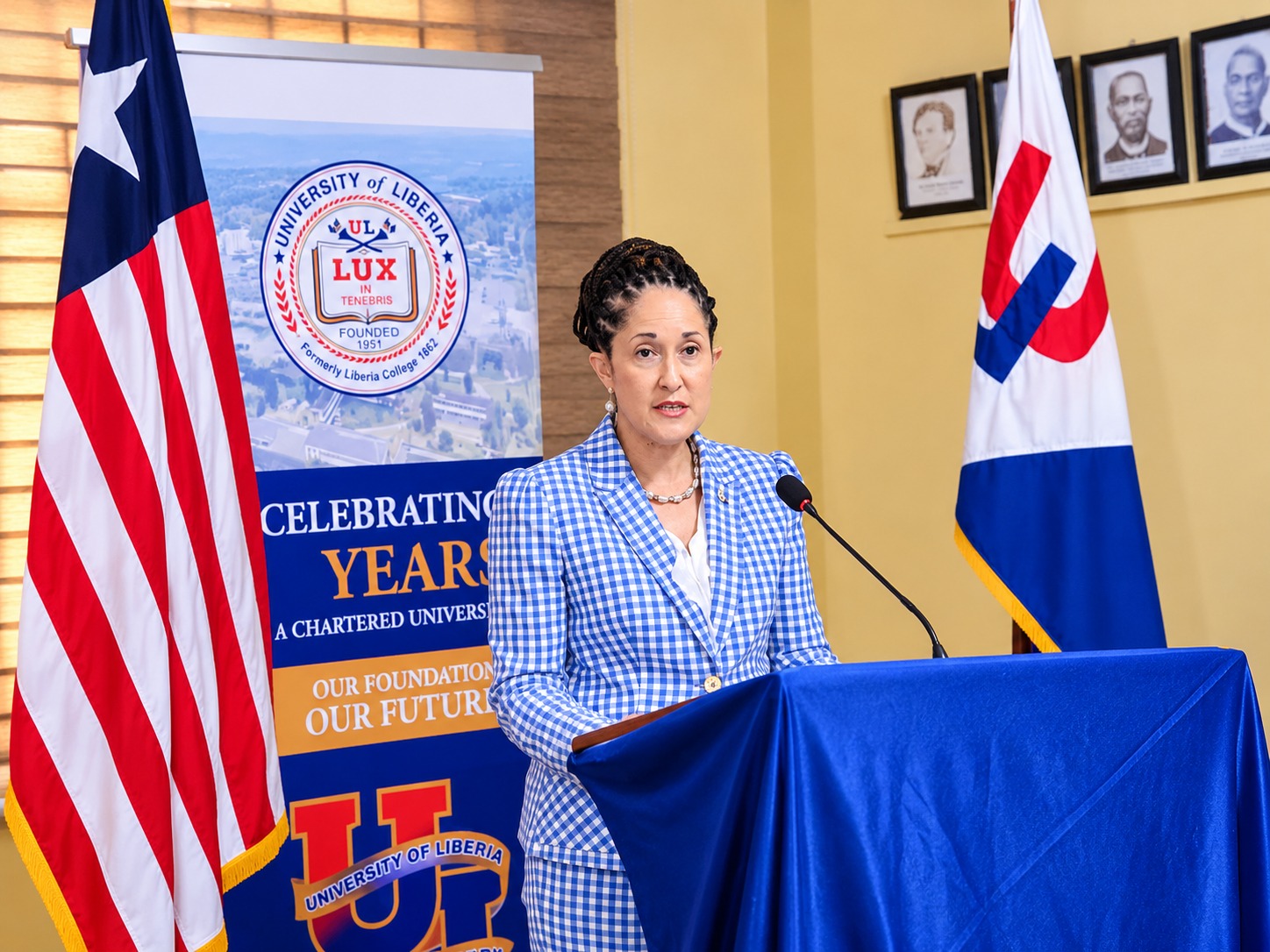
Enough is enough. There are times in life when you just have to call it. Today, as posted on the official University of Liberia Facebook page, the University of Liberia Board of Trustees is calling all faculty and staff back to work. Duties are to resume on Tuesday, December 1st. Classes are to resume on Monday, January 4th, 2027. Dialogue has been exhausted and not yielded a resumption of activity. The University has lost a semester of time. Students have languished on the sidelines long enough. Our failure to resume normal activities has eaten into our international reputation badly enough. More lost time will only equate to backward movement.
Yes, we have made significant progress on renovations – and that will continue. But we can no longer remain out of school. UL’s closure is a national embarrassment.
As UL’s Chief Executive Officer, and as the Executive Officer of the UL Board of Trustees, I am calling it. ULFASA, the combined leadership of the UL Faculty Association (ULFA) and the UL Staff Association (ULSA), presented many legitimate concerns to the UL Administration and Board of Trustees on July 17th and again on July 29th.
Despite the vote of no confidence in the UL President and two key members of UL Administration – the Chief Financial Officer and the Associate Vice President for Human Resources – UL Administration took those concerns seriously and began working on them immediately, with the support and backing of the UL Board of Trustees.
Over the four-plus months of the work stoppage, during which time the striking faculty and staff were still being paid their full salaries, UL Administration made significant progress on most of the issues of concern. For example, faculty and staff decried the poor state of UL’s facilities, whether bathrooms, classrooms, offices, or other structures. Thanks to a US $6.35 million dollar allotment by the National Legislature in the FY2026 budget and a catalytic push by His Excellency Joseph Nyuma Boakai, Sr., architect of the ARREST Agenda for Inclusive Development, in August, UL’s renovation, modernization, and beautification (RMB) exercise is in full swing, for all the nation to see. Not only did the government provide significant and meaningful resources to renovate, modernize, and beautify UL in 2026, but it has publicly committed to a multi-year RMB exercise that will effectively give the nation’s flagship university a completely new face by 2029.
Imagine that!
This is an historic, generationally significant investment in the University of Liberia that should satisfy ULFASA’s concerns that attention is not being given to the improvement of their workplace. And yet, they have not returned to work. With regard to concerns about retirement and NASSCORP, ULFASA rightly identified that UL had significant arrears with NASSCORP that could affect the ability of retiring faculty and staff to achieve a dignified retirement and full pension. UL Administration shared these concerns and actually had been in talks with NASSCORP for over a year prior about how to rectify this situation. After ULFASA’s July resolution, the Ministry of Finance and Development (MFDP) planning joined the conversation and identified NASSCORP arrears by government entities a national concern. Generously and appropriately, MFDP agreed to resolve this problem, not only for UL, but for all of government.
With regard to UL specifically, MFDP agreed to cover the deficit in employee contributions, known as “the 4%”, while working over time to resolve the more significant arrears related to employer contributions, also known as “the 6%”.
Importantly, on the basis of this commitment by MFDP, NASSCORP agreed to fully fund the pensions of all UL retirees, effective immediately, thus removing the concern that UL faculty and staff would be unable to retire with dignity. While it is understandable that ULFASA would want to continue to follow the progress of the payment of all UL-owed arrears to NASSCORP, the fact that the problem has been solved for UL retirees themselves, most especially those scheduled to retire at the end of 2026, means that to continue to strike over this issue is a game of diminishing returns.
From the perspective of UL Administration, UL can now offer a dignified retirement and full pension to all its employees who are 65 and above, and is in a position to follow applicable law, namely the NASSCORP Act of 2017, in this regard.
ULFASA had many concerns related to employee compensation and benefits. For example, ULSA had a longstanding concern with salary disparities, especially for staff below director level, which affects employees such as plant operations workers, janitors, patrolmen, office assistants, expeditors, records officers, and the like. After reviewing ULSA’s 2023-2024 salary disparities report, I did follow-up data analyses on more recent data (2025-2026) and agreed with their conclusions. I then worked with UL’s Vice President for Administration, UL’s Associate Vice President for Human Resources, and ULSA leadership to come up with a new salary scheme that resolved the salary disparities, providing harmonization that brought underpaid employees to the level of their appropriately paid peers – and ULFA leadership agreed to this scheme right before the work stoppage began. Even though the strike was underway, the VP for Administration and the Business and Finance Office (BFO) leadership worked with me to insert these adjusted salaries into UL’s FY2027 budget proposal. ULSA staff were disappointed that we were unable to offer the raises immediately within FY 2026, but, as we explained, because a national budget effectively operates as a law, our only option was to put these salary changes into the FY2027 budget proposal and await its approval by the National Legislature and MFDP.
Nevertheless, we got good feedback from MFDP that our proposal in this regard was logical and just. Perhaps the biggest bone of contention in the entire dialogue related to ULFA’s demand for a 40% increment in pay for many faculty, based on its contention that certain provisions of the 2022 Tripartite Agreement between UL, MFDP, and ULFA remained unfulfilled. Because the extant copy of that Tripartite agreement lacks the addendum explaining how the 40% was to be calculated, and because the records of UL, MFDP, and ULFA differ from each other, this particular item of the resolution is unable to be resolved at this time. ULFA presented a faculty salary budget proposal that had most faculty receiving a significant increment, while UL records show that the vast majority of UL faculty have salaries consistent with the new salary scheme that was devised in 2022. Only that handful of faculty members whose pay is still far below the salaries agreed upon in 2022 is being proposed for raises. Otherwise, most UL faculty are the best paid in Liberia and are not in line for a raise in FY2027.
Exceptions include those faculty who, as a result of tenure and promotion review in 2026, have been recommended for promotion, for example, from Instructor to Assistant Professor, from Assistant Professor to Associate Professor, or from Associate Professor to full Professor. Such faculty will be eligible for the merit raise associated with such a promotion in rank, and, for Associate Professors in particular, achievement of tenure. This is a relatively small number of individuals.
One place of agreement between ULFA, the UL Administration, the Board of Trustees, and government actors is the critical importance of making sure that all faculty who have returned from Study Leave with advanced degrees are appropriately promoted and paid. For those who are unfamiliar with the Study Leave program, which is enshrined in the UL Charter and Bylaws, faculty or staff who go for advanced training (Master’s degree, Ph.D., or other terminal degree) are entitled to 50% of their salary while they are away on study, and, when they return, to a promotion and salary change. For example, an Instructor with a Master’s degree who goes for study to get a Ph.D. should be promoted to Assistant Professor upon his or her return and given an according raise in salary. However, for a variety of budgetary and administrative reasons, some people were not adjusted upon their return. All parties agree that these individuals should be promoted to their correct position and given the corresponding salary.
Therefore, UL’s FY2027 budget proposal includes funds to restore all these individuals, of which there are many. Therefore, effectively, UL Administration has favorably responded to this concern of ULFASA and should no longer be held hostage because of it.
There are many other forms of compensation that ULFASA raised in its July resolution. For example, UL pays stipends to graduate faculty who supervise theses and to law faculty who grade law entrance exams. ULFASA legitimately pointed out that UL Administration has arrears on some of these, and we have agreed to pay them. Additionally, a few adjunct faculty still have arrears, despite my administration’s massive push to compensate all adjuncts fully and on time; these have also been agreed to be paid, as long as teaching contracts can be produced. However, ULFASA requested that gas slips and scratch cards be restored for Deans and Department Chairs. This program went away with salary harmonization some years ago and will not be restored at this time.
There are a few other demands made by ULFASA that UL Administration has decided not to fulfil. For example, ULFASA requested that all dismissed employees be reemployed. For reasons specific to each case, UL Administration does not agree to reemploy people previously dismissed for cause. Additionally, ULFASA demanded that the Chief Financial Officer and Associate Vice President for Administration be removed from their positions. The CIO resigned in August for unrelated reasons; however, claims made by ULFASA regarding the AVP HR were investigated by UL Administration and found to be unfounded, necessitating no action regarding that position.
ULFASA’s July Resolution had 11 demands. Perhaps I have not touched on all of them. However, it should be evident that the posture of UL Administration has been one of responsiveness and care throughout the process. Some may argue that face-to-face dialogues between UL Administration and ULFASA were too few over these months of the standoff; however, there is a trackable history of engagements (plus attempts at engagement, particularly through intermediaries, that were unsuccessful), and non-face-to-face communications such as letters, email, phone calls, and chats.
In this digital age, everything counts. It is unfortunate that the impasse we experienced from July to November did not result in a clear public victory that both sides could claim in unison. That is always the ideal after such an experience. However, some chess games end in a stalemate. It seems that is what has happened here. Both sides have lost something and both have gained something; neither has total loss or victory. However, there is one player not in the game who cannot afford to lose more, and that is UL’s student body. I am thankful, indeed, in utmost respect, of UL’s students, who have shown two admirable traits during this period of impasse. First, they have shown incredible restraint. Student frustration did not erupt into destructive protests, even though students were quite vocal online, and rightly so. Second, students have galvanized around the value they place on their own education. For the most part, the singular message has been “We want to go back to school,” often followed by “Don’t compromise our futures.” I couldn’t be more pleased to see young people passionate about their education and recognizing it as the key to the future. Our students showed that. Bravo, students!
For me, the biggest loss has been the forfeiture of all progress that we made towards a New Regularized Academic Calendar passed by the Faculty Senate and Joint Committee in February 2025. That academic calendar, designed to better align with academic calendars in countries where our students or study leave participants might wish to go for advanced study, was to begin in August and end in July of each year. Had we started on time this year, we would have achieved it, but having lost a full semester, it is now impracticable to try to regain it. I accede that UL has chosen a calendar year (January to December) academic calendar for itself, and we will do our best to make other adjustments that still make it possible for our students and faculty to take advantage of opportunities abroad with minimal difficulty or delay. All is not lost.
So, game over on the school closure. Beginning December 1st, failure to return to work is effectively a statement that you no longer wish to work at the University of Liberia. If you don’t come back, you have abandoned it, its mission, and its students. The Liberian public can no longer bear to watch well-paid faculty receive pay while their children are sitting home and their children’s friends are graduating from other universities.
The nation’s flagship institution of higher learning can no longer afford to have a reputation as a school that only offers one semester a year. Those days are behind us. Indeed, as we renovate, modernize, and beautify UL’s physical infrastructure, we will likewise renovate, modernize, and beautify its curriculum, its academic, administrative, and financial systems, and everything else about it.
The institution that was once the “beacon on the hill” for all of Africa will be that once again. We are headed there, and it is time for all who wish to be a part of it to “pick up their burdens and walk”. Let us dust ourselves off, leave the rancor behind, and move forward together.




Discussion about this post