


Published: May 18, 2026
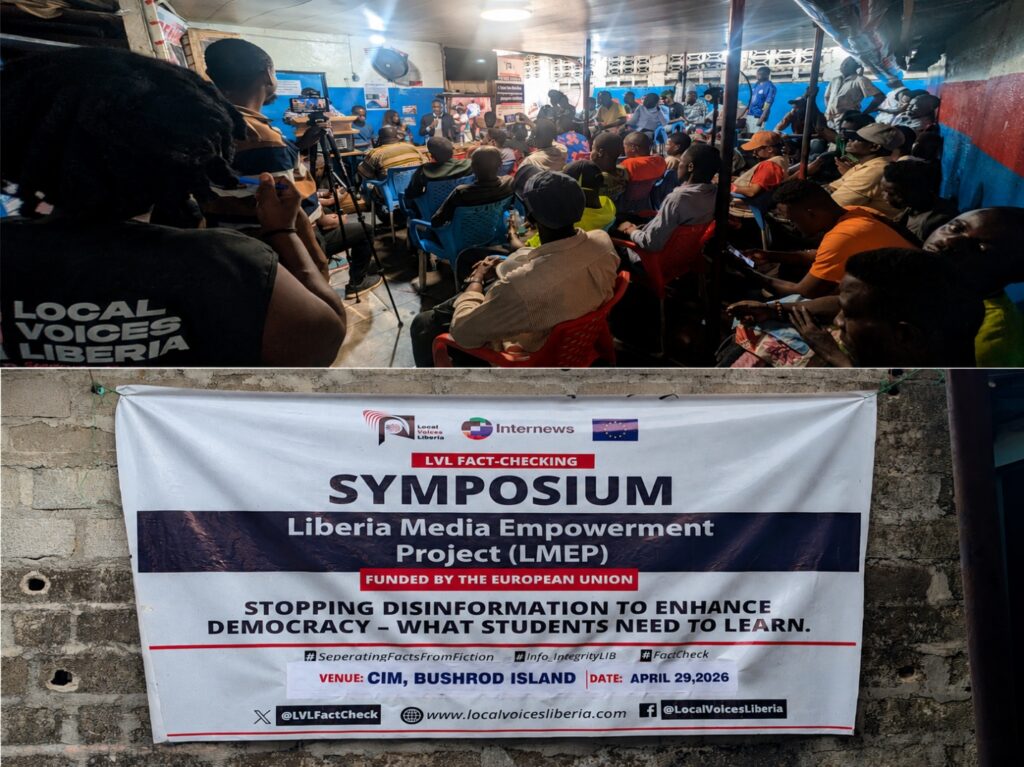
Monrovia – Local Voices Liberia (LVL) is intensifying its efforts to combat misinformation and strengthen information integrity in Liberia through a series of public fact-checking symposia and media literacy engagements held at major intellectual centers in Monrovia and surrounding communities.
The recent engagements in April were held at the Friends of Friends Hatai Association (FOFHA), the Center for Intellectual Exchange and Opinions (CEIO), Carey Street in Central Monrovia, and the Contemporary Intellectual Museum (CIM) in Logan Town, Bushrod Island.
These activities marked a significant expansion of LVL’s media literacy outreach beyond classrooms and journalism schools into broader public spaces where citizens actively debate social and political issues.
The symposia formed part of LVL’s growing campaign to empower citizens, journalists, students, and community leaders with practical tools to identify, verify, and counter misinformation and disinformation in Liberia’s rapidly evolving information ecosystem.
According to Atty. Alpha Daffae Senkpeni, Executive Director of Local Voices Liberia, expanding the discussions into intellectual centers was a deliberate strategy aimed at bringing fact-checking conversations directly to communities where information shapes public opinion and democratic participation.
“Disinformation is no longer just a media issue; it is a national development issue,” Atty. Senkpeni said. “When false information spreads unchecked, it undermines public trust, distorts democratic discourse, and affects how citizens make decisions about governance, health, security, and the economy. That is why we believe media literacy must move beyond newsrooms and classrooms into community spaces where people exchange ideas every day.”
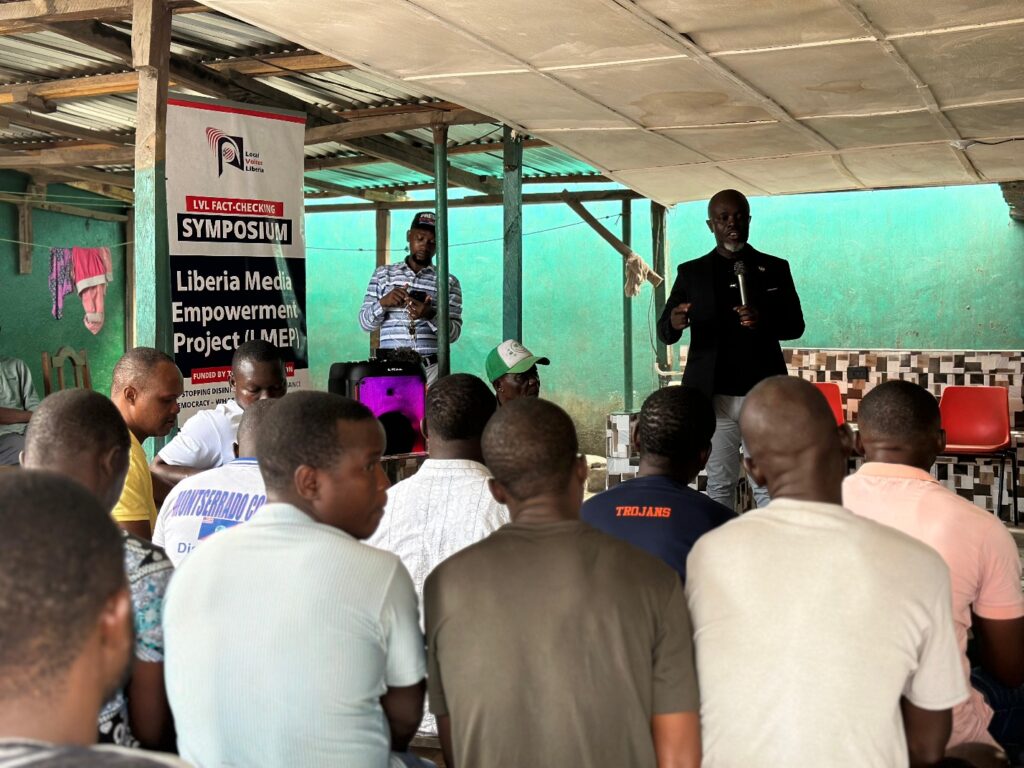
At CEIO on Carey Street, where the symposium was held on April 23, Atty. Senkpeni delivered a practical and engaging presentation on the theme, “Countering Disinformation to Strengthen Liberia’s Democracy.” During the session, he challenged participants to think critically about the information they consume and share online, emphasizing that every citizen has a responsibility to promote truthful and verified information.
He also highlighted the growing influence of social media and emerging technologies in shaping public narratives, warning that misinformation spreads faster when audiences fail to question sources or verify claims before sharing them.
The CEIO engagement sparked interactive discussions among participants, many of whom raised concerns about political misinformation, manipulated social media content, and the role of citizens in protecting democratic discourse.
The FOFHA event held on April 22, featured a high-level panel discussion moderated by broadcast journalist and OK FM News Director Trokon Wrepue. The panel brought together Atty. Al-Varney Rogers, Peterking Quaye, and Jackson C. Clay Jr. to examine how misinformation affects governance, accountability, and national development.
Atty. Rogers emphasized that access to credible information and freedom of expression are protected under both Liberian law and international human rights frameworks. However, he noted that those rights also come with responsibilities.
“Freedom of expression does not give anyone the right to deliberately spread falsehoods that can endanger public safety or undermine democratic stability,” Rogers said during the discussion.
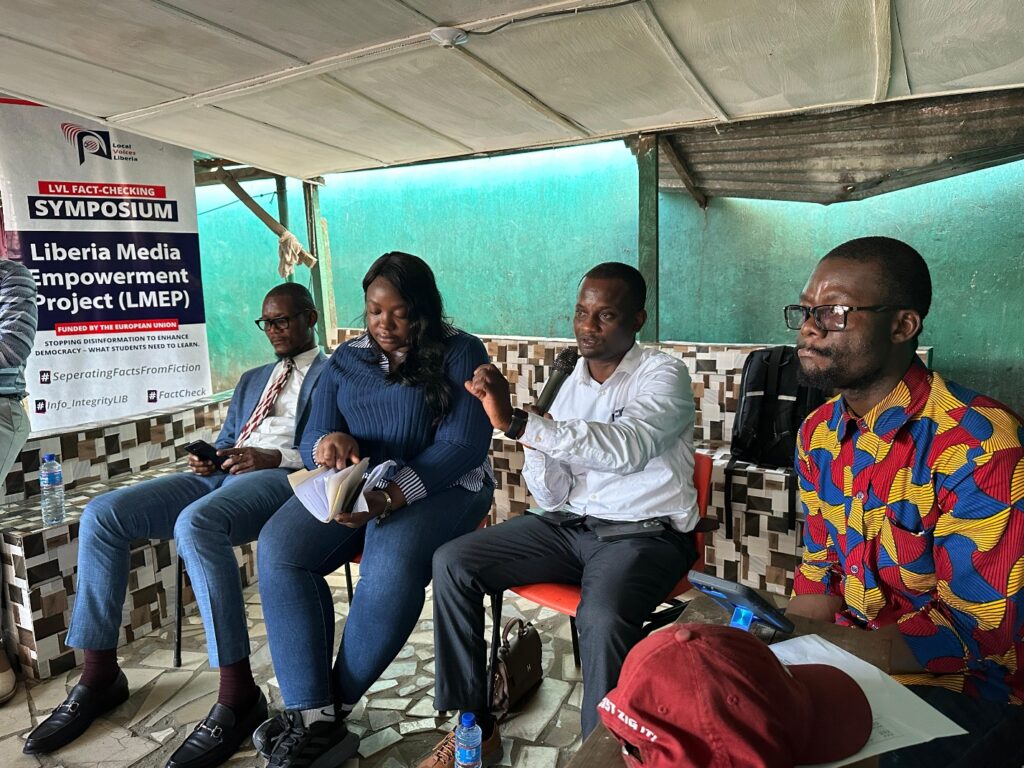
Peterking Quaye, a Certified AI Governance Expert and Director of Programs and Projects at WAICTANT, explored how artificial intelligence and digital technologies are increasingly shaping political narratives and influencing public perception.
“The same technology that helps democratize information can also amplify falsehoods if citizens are not digitally literate,” Quaye warned. “We must prepare people to critically engage information in this AI-driven era.”
Jackson C. Clay Jr. stressed the importance of verification and public participation in strengthening Liberia’s information environment, noting that fact-checking often faces resistance when it challenges influential voices or widely accepted narratives.
The discussions continued at the Contemporary Intellectual Museum in Logan Town, where another dynamic panel discussion centered on the theme, “Countering Disinformation to Enhance Liberia’s Democracy.”
The CIM forum, held on April 29, also featured Atty. Al-Varney Rogers, Peterking Quaye, and media professional Ruth Gbatoe, with Jackson Clay moderating the session.
Panelists explored the legal implications of spreading false information, the ethical responsibilities of journalists and content creators, and the growing influence of digital technologies in shaping public opinion.
Ruth Gbatoe emphasized the need for media professionals to maintain ethical standards and prioritize verification in a fast-moving digital environment.
“Journalists and communicators must remain committed to truth and accuracy, especially in a time when misinformation spreads rapidly through social media,” she said.
Throughout the three symposia, participants actively engaged panelists with questions about fake news, political propaganda, online manipulation, and the role of young people in promoting responsible information sharing.
Jerry Gay, Coordinator of LVL’s Fact-Checking Desk, described the engagements as an important intervention in strengthening public resilience against misinformation.
“These symposiums are helping to build a culture of verification and critical thinking,” Gay said. “Improving information integrity requires citizens to actively question what they see online, verify information before sharing it, and understand the broader impact misinformation can have on democracy and national development.”
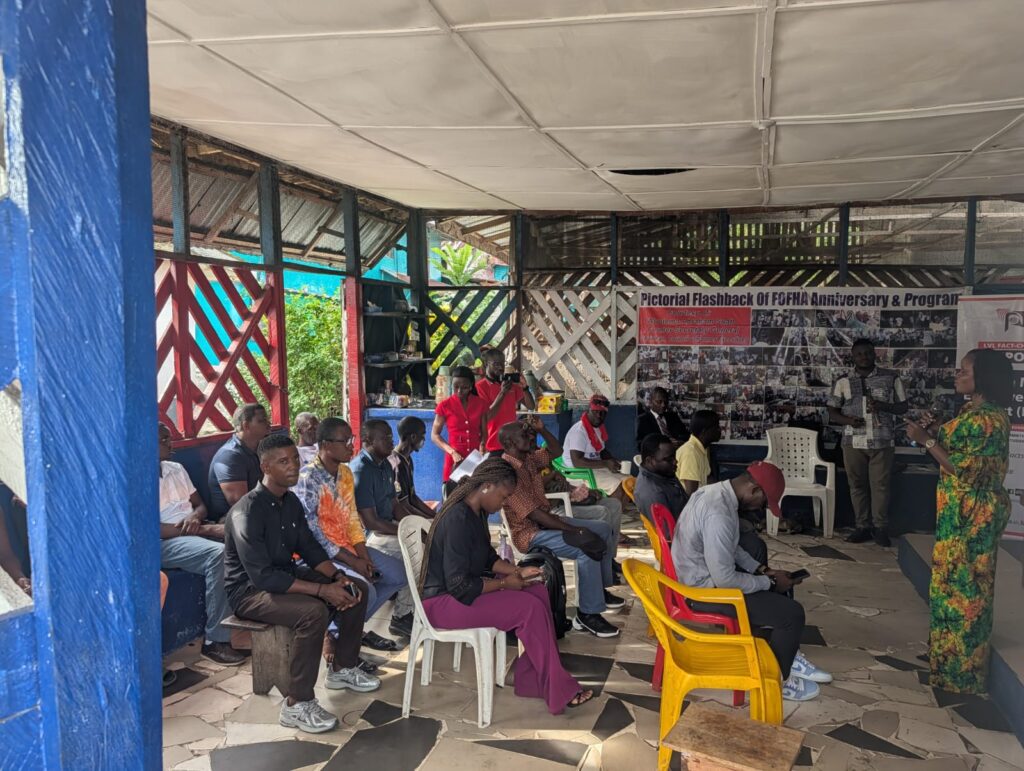
Rita Jlogbe, Journalism Program Officer at Internews Liberia, also praised LVL’s expanding outreach efforts, noting that the initiative is helping communities engage more thoughtfully with information and public discourse.
“Access to trustworthy information is essential for responsible decision-making,” Jlogbe said. “Programs like these create important opportunities for citizens to reflect on the information they consume and how it shapes their participation in society.”
Beyond the public symposia, LVL also conducted specialized fact-checking and verification training for more than 30 journalism students from universities and journalism schools across Monrovia. The training covered fact-checking techniques, responsible use of artificial intelligence, and cybersecurity awareness.
The activities form part of the Liberia Media Empowerment Program, implemented by Internews with support from the European Union.




Discussion about this post