


Published: April 29, 2026
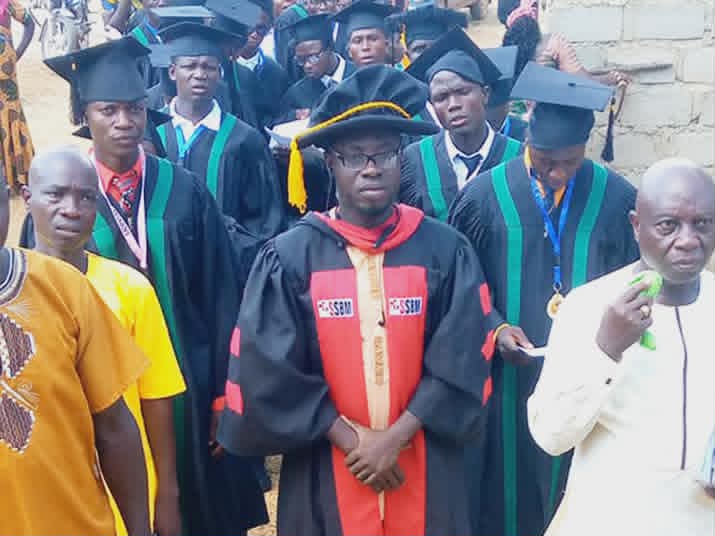
Monrovia — In what has been described as one of the most significant academic milestones in the country’s recent history, the LICOSESS College of Education graduated more than 1,200 teachers during its 27th “C” Certificate, 22nd Associate of Arts, and 3rd Bachelor’s Degree Convocation Ceremony, held April 25, 2026, at the Samuel Kanyon Doe Sports Complex.
The large-scale ceremony, marked by academic pageantry, policy direction, and strong national messaging, brought together government officials, education stakeholders, development partners, and families, all united around a central theme: transforming Liberia’s education system through qualified teachers.
A Historic Gathering for Education
The ceremony was coordinated by Mrs. Anita Saa Yambi and Mr. Manfred Mulbah, who guided proceedings throughout the day. Delivering the opening invocation, graduand Alvin B. Massaquoi called for divine guidance over the ceremony and the future of the graduates, setting a solemn tone before the LICOSESS Ode ushered in a celebratory atmosphere.
In his welcome remarks, Dean D. Darric Dennis described the event as both a celebration and a moment of reflection. He emphasized that the graduates had undergone rigorous academic and practical training and now carry the responsibility of shaping Liberia’s next generation. “Teacher education goes beyond academic instruction,” Dennis said. “It is about character, leadership, and service to society.”
Over 1,200 Graduates to Impact National Classrooms
At the heart of the ceremony was the announcement by LICOSESS President Dr. Benjamin Yele Wehye that the institution had produced over 1,200 graduates across certificate, associate, and bachelor’s degree levels—making it the largest single graduation of educators in Liberia.
The graduates span key disciplines, including early childhood education, primary education, mathematics, science, language arts, and school administration. Dr. Wehye underscored the national implications of this milestone, noting that the graduates will help: Reduce Liberia’s teacher shortage, Improve the Pupil-Qualified Teacher Ratio (PQTR), Expand access to education in underserved communities and Strengthen overall classroom instruction.
“This graduation represents renewed hope for Liberia’s education system,” he said. “It is not rhetoric that will transform education, but measurable impact in our classrooms.”
Significantly, more than half of the graduates-over 690 are women, particularly in early childhood and primary education, highlighting progress in gender inclusion. The graduating class also included persons with disabilities, among them five deaf or hard-of-hearing students and one visually impaired graduate, reflecting growing inclusivity in higher education.
Government Commits to Education Reform
Delivering the keynote address on behalf of President Joseph Nyuma Boakai Sr., Senior Political Advisor MacDella M. Cooper described the ceremony as a “moment of national significance.” Under the theme “Reshaping Primary Education in Liberia for a Brighter Future,” Cooper emphasized that education reform must be a shared national responsibility.
She outlined key government initiatives, including: Increased education budget allocations Implementation of the ARREST Agenda for Inclusive Development Ongoing collaboration with international partners such as the World Bank and the United Nations Expansion of modern school infrastructure across Liberia However, she stressed that infrastructure alone cannot transform education. “The strength of any education system lies in the quality of its teachers,” Cooper said. “You, the graduates, are the foundation of Liberia’s future.”
She urged graduates to uphold professionalism, integrity, and passion in their careers, describing them as “architects of young minds and custodians of knowledge.”
A Call for Self-Reliance from Valedictorian
In a powerful valedictory address, Mrs. Davidetta Togba Cassell challenged Liberians to take ownership of their country’s development. Speaking on the theme “Only Liberians Will Build Liberia,” Togba argued that the country must move away from dependency on external aid and embrace self-reliance. “Our greatest challenge is not resources, but mindset,” she said, adding, “We must shift from dependency to responsibility.”
Cassell called on policymakers to prioritize local investment, particularly in education, and urged public officials to demonstrate confidence in national systems by utilizing local schools and healthcare institutions. She also emphasized the importance of supporting institutions like LICOSESS, describing them as critical to national transformation.
Honoring Legacy and Institutional Resilience
A solemn moment during the ceremony was dedicated to honoring two late institutional leaders: Dr. Thomas Oppong Asare, co-founder and board chairman, and Dr. Beyan G. Zayzay Sr., Vice President for Academic Affairs. In a moving eulogy, Emmanuel Owusu recounted Dr. Asare’s journey from Ghana to Liberia in 1978 and his eventual role in co-founding LICOSESS in 1995 to address the shortage of trained teachers.
Despite Liberia’s civil conflict and institutional challenges, LICOSESS has remained operational for over three decades, a testament to its resilience. Dr. Wehye noted that the institution continued functioning during national crises and recently overcame the abrupt shutdown of a major USAID-supported program, which affected over 1,400 students.
Digital Learning and Strategic Partnerships
In a forward-looking announcement, LICOSESS revealed a partnership with Learning for Humanity (Canada) to enhance digital education. The initiative will provide: Interactive lessons and simulations Offline and online learning platforms Curriculum-aligned digital content Multimedia teaching resources.
The system is designed to function even in areas without internet access, addressing a key barrier in Liberia’s education system. Additionally, the institution distributed over 2,200 early childhood education textbooks and announced ongoing collaboration with BlueSpring Publishing Liberia to expand learning materials across grade levels.
Stakeholders Emphasize National Collaboration
Throughout the ceremony, multiple stakeholders reinforced the importance of collaboration in strengthening education. Representatives from the Ministry of Education, National Commission on Higher Education, and the National Teachers Association of Liberia all commended LICOSESS for its contributions. Assistant Minister of Education, Clifford Konah described the institution as a “strategic partner” in addressing the country’s teacher shortage.
Meanwhile, Prof. Nathaniel Gbessagee of the National Commission on Higher Education emphasized the need for quality assurance, improved infrastructure, and technological integration in higher education.
Recognition of Excellence
The ceremony also featured an awards segment honoring individuals and partners who have contributed to the institution’s growth. Among those recognized were: Dr. Roland Gontee – Coordinator of the Year, Rev. Benjamin Suah and Rev. Peter Gbelee – Faculty of the Year, Mr. Lawrence Bayusie – Administrator of the Year and Philanthropists and development partners were also acknowledged for supporting students through scholarships and financial aid.
Graduates Charged as “Agents of Transformation”
In his closing address, Dr. Wehye delivered a symbolic message, describing graduates as “educational yellow machines” tasked with transforming Liberia. He assigned them metaphorical roles: Bulldozers to remove ignorance Excavators to uncover student potential Graders to promote equity and Cranes to elevate excellence.
Quoting Irish poet William Butler Yeats, he reminded graduates that “education is not the filling of a pail, but the lighting of a fire.”
A Defining Moment for Liberia’s Future
The ceremony concluded with the formal conferment of degrees, presentation of diploma covers, and admission of graduates into the LICOSESS Alumni Association. As the newly qualified teachers prepare to enter classrooms across Liberia, the impact of this historic graduation is expected to be far-reaching.
With more than 1,200 educators now poised to serve, stakeholders say the event represents not just academic success, but a turning point in the country’s efforts to rebuild and strengthen its education system. In the words of the valedictorian, the responsibility now rests squarely on Liberians themselves. “The future of Liberia,” she said, “will be built by Liberians—starting in the classroom.”




Discussion about this post