


Published: May 22, 2026
MONROVIA — The hum of private generators has become the unofficial soundtrack of Liberian life. Businesses close early to cut fuel costs. Students study by candlelight. Hospitals run on backup power. And across rural Liberia, entire communities remain completely off the grid. Despite years of investment and successive government pledges of reform, Liberia’s electricity crisis endures as one of the most entrenched in West Africa.
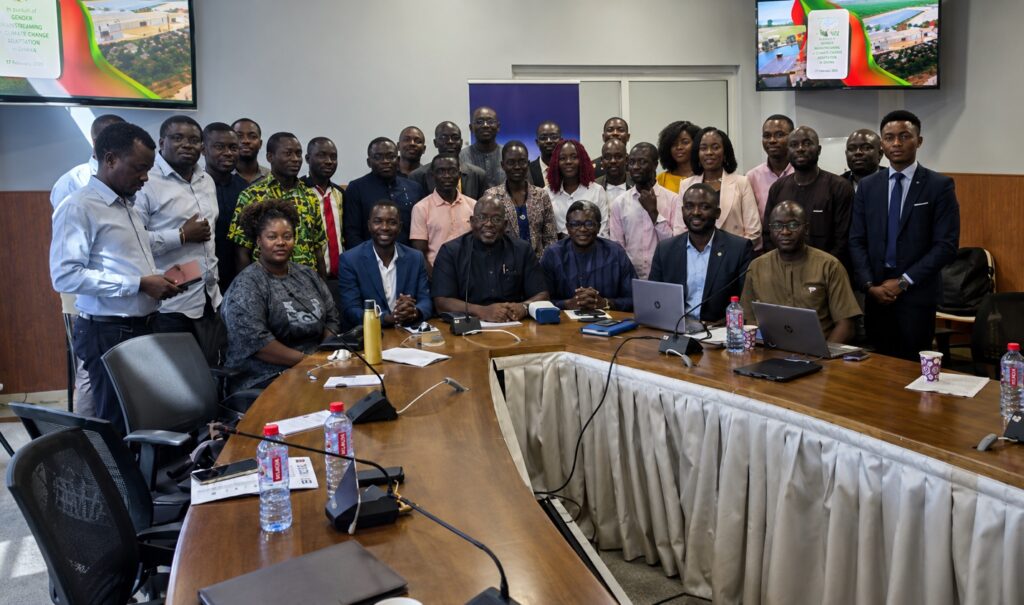
Against that backdrop, the Liberia Electricity Regulatory Commission convened a one-day media engagement workshop Thursday in Sinkor, bringing together journalists, editors and energy sector stakeholders to argue that stronger regulatory compliance, not just more megawatts, is what the sector most urgently needs.
“An informed media is essential to ensure that accurate and balanced information reaches the public,” LERC Chairman Claude J. Katta told participants at the opening of the workshop, held under the theme of tracking the implementation of Liberia’s electricity regulatory framework.
Katta said public confidence in the energy sector depends on transparency, accountability and consistent enforcement of established regulations. He described the media as a critical partner in informing consumers about their rights, utility responsibilities and the reforms underway in the sector, and assured journalists that the Commission remains committed to providing timely information and remains open to sustained public engagement.
The Commission, established in 2015, serves as the independent regulator overseeing Liberia’s electricity sector. Its mandate covers licensing operators, approving tariffs, monitoring compliance, protecting consumers and ensuring fair competition. Crucially, it is distinct from the Liberia Electricity Corporation, which actually provides electricity services. The Commission regulates. LEC delivers. That distinction, however, remains widely misunderstood among the Liberian public, and the confusion has practical consequences for accountability.
David S. Menjor, news editor of The Liberian Investigator and a participant speaking on behalf of media practitioners, put the problem plainly. “There’s a lot of misunderstanding in the public about the difference between the LERC’s work and the Liberia Electricity Corporation’s work,” he said. Menjor urged the Commission to move beyond occasional workshops and invest in sustained public awareness campaigns, noting that the regulator’s role as referee between electricity service providers, including LEC and independent operators such as Jungle Energy Power Supply in Nimba and Central Liberia, requires a consistently informed public to function effectively. “The more awareness you carry out, the better it becomes for the public,” he said.
The Commission’s push for greater public education comes as Liberia’s electricity sector confronts problems that predate its establishment. The country’s energy infrastructure was effectively destroyed during the civil wars, and postwar reconstruction has been slow. Demand consistently outpaces supply. The national grid remains limited in geographic reach, with large portions of rural Liberia entirely unserved. Even in Monrovia, where coverage is comparatively better, residents routinely contend with unstable supply, high tariffs, poor customer service and prolonged outages.
The structural constraints are severe. Limited generation capacity, aging infrastructure, rampant power theft, illegal connections, financial losses and insufficient transmission networks collectively undermine efforts to expand access. Small businesses across Liberia often spend more on generator fuel than on rent. Barbers, cold-water operators, entertainment center owners and small manufacturers consistently cite electricity costs as among their heaviest operational burdens. In rural counties, the absence of reliable power continues to cut communities off from digital education, modern healthcare technologies and private investment.
Press Union of Liberia President Julius Kanubah, who also addressed the workshop, said the media’s role in holding the sector accountable cannot be overstated, particularly given the Commission’s limited capacity to maintain a physical presence across all 15 counties.
“The work of the LERC is crucial for the energy security of Liberia,” Kanubah said. “Access to energy lies at the heart of every society.” He encouraged journalists to pursue investigative reporting focused on electricity service delivery and treat accountability in the sector as a priority beat rather than an occasional story. “Conducting investigative journalism which calls for holding accountable those involved in delivering services is key and should not be taken lightly,” he said.
Kanubah also noted that Thursday’s workshop was one of several journalism training and engagement initiatives taking place simultaneously across Monrovia, involving the United Nations, the Center for Media Studies and Peacebuilding, Internews and the European Union, a convergence he said reflected growing institutional recognition of the media’s role in Liberia’s development.
Consumer frustrations, meanwhile, remain widespread and largely unresolved. Residents complain about inconsistent billing, delayed responses to complaints, meter disputes and recurring blackouts. Low-income households unable to afford formal connections rely on illegal hookups or expensive alternatives. Businesses face operational uncertainty from unstable supply. And because consumers often cannot distinguish between the regulator and the service provider, they frequently do not know where to direct complaints, a gap that diffuses accountability and deepens public cynicism.
Katta said the Boakai administration’s support for sector liberalization could eventually open the market to additional independent power providers, particularly in underserved counties. Companies such as Jungle Energy already operate outside Monrovia, reflecting gradual diversification. But expansion without enforcement, analysts warn, risks exposing consumers to arbitrary pricing and poor service with no meaningful recourse.
“We believe the media can continue to assist the Commission by accurately reporting on developments in the sector, educating consumers on regulatory policies, encouraging public participation, and helping to combat misinformation regarding electricity services, customer issues and tariffs,” Katta said.
Liberia’s electricity challenge is, at its core, a national development challenge. Reliable power is among the clearest indicators of economic transformation. Countries with stable electricity systems consistently show stronger industrial growth, better healthcare outcomes and broader educational access. Achieving those goals in Liberia will require more than new generation capacity. It will require institutions that enforce the rules, protect consumers, command investor confidence and earn public trust.
As generators continue roaring across Monrovia every night the grid fails, the Commission’s message is that building that system begins not with cables and transformers but with a public that understands how the sector is supposed to work and a media willing to hold everyone accountable when it does not.






Discussion about this post