


Published: November 9, 2026
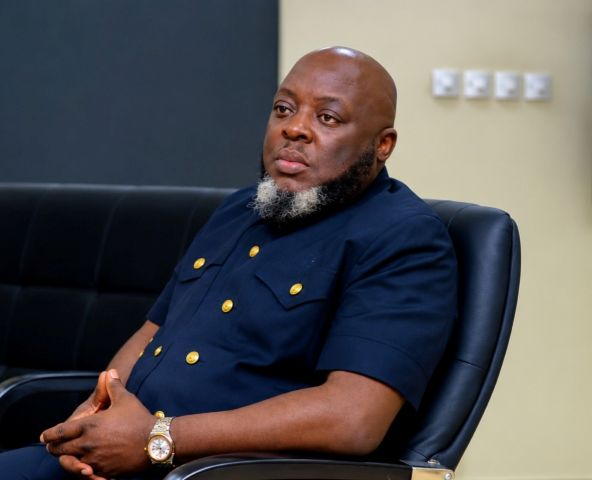
MONROVIA — Former Deputy Minister of Education for Administration and veteran Liberian educator Ambassador Latim Dathong has welcomed the November 3 U.S. elections, saying the reported victories of women, immigrants and minority candidates have renewed his confidence in America’s democratic system after years of disappointment with the country’s political direction.
Dathong, founder and board chairman of Starz University, expressed his views in a personal reflection titled “The America I Know: Change Has Come!”, in which he discussed his experiences in the United States, concerns over immigration policies, reductions in foreign assistance and the election outcomes he believes signal a change in the country’s political direction.
The former deputy minister, who first traveled to the United States at age 17, said America played a significant role in shaping his education, professional development and personal life.
He disclosed that he had traveled between Liberia and the United States approximately 38 times over the past 15 years, maintaining connections with both countries.
However, Dathong said his perception of America had changed in recent years because of developments he considered inconsistent with the country’s longstanding principles.
“I became increasingly disappointed. The country I had called my second home no longer felt like home,” he wrote.
Dathong cited immigration enforcement measures, including the separation of children from their parents, as one of the developments that contributed to his disappointment.
He questioned the treatment of immigrants in a country whose population and development have been shaped by generations of people arriving from different parts of the world.
The former education official also expressed concern about reductions in funding and operations associated with the United States Agency for International Development (USAID).
According to Dathong, USAID’s activities in health care, education, food security and development assistance had contributed to America’s relationships with countries around the world, including Liberia.
He said the reductions in the agency’s operations had further contributed to his concerns about the country’s international humanitarian commitments.
Turning to the November 3 elections, Dathong highlighted several candidates whose reported victories he described as significant for political representation in the United States.
Among those he mentioned were Somali-American Muslim Congresswoman Ilhan Omar, Dr. Abdul El-Sayed, former Atlanta Mayor Keisha Lance Bottoms, Gina Hinojosa and former U.S. Interior Secretary Deb Haaland.
In his reflection, Dathong identified Omar as having secured re-election and described El-Sayed as the first Muslim elected to the U.S. Senate.
He also cited what he described as Bottoms’ election as Georgia’s first Black woman governor, Hinojosa’s election as Texas’ first Latina governor and Haaland’s election as the first Native American woman governor of a U.S. state.
The specific election outcomes and historical distinctions cited by Dathong have not been independently verified by The Liberian Investigator.
Discussing the significance he attached to the results, Dathong wrote:
“These are not just election victories. They are powerful reminders of what America can be when people are allowed to participate, compete, and lead regardless of where they come from, what they look like, or what faith they practice.”
He said the election outcomes demonstrated the role of voters in determining the country’s political leadership and the opportunities available to candidates from different backgrounds.
Dathong also discussed America’s international influence, arguing that its ability to accommodate people of different nationalities, religions and ethnic backgrounds was central to his understanding of the country.
“I have always believed that the greatest strength of America was never simply its military, its economy, its technology, or its wealth. Its greatest strength was its ability to bring together people from different corners of the world and convince them that they could all belong to one nation,” he wrote.
The former deputy minister further referenced the U.S. Diversity Visa Lottery Program, which provides an immigration pathway for eligible applicants from countries with historically low rates of immigration to the United States.
Dathong said the program had provided opportunities for individuals and families, including Africans, to pursue education, employment and permanent residence in America.
He linked his support for such opportunities to his belief that a person’s place of birth, race, religion or economic circumstances should not determine their prospects in life.
Although he welcomed the election outcomes, Dathong acknowledged that the United States continues to face racial inequalities, economic challenges and political divisions.
He called for greater national unity and urged Americans to recognize their shared identity despite differences in political affiliation, race and religion.
“There is no Black America. There is no White America. There is no Muslim America. There is no Christian America. There is no Red America or Blue America. There is one United States of America,” he emphasized.
Dathong also praised Americans who participated in the elections, saying their involvement reflected the importance of citizens exercising their democratic rights.
He expressed hope that future generations, including his children, would experience the opportunities he associated with America when he first arrived in the country as a teenager.
“That is the America I fell in love with at 17. That is the America that helped build me. That is the America I want my children and generations after them to experience,” he wrote.
Dathong welcomed what he described as a renewed direction for the United States. “Welcome back, America. The world needs the best of you.”


Discussion about this post