


Published: November 11, 2026
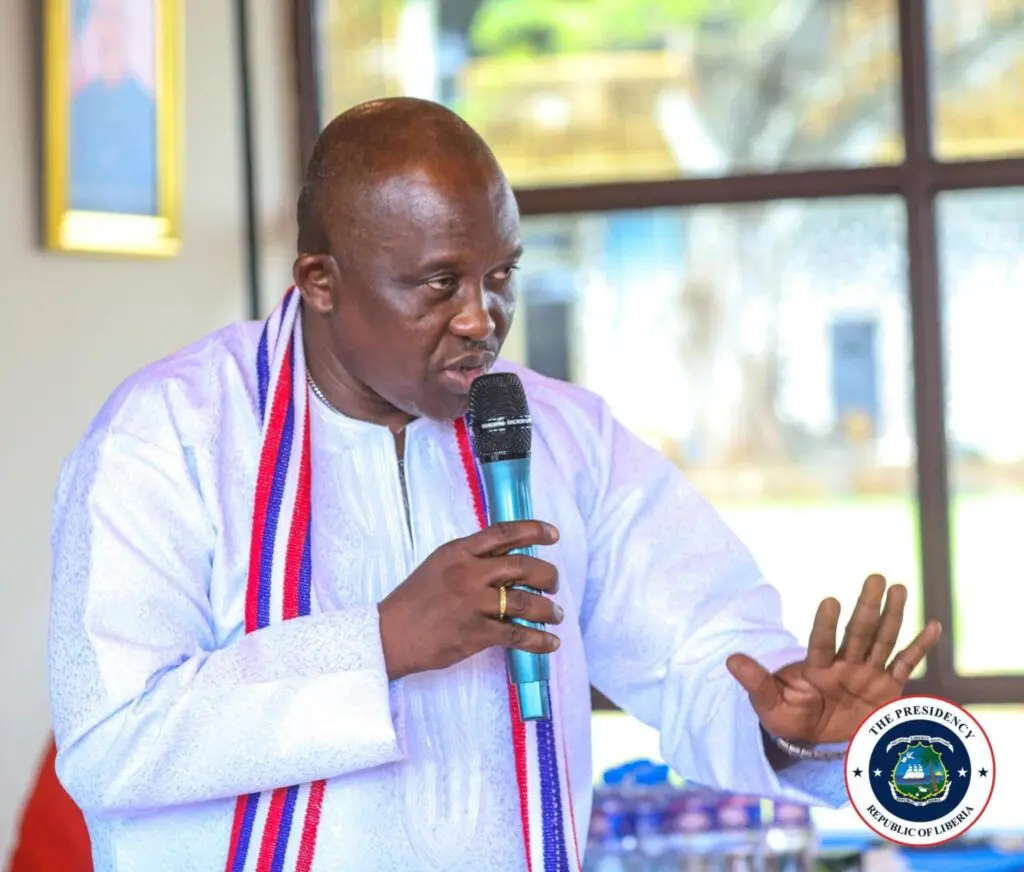
MONROVIA — The office President Joseph Nyuma Boakai created to build Liberia’s war crimes court says war victims, survivors and the office itself were excluded from the Nov. 6 unveiling of the country’s first civil war memorial, calling it “a shock and unacceptable” that the people the memorial is meant to honor had no place at the ceremony.
In a statement Tuesday, the Office for the Establishment of War and Economic Crimes Court for Liberia said it was left out of the unveiling at the Executive Mansion despite its mandate, under Executive Order No. 131, to lead efforts to establish the war crimes court and an anti-corruption court. The office said representatives of war victims, survivors and persons with disabilities were also excluded.
The statement quoted Executive Director Cllr. Jallah A. Barbu as describing the exclusion as “a shock and unacceptable.” Barbu said that while the Executive Mansion has the authority to start national programs, memorializing Liberia’s civil wars cannot be treated solely as a government project, and those whose lives the wars upended must have a meaningful voice in how the country remembers them.
“A memorial that does not adequately reflect the voices of those who experienced the conflict risks becoming a monument to the conflict rather than a meaningful national space for truth, remembrance, healing, and reconciliation,” the statement said.
The office said it welcomed the decision to build a national memorial but questioned how it was introduced. It called on the Executive Mansion to reconsider its approach and open national consultations with war victims, survivors, persons with disabilities and affected communities, particularly in the areas hardest hit by the wars. Persons with disabilities, including those disabled during the conflicts, must take part in the memorial’s design, development, implementation and management, the office said.
Liberia needs a memorial that belongs to the whole country rather than to any single institution, administration, political party or group, the statement said.
The Liberian Investigator asked Deputy Information Minister Daniel O. Sando why the office and victims’ representatives were excluded, whether Boakai was aware and whether the government would reconsider its approach. Sando referred the questions to the Ministry of Finance and Development Planning without saying why that ministry should answer for the unveiling.
“Please direct your inquiry to MFDP,” Sando said in a WhatsApp message.
At the Nov. 6 ceremony, held under the theme “Honoring the Past, Celebrating Peace, and Inspiring the Next Generation,” Boakai presented the memorial as a national symbol of remembrance, healing and reconciliation for those killed during Liberia’s 14 years of civil conflict. According to an Executive Mansion statement, he told families of the dead that their loved ones would not be forgotten and that the country owes them truth and remembrance, but cautioned that a memorial alone cannot heal a nation.
The ceremony drew representatives of the Inter-Religious Council of Liberia, the Federation of Liberian Youths, traditional chiefs and elders, and diplomatic and international partners, the Mansion said. Foreign Minister Sara Beysolow Nyanti and retired Maj. Gen. Daniel Dee Ziankahn Jr., chairman of the ECOMOG Memorial Committee, also spoke.
The administration said construction of the Civil War Memorial Wall is expected to begin in mid-2027 on Bali Island in Monrovia. The project is linked to the Liberia Peace, Reconciliation, and Memorial Museum, whose steering committee is scheduled to meet Nov. 16-18.
It remains unclear whether the exclusions were an administrative oversight or a deliberate choice.


Discussion about this post