


Published: August 10, 2026
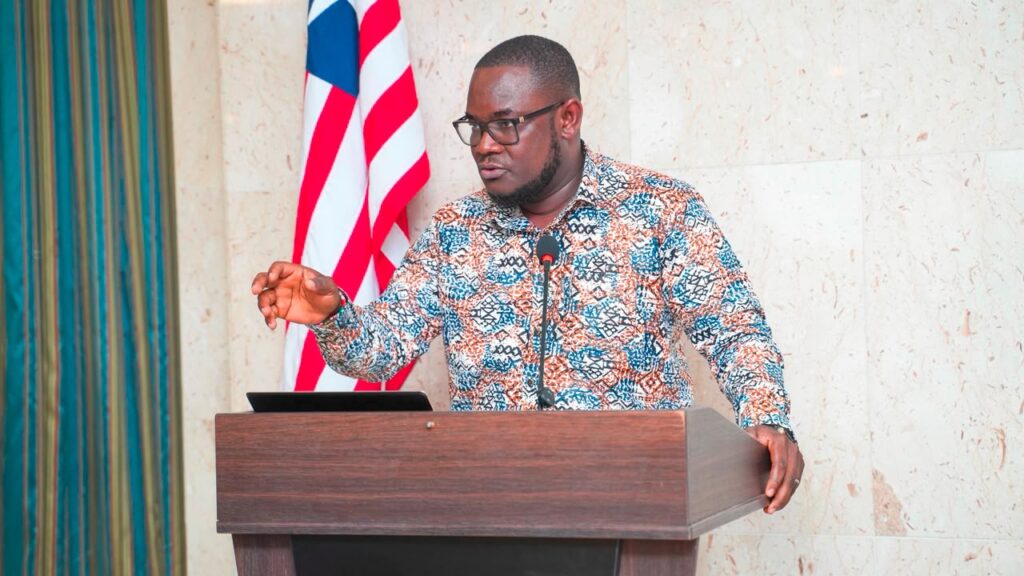
Minister Jones at the podium, sharing updates from The Presidency
The Government of Liberia has announced plans to expand the Presidential Scholarship Program beyond Monrovia, bringing more educational opportunities to young people across the country through public universities, community colleges, technical and vocational institutions, and senior high schools.
The expansion is part of an ongoing restructuring of the scholarship initiative aimed at reducing financial barriers to education and ensuring that more young Liberians, particularly those in rural counties, have access to opportunities for academic and skills development.
Speaking during the Ministry of State for Presidential Affairs weekly press briefing at the Executive Mansion, Deputy Minister for Administration Bill McGill Jones said the scholarship program is being repositioned to reach more deserving Liberian students nationwide.
“When I joined the Ministry of State for Presidential Affairs, the scholarship process was one of the areas we focused on improving. We reviewed the system to ensure that more Liberians, especially young people, can access these opportunities,” Jones said.
The Presidential Scholarship Program was launched in December 2024 as a merit-based initiative designed to expand access to higher education for Liberia’s promising youth.
According to Deputy Minister Jones, the program has so far supported more than 490 scholars across 22 colleges and universities in seven counties, including Montserrado, Bong, Nimba, Margibi, Grand Kru, Maryland, and Lofa counties.
He said nearly 100 students supported through the program are expected to graduate this year.
Bringing Opportunities Closer to Young Liberians
Deputy Minister Jones acknowledged that while the scholarship program has made progress, many beneficiaries have been concentrated in Monrovia, creating the need for greater decentralization.
“Out of the students currently benefiting from the program, a large number are in Montserrado County. This is why we are decentralizing the process to reach young people in other parts of Liberia,” he explained.
Under the new expansion plan, the scholarship program will extend to public universities, community colleges, technical and vocational education institutions, and eventually senior high schools across Liberia’s 15 counties.
New institutions expected to benefit from the expansion include Grand Bassa University, Bong County University, Sinoe County Community College, Grand Gedeh Community College, Bomi County University, and other public learning institutions.
The government also plans to increase the number of beneficiaries in counties already participating, including Lofa, Nimba, Grand Kru, Maryland, and Margibi.
Jones said the expansion reflects the government’s commitment to ensuring that education opportunities are not limited to young people in urban communities.
“We believe education should not only be available to young people in urban communities. Young people in rural Liberia also deserve the opportunity to build their capacity and contribute to national development,” he said.
Merit, Financial Need, and Community Responsibility
Deputy Minister Jones explained that the scholarship program operates under three main requirements: academic excellence, financial need, and civic responsibility.
Students seeking full scholarship support must have a minimum 3.0 GPA, which qualifies them for 100 percent tuition coverage.
Students with at least a 2.5 GPA may qualify for financial assistance if they can demonstrate proven humanitarian need, receiving up to 60 percent tuition support.
Beyond academic performance, beneficiaries are required to complete 10 hours of community service each semester as part of their responsibility to give back to society.
Jones said the community service component is designed to develop socially responsible young leaders.
“The scholarship is not only about receiving support. We want beneficiaries to understand that education comes with responsibility,” he said.
He explained that community service may include public awareness activities, supporting local initiatives, working with schools, collaborating with local authorities, or addressing issues affecting communities.
“It does not mean students must only clean streets. They can organize awareness programs, support community initiatives, or work with local organizations to solve problems,” Jones added.
Preparing Graduates for Future Opportunities
The Deputy Minister said the government is also working to ensure scholarship beneficiaries are prepared beyond graduation through internship and professional development opportunities.
He said the Ministry of State for Presidential Affairs is collaborating with institutions including the Ministry of Youth and Sports, private sector partners, and other organizations to create pathways for graduates to gain practical experience.
“We do not want to support students and leave them after graduation. We want to prepare them for the next stage of their lives,” Jones said.
He noted that internship opportunities and partnerships will help graduates transition from academic life into professional careers.
Funding and Private Sector Support
Deputy Minister Jones disclosed that the Government of Liberia provides US$200,000 annually through the budget of the Ministry of State for Presidential Affairs to support the scholarship program.
The initiative is also strengthened through partnerships with private sector institutions, including Orange Liberia, which has supported the program since its establishment.
Other corporate partners supporting the scholarship initiative include the National Social Security and Welfare Corporation (NASSCORP), Liberia Maritime Authority, Liberia Telecommunications Authority, National Port Authority, and Liberia Petroleum Refining Company.
Jones said these partnerships demonstrate the importance of collective investment in education and youth empowerment.
Inter-University Debate to Promote Leadership Skills
As part of activities for 2026, the Office of the President will host an Inter-University Debate among scholarship recipients from August 13–14 at the Ellen Johnson Sirleaf Ministerial Complex.
The event, organized under the theme “Empowering Youth Intellect, Driving National Development , Scholars Arena, Where Academic Excellence is Rewarded and Intellect Inspires the Future,” will bring together nearly 500 scholarship beneficiaries.
Jones said the debate is designed to strengthen critical thinking, public speaking, and civic engagement among Liberia’s future leaders.
Winners of the competition will receive institutional and individual awards, which will be presented by President Joseph Nyuma Boakai during the Flag Day celebration on August 24, 2026.
Transparent Application Process
The Deputy Minister assured the public that the scholarship application process will remain open, transparent, and accessible to qualified Liberians.
He said applications for the next intake will be announced through the Executive Mansion website, Facebook page, educational institutions, and other communication channels.
Eligible students across the country who meet the requirements will be encouraged to apply.
Jones emphasized that the program represents a national investment in Liberia’s youth.
“This is about building the next generation of leaders. When young people are educated and empowered, they have the capacity to contribute to national development,” he said.
As Liberia continues to address challenges related to youth unemployment, limited access to education, and skills development, the government says expanding the Presidential Scholarship Program is a key step toward creating more opportunities for young Liberians across the country.






Discussion about this post