


Published: June 4, 2026
MONROVIA — Liberia’s Agriculture Ministry last Tuesday flatly rejected the European Union’s landmark deforestation regulation, calling it a “new colonial rule” that imposes foreign law on a sovereign nation and threatens to shut hundreds of thousands of smallholder farmers out of European markets.
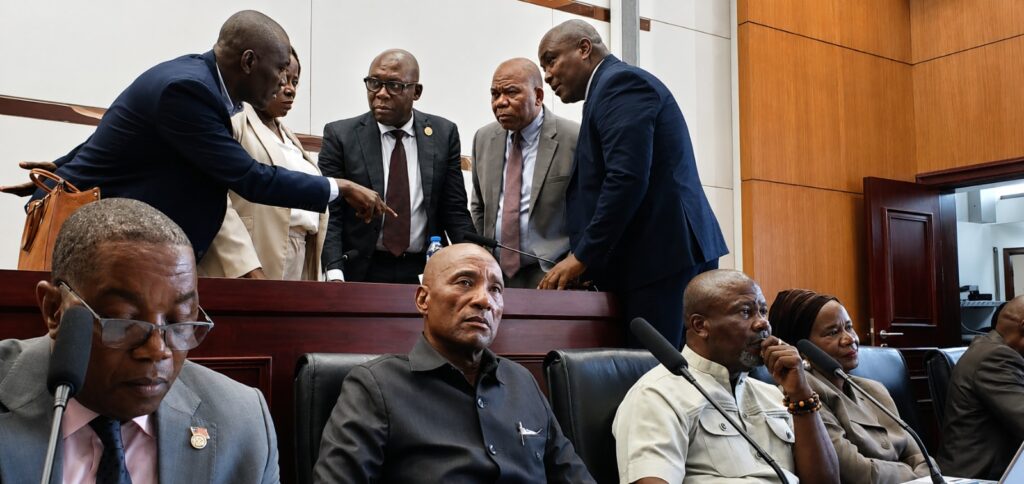
Acting Agriculture Minister David K. Akoi delivered the government’s position before a Senate Committee of the Whole hearing that drew sharp divisions among lawmakers, regulators and EU officials before ending in abrupt confusion.
“The Minister of Agriculture, Dr. J. Alexander Nuetah, and the ministry do not support the regulation as it currently stands,” Akoi told senators. “This is our position.”
The European Union Deforestation Regulation, known as EUDR, requires that commodities entering the EU market be deforestation-free, legally produced under domestic law and fully traceable through GPS coordinates tied to the farms where they originate. The compliance deadline is Dec. 31.
Acting Minister Akoi warned that the regulation places crushing technical and financial demands on Liberia’s largely rural smallholder farming population, requiring the registration of hundreds of thousands of farmers, the collection of their geo-coordinates and the construction of entirely new traceability platforms — all before a single shipment can reach European buyers.
“There is a significant risk that the EUDR will disenfranchise smallholder farmers and disrupt market linkages established under the National Agriculture Development Plan,” he said, adding that agricultural and forestry regulations affecting Liberia should be enacted through domestic legislation, not externally imposed frameworks.
He called on the EU to work through Liberia’s Ministry of Justice, Ministry of Foreign Affairs and the Legislature to localize environmental standards rather than enforce its own.
He also flagged a direct conflict between the regulation and Liberia’s agricultural growth agenda. Liberia plans to expand cocoa and coffee production under its National Agriculture Development Plan, but fears the EU will reject products grown on newly developed farmland.
“Liberia faces a significant challenge because the EU is a major buyer, yet their environmental regulations may stifle Liberia’s domestic goals for agricultural expansion,” he said.
EU Chargé d’Affaires Zoltan Szalai defended the regulation before Akoi’s presentation, describing Liberia as “a reliable friend and a guardian of the Guinean forest ecosystem” and arguing that compliance would improve the value of Liberian exports, strengthen government revenue and generate better national agricultural data.
He acknowledged, however, that the GPS traceability requirement is “the most significant short-term challenge for producers.”
Not all Liberian officials sided with the Agriculture Ministry. Liberia Agriculture Commodity Regulatory Authority Acting Director-General Dan T. Saryee broke from the minister’s position, urging compliance and warning that failure to meet the December deadline “threatens the livelihoods of the 70% of Liberian citizens who depend on agriculture.”
Saryee disclosed that the Ministry of Finance has allocated an initial $200,000 toward compliance and that a traceability platform has been developed with support from the European Forest Institute. He described that funding as grossly inadequate, saying Liberia must map roughly 350,000 farmers nationwide while simultaneously training field investigators and conducting farmer education campaigns.
The hearing collapsed into disorder after Senate Pro-Tempore Nyonblee Karnga-Lawrence returned to the chamber and resumed presiding authority. River Cess County Sen. Wellington Geevon-Smith, chairman of the Senate Agriculture Committee, and Maryland County Sen. James P. Biney abruptly moved to adjourn — moments after several senators had applauded Akoi’s presentation and approached him to shake his hand in apparent solidarity.
The sudden adjournment laid bare deepening divisions within the government and the Legislature over how Liberia should navigate the competing pressures of environmental compliance, trade access, and national sovereignty with the EU deadline fast approaching.






Discussion about this post