


Published: July 3, 2026
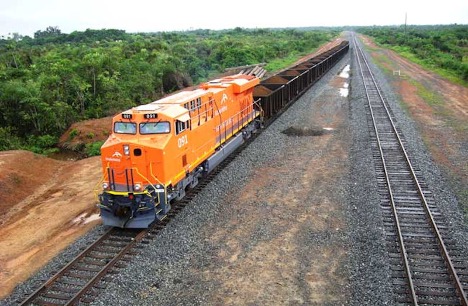
MONROVIA — The Government of Liberia is nearing the end of inter-agency consultations on a bill to establish a National Railway Authority, according to officials familiar with the process. The Ministry of Transport, the National Investment Commission, the Ministry of Justice and the Bureau of Concessions are among the institutions involved.
The move marks a significant step in the country’s infrastructure governance and, in principle, a sound one. Liberia holds substantial long-term potential in mining, trade, logistics and regional transport connectivity. A modern legal and regulatory framework to govern railway infrastructure, protect national interests, ensure safety and regulate access is overdue.
But a second question now demands equal scrutiny: should Liberia also hire an independent operator to run its railway system.
Based on the country’s current economic and operational realities, the answer is no. Liberia needs a strong regulator. It does not yet need an independent rail operator.
The Current Reality
Liberia operates two railway corridors today. The Yekepa to Buchanan line is run and maintained by ArcelorMittal Liberia as part of its iron ore operations in Nimba County. The Bong Mines to Monrovia line is run and maintained by China Union for its own mining activities.
Neither is a passenger system. Neither functions as a national cargo corridor in the traditional sense. Both are industrial railways built to move ore, and both are financed, maintained and operated by the concessionaires that use them, at no operational cost to the government.
That fact matters. Liberia has no national passenger rail system, no commercial freight rail system and no diversified multi-user railway network. Given that, the government should weigh carefully why it would commit scarce public resources to pay an outside operator to manage rail systems that are already running, and already privately maintained.
Regulation Is Not Operation
The distinction lawmakers must keep clear is that a National Railway Authority and an independent rail operator are two different policy instruments.
An authority would regulate the sector: setting safety and operational standards, overseeing infrastructure governance, managing access frameworks and ensuring compliance with national law. That is a legitimate government function, and one Liberia currently lacks.
An independent operator would instead run day to day operations: dispatch, scheduling, infrastructure management, maintenance oversight and daily coordination. That function carries a real cost, and the question is whether current rail activity in Liberia justifies it. At present, it does not.
The Financial Case For Restraint
Liberia’s development needs remain vast. Education, health care, roads, electricity, water and sanitation, job creation and youth empowerment all compete for the same limited resources. Every new institution and every major operational commitment should be justified by clear economic value.
An independent rail operator would likely require compensation through some combination of direct government payment, rail access fees, infrastructure management contracts or revenue sharing arrangements. Revenue that could otherwise fund national priorities would instead flow to an outside operator. That is a burden Liberia can ill afford at this stage, and prudence argues for restraint.
What The Region Shows
Liberia is not the first resource-rich African nation to face this question, and the regional pattern is instructive.
In Guinea, mining rail systems tied to the Simandou and bauxite corridors are structured around concession-based operations, where investors finance and manage infrastructure linked to extraction and export. The Trans-Guinean Railway associated with Simandou, an undertaking estimated near $20 billion and covering more than 600 kilometers of rail and port infrastructure, is anchored around the mining and logistics consortium financing it, not a standalone publicly funded operator.
In Sierra Leone, mining rail corridors used by iron ore producers have historically been run by the concessionaires themselves to move ore from production sites to port. In Mauritania, the iron ore railway linking Zouerat to Nouadhibou is managed by the national mining company as part of its own integrated logistics.
The pattern across the region is consistent. Where rail exists chiefly to serve mining operations, the mining companies or concession holders run it, not government-funded outside operators. Liberia should take note.
The Multi-User Argument
Supporters of an independent operator point to Liberia’s potential shift toward a multi-user rail system, and the argument has merit on its face. If more mining companies begin using the Yekepa to Buchanan corridor, traffic complexity will rise, and shared access rules, scheduling coordination, maintenance standards and tariff regulation will matter more than they do today.
That is precisely the case for a strong National Railway Authority. But regulation and operation remain separate questions even in a multi-user environment, and Liberia should avoid building costly structures ahead of traffic volumes and operational demands that do not yet exist.
The Ivanhoe Atlantic Factor
Much of the urgency behind rail governance appears tied to the anticipated entry of Ivanhoe Atlantic, formerly known as HPX, as an additional user of the Yekepa to Buchanan corridor. The company has secured arrangements intended to move iron ore from Guinea’s Nimba region through Liberia to the Port of Buchanan, and that prospect has fueled calls for new governance structures.
Implementation, however, remains uncertain. Guinea has invested heavily in expanding its own strategic rail infrastructure to support exports through domestic routes, creating strong incentives for Guinea to maximize use of its own rail and port systems. That investment introduces real uncertainty about the long-term scale and viability of cross-border exports routed through Liberia. Building costly operational structures around assumptions that have not yet materialized would be premature.
A Smarter Path Forward
Liberia should proceed with establishing a National Railway Authority. That step is correct. But the authority should focus initially on regulation, policy development, licensing, compliance, safety enforcement, dispute resolution and future rail planning, while operations remain with existing concessionaires and users unless market conditions change significantly.
Liberia can revisit the question of an independent operator once multiple major users are actively operating, rail traffic reaches substantial volume, passenger or commercial cargo rail becomes viable, or national rail expansion creates operational complexity beyond what current arrangements can handle. That is when an independent operator may become necessary. That time is not now.
The Bottom Line
The debate is not over whether Liberia should modernize rail governance. It should. The real question is whether Liberia should burden itself with costly operational structures before the sector has matured enough to need them.
Liberia must avoid building institutions driven by sentiment, politics or theoretical future possibilities. Decisions of this magnitude should rest on economics, practicality and national interest. A National Railway Authority makes strategic sense. An independent rail operator, for now, does not.
Liberia’s railway future should be built not on bureaucracy for its own sake, but on smart, practical and economically sound decisions that deliver maximum value to the Liberian people.






Discussion about this post