


Published: October 9, 2026
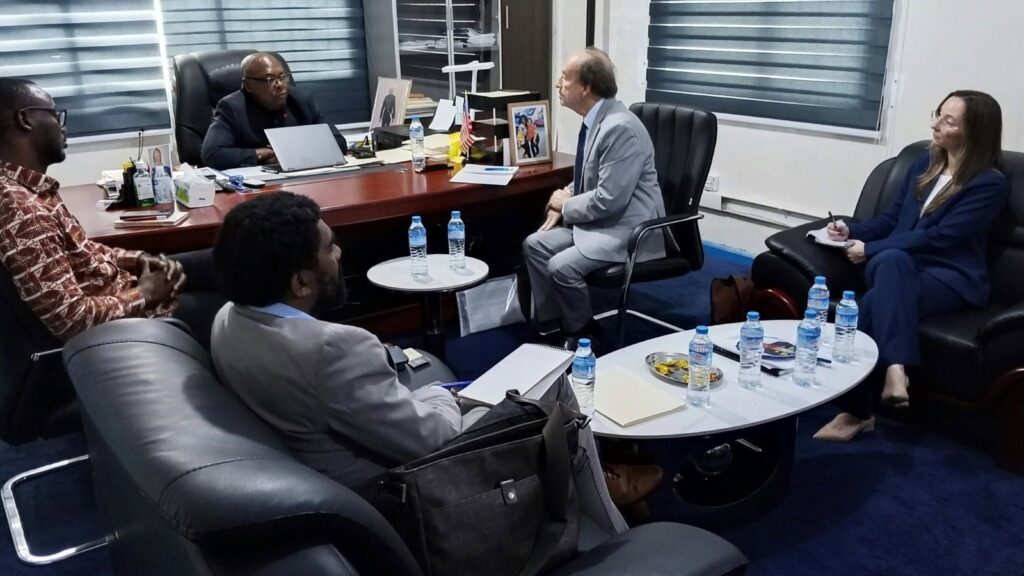
MONROVIA — Liberia has intensified efforts to overhaul its mining law as part of critical reforms tied to negotiations for a second Millennium Challenge Corporation (MCC) Compact, with the Law Reform Commission (LRC) leading a review of the country’s legal framework governing the mining sector.
By Alphanso G. Kalama
The reform initiative, a key requirement for advancing the compact development process, was the focus of a high-level inception meeting held Wednesday, Oct. 7, 2026, at the LRC headquarters in Monrovia.
The meeting brought together LRC Chairperson and Chief Executive Officer Cllr. Bornor M. Varmah, MCC Country Director for Liberia; Kevin George, Liberia Compact Development Team (LCDT) National Coordinator; Alieu F. Nyei, MCC Program Officer; and Molly Johnson, among other stakeholders.
The discussions focused on establishing a clear framework to review the existing mining law, identify legislative gaps, and ensure the proposed reforms align with the requirements and timelines of Liberia’s second MCC Compact.
According to Nyei, the engagement was necessary to harmonize expectations among participating institutions, clarify the scope and methodology of the review and establish a coordinated approach to meeting critical deadlines.
He emphasized that reforming the mining law remains an important component of the compact development process, making timely collaboration among government institutions and development partners essential.
The LCDT serves as the government’s technical team responsible for coordinating consultations, conducting economic analysis, and developing proposals for Liberia’s second MCC Compact.
Welcoming the delegation, Varmah reaffirmed the commission’s commitment to leading the legal reform process, assuring stakeholders of its technical capacity and readiness to undertake a comprehensive review of the mining legislation.
He traced the commission’s establishment to reform commitments under the Accra Comprehensive Peace Agreement, explaining that the institution was initially established by executive order in 2009 before receiving statutory authority in 2011.
Varmah outlined the commission’s responsibilities, including reviewing existing laws, identifying legal and institutional gaps, drafting legislation and providing legal advice to support national governance reforms.
Providing an update on preparations for the mining law review, the LRC chairman said the commission had already held two consultative engagements with the Legislature to discuss the proposed methodology.
He said the commission had also undertaken preliminary legal analysis and desk reviews, and was collaborating with the Ministry of Finance and Development Planning and the LCDT to advance the reform process.
To strengthen the technical review, Varmah said the commission submitted the curricula vitae of two experienced lawyers to the MCC consultant, with one expected to work alongside the consultant during the exercise.
He further disclosed that the commission had submitted a detailed concept note and proposed budget outlining the activities and resources required to carry out the review.
The LRC chairman also highlighted lawmakers’ concerns about local content provisions in the mining sector, underscoring the need to ensure the proposed legislation adequately addresses Liberian participation and benefits from mining activities.
According to Varmah, those concerns reinforce the need for extensive consultations involving lawmakers, government institutions, and other relevant stakeholders before finalizing the proposed reforms.
He said the commission is prepared to coordinate an inclusive process to produce legislation that addresses existing weaknesses while supporting responsible development of Liberia’s mineral resources.
The proposed review comes as Liberia seeks to strengthen its regulatory environment and advance negotiations for a second MCC Compact, following its previous partnership with the United States development agency.
The first MCC Compact, valued at about US$257 million, supported investments in Liberia’s electricity sector and road maintenance.
The latest initiative lists mining sector governance among the reform priorities as the country works to secure another compact.
Although the inception meeting represents progress in coordinating the review, the proposed amendments must still undergo the necessary legal and legislative processes before becoming law.
The LRC and its partners are expected to continue consultations and technical assessments as they work toward developing a revised mining law that responds to Liberia’s development priorities and supports the ongoing MCC Compact process.







Discussion about this post