


Published: December 10, 2025
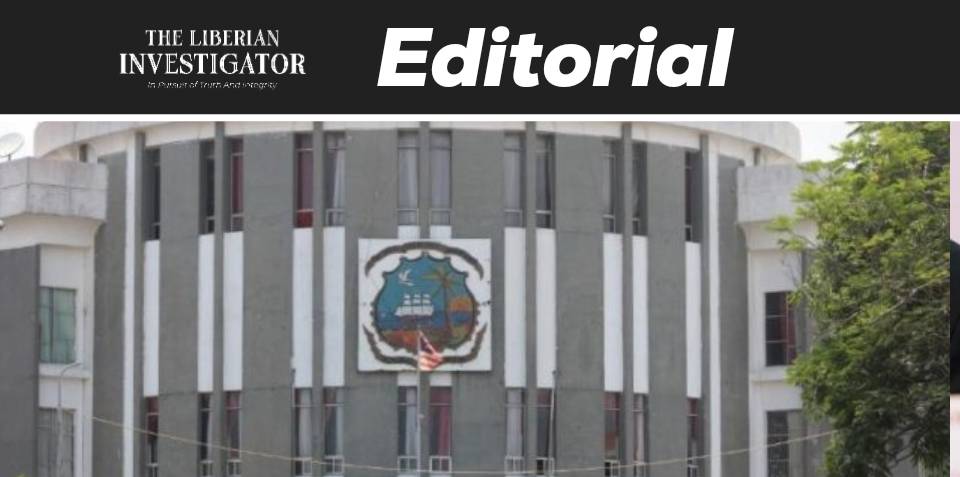
Liberia’s House of Representatives has chosen a curious moment to enlarge itself. With the stroke of a vote, lawmakers approved 14 new seats, growing the chamber from 73 to 87 members, under the banner of constitutional duty and demographic reality. They point to Article 80: the mandate to reapportion following a census, the requirement to correct representational imbalances, the obligation to ensure that no district is four times larger or smaller than another.
On paper, their argument is airtight. In practice, it exposes the gulf between constitutional compliance and moral responsibility.
The Constitution required the Legislature to act within a year of the publication of the 2022 Census. That deadline passed quietly. For years, lawmakers showed no urgency in fixing glaring disparities in district populations, some rural districts representing fewer than 20,000 citizens, while parts of Montserrado carry more than 100,000.
Only now, during economic strain and growing public frustration, has the House rediscovered the urgency of constitutional fidelity. It is a strange awakening, arriving precisely when citizens can least afford the consequences.
No serious policymaker disputes that Liberia’s electoral map must reflect its population. Demography should shape democracy. But the central question remains: must this expansion occur at a time when the nation is struggling to fund schools, clinics, access to electricity, agricultural programs, and anti-corruption institutions?
Adding 14 lawmakers is not a symbolic gesture. It is an expensive and permanent expansion of the wage bill. Each new representative requires office staff, security, a vehicle, fuel, a district office, logistical support, and the suite of benefits attached to the Legislature. Conservative estimates place the annual cost at roughly US$4–6 million, even before accounting for the initial setup expenses.
In a country where hospitals run out of basic supplies and young Liberians scramble for economic opportunity, such spending is more than a budgetary decision; it is a moral one.
Liberians did not need experts to interpret Tuesday’s vote. Their reaction, swift, loud, and overwhelmingly negative, laid bare the widening disconnect between elected officials and the people they serve.
Across social media and radio call-in shows, the sentiment was unmistakable. Citizens questioned how a struggling nation could justify adding new lawmakers when it cannot adequately fund essential services. They pointed to the poor performance of the existing Legislature and wondered why expanding its size should be seen as progress. The public anger is not rooted in cynicism; it is grounded in lived experience.
The House insists its hands are tied, that the Constitution compelled this move and demographic fairness demanded it. But constitutional obedience is not supposed to be selective. If lawmakers displayed the same urgency on transparency, accountability, responsible budgeting, or ethical conduct, Liberia’s governance landscape would look very different today.
Invoking the Constitution only when it expands political space is not leadership; it is convenience.
The Senate now inherits a deeply polarizing proposal. Its members must weigh constitutional requirements against fiscal realities and political stability. They must consider whether the National Elections Commission can responsibly redraw the national electoral map before 2029. They must ask whether expanding representation at this moment enhances democracy or merely enlarges government.
Handled without care, this process could deepen mistrust, trigger legal disputes, and inflame pre-election tensions. Handled with courage, it could become a moment of national restraint and clarity.
Liberia needs reform, but not this one—not now. What the country needs is a leaner, more accountable government; stronger anti-corruption institutions; empowered youth; modernized agriculture; and improved public services. None of these priorities are advanced by adding more lawmakers.
As civil society advocate Anderson Miamen noted, Liberia does not need extra legislative seats. His point captures the wider truth: the country needs a Legislature that performs better, not one that grows bigger.
This is a moment that demands discipline. It calls for leaders who can distinguish constitutional obligation from constitutional opportunism, and who understand that statecraft requires restraint when resources are scarce. Reapportionment is necessary; expansion is not.
Liberia must choose reforms that lighten the burden on citizens, not add to it. The Senate now holds the responsibility to ensure that this decision reflects not only the letter of the Constitution, but also the deeper conscience of the nation.
Liberians deserve fair representation. What they do not deserve is unnecessary weight placed upon an already strained national budget.





Discussion about this post