


Published: June 19, 2026
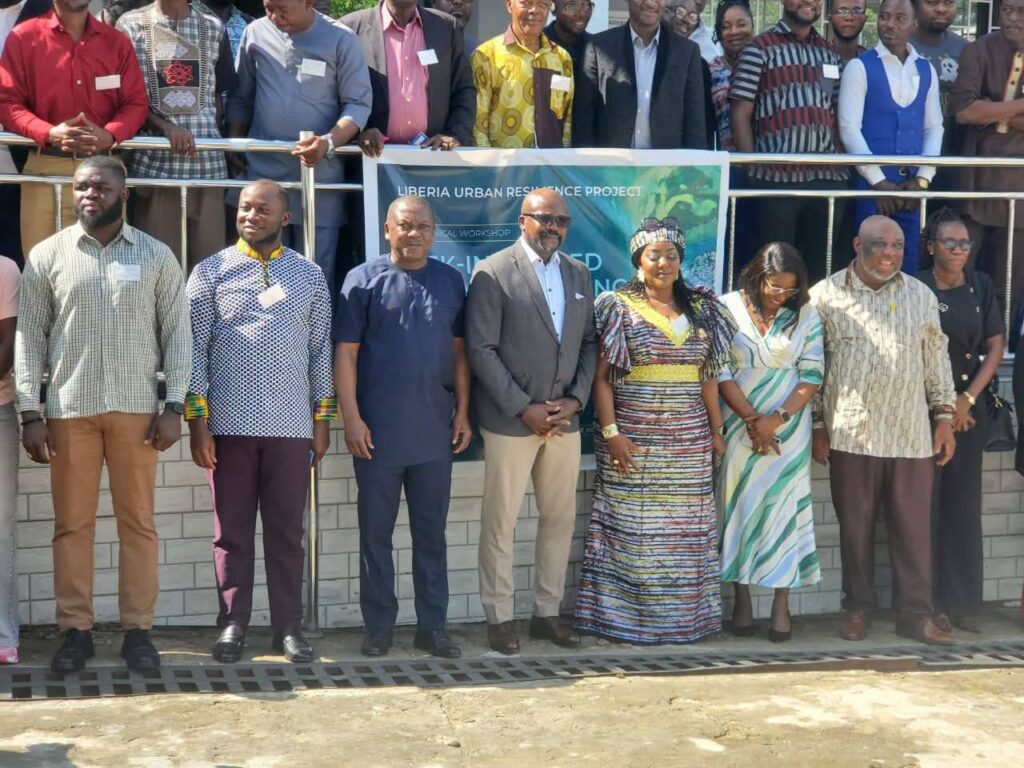
MONROVIA – Liberia has launched a three-day training to embed disaster risk into how its fast-growing cities are planned, as officials confront unregulated settlements, vanishing wetlands and an urban population projected to more than double by 2050.
The Ministry of Public Works, in partnership with the World Bank through the Liberia Urban Resilience Project, opened the technical training on Risk-Informed Urban Planning to strengthen the country’s capacity to manage rapid urban growth, reduce disaster risks and promote sustainable development. The program brings together representatives from key government ministries, agencies and municipal authorities to develop practical tools for integrated spatial planning, land-use management, zoning and investment prioritization.
According to a statement issued June 17, the initiative seeks to improve urban livability, resilience, sustainability and economic productivity by building risk considerations into planning and development decisions. Participants include officials responsible for urban development, public works, housing, land administration, disaster risk management, environmental protection, climate services, finance and local governance. Municipal teams from Monrovia, Paynesville, Buchanan, Gbarnga and Ganta are also taking part alongside technical partners supporting urban planning in those cities.
Launching the training, Public Works Minister Roland Layfette Giddings said Liberia has for too long taken a reactive approach to development, resulting in unregulated settlements, wetlands converted into communities, and infrastructure projects lacking adequate drainage.
“Sometimes we build first and ask questions later, only to realize that we have constructed a school in a swamp or a clinic at the end of an impassable road,” Giddings said.
He said Liberia’s new Zoning Law provides a framework for orderly growth, public safety and resilience by creating urban resilience zones and requiring structures in flood-prone areas to be elevated above projected flood levels. The training, he added, is intended to build a shared understanding among national and local stakeholders on how risk-informed planning can create more resilient, inclusive and economically viable cities.
Over the three days, participants will learn to assess existing planning systems, identify major risks and translate risk analyses into practical, place-based planning decisions. “This includes applying the Restrict–Condition–Promote framework to guide zoning, infrastructure siting, and development control,” Giddings explained.
He described the initiative as a major step toward modernizing urban planning and development control in Liberia. “The initiative represents a milestone in transforming urban planning and development control in Liberia. It shifts the focus from general diagnostics to place-based decisions that reduce current and future risks and support safer, more inclusive, and resilient urban growth,” he added.
The World Bank says Liberia’s urban population grew from 1.9 million in 2010 to 2.6 million in 2020 and could reach 6.7 million by 2050, underscoring the need for comprehensive urban planning reforms.
Speaking at the opening session, Madhu Raghunath, Practice Manager for Urban, Resilience and Land for West and Central Africa at the World Bank, stressed the importance of integrating risk-informed planning into urban development. She said effective urban resilience requires strong institutions, coordinated action across sectors, clear regulatory frameworks and practical implementation strategies.
The workshop, held at the Ministry of Local Government from June 17 to 19, is part of LURP’s broader urban capacity-building program aimed at promoting safer, more inclusive and resilient urban growth across Liberia.





Discussion about this post