


Published: August 14, 2026
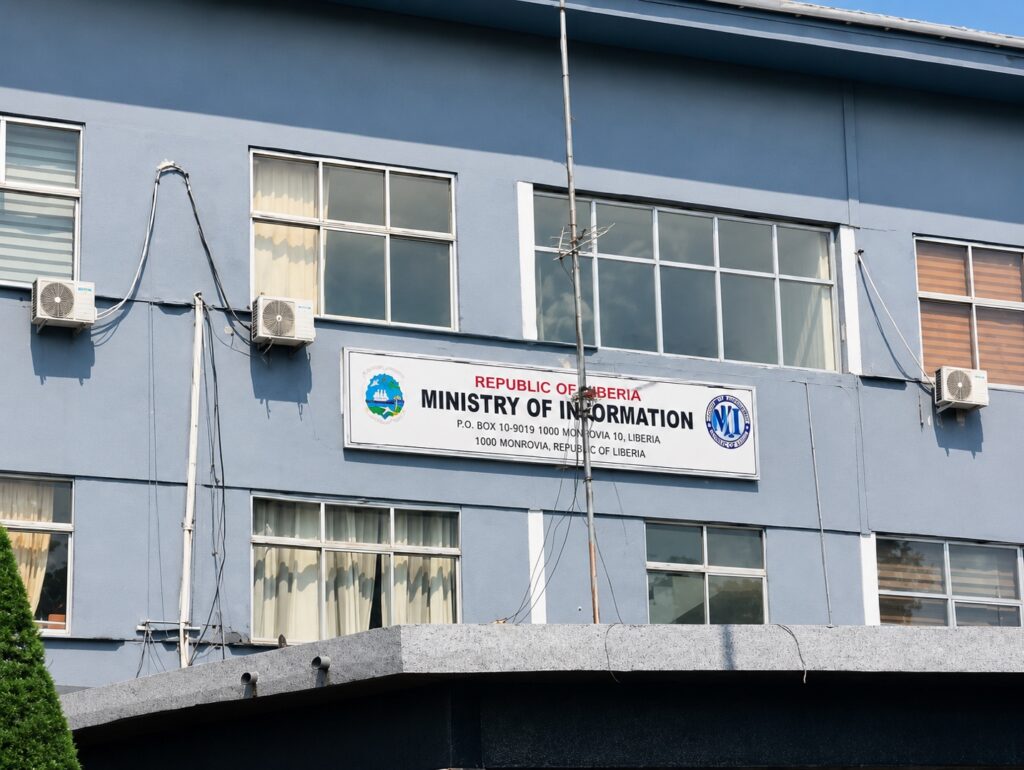
MONROVIA – Liberians who criticize the Boakai government in public are often answered not with information but with an attack, delivered from a platform the taxpayer pays for, by officials whose job is to explain government policy.
The latest target is Gbarpolu County Sen. Amara Konneh, and the latest weapon was his religion. On a government-run talk show earlier this week, Deputy Information Minister Daniel Sando told Konneh, a practicing Muslim, to return to the mosque and seek forgiveness for what Sando called his past political sins. He accused Konneh of having connived to rig the 2017 election that brought George Weah to power, and questioned whether he had standing to criticize anyone. Konneh had asked whether investigations into senior security and law enforcement officials over Liberia’s cocaine seizures would be allowed to run independently. Sando did not address that.
Konneh replied that he did not need “an unskilled sycophant” to tell him to pray.
The exchange was ugly, and it was not unusual. It is the way the Ministry of Information has handled critics since Joseph Boakai took office, and the record of who has been targeted is long enough that a sitting senator read it into the Senate record nearly a year ago.
The roster
Bomi County Sen. Edwin Melvin Snowe named them. Former President Weah. Former Vice President Jewel Howard-Taylor. Alternative National Congress leader Alexander Cummings. Sinoe County Sen. Crayton Duncan. Bishop Kortu Brown, the former president of the Liberia Council of Churches. And Konneh, who had been verbally attacked by the ministry once before, over an unrelated legislative matter, at a time when his sister was ill abroad.
That list crosses every line the ministry might have been expected to respect. It includes a former head of state, a former vice president, an opposition party leader, two sitting senators of the republic and a senior cleric. Snowe told the Senate the ministry was diluting its own function, that officials were “insulting people, national leaders,” and that the institution was turning into what he called a gangsterism situation.
Snowe drew the distinction that would have settled the matter. Information Minister Jerolinmek Piah and his deputies have their own night-time radio platforms, he said, and what they say there is politics. Using the ministry’s platform to do the same thing is something else, because that platform belongs to the state. He asked the president to intervene. “The President must take action,” Snowe said.
The president has not, publicly, and the ministry’s conduct has not changed.
The case that should have ended it
The most serious instance did not involve an insult on a talk show. It involved a formal ministry release.
In May 2025, MICAT publicly accused Snowe of threatening to use his connections at ECOWAS to destabilize the Boakai administration, citing remarks he was said to have made on a radio program. The release was circulated to international partners, including the ECOWAS Parliament, where Snowe represents Liberia. The accusation, in a country that fought two civil wars, was of political destabilization and insurrection.
The Senate took it up and directed Piah to issue a correction, on the ground that it damaged the reputation of a sitting member and that any senator could be next. Months later, Snowe said no correction had come. He announced he would sue the government.
Then Speaker J. Fonati Koffa said at the time that the government had paraphrased Snowe’s remarks and then criminalized the paraphrase, and warned of a “chilling effect on the opposition.” That is the substance of the complaint against the ministry. Not that officials are rude, but that the machinery of state communication is being used to characterize critics as threats to the state, in documents that travel abroad and cannot be recalled.
Two hats, one microphone
The mechanism that makes this possible is not hidden. It is published on the ministry’s own website.
Sando is deputy minister for press and public affairs and deputy spokesperson of the Liberian government. He is also, by MOI’s own account, the official spokesperson and constitutional vice chair for press and public affairs of the Liberty Party. Before joining the ministry, he was administrative assistant to Senate Pro Tempore Nyonblee Karnga-Lawrence, herself a Liberty Party figure.
Liberty Party is not the ruling party. It is a partner inside the governing arrangement. So the man who speaks for the Liberian government on press matters is simultaneously a party’s constitutional officer for press matters, and the two roles use the same voice.
That is why Snowe’s distinction between the ministry’s platform and a politician’s own platform has proved unenforceable. There is no practical boundary between them when the same official occupies both, and the government has never been asked to say where one ends and the other begins.
What the ministry says it is for
MOI’s own description of its work is unobjectionable. Regular press briefings. Official statements. The Kapa Kulono town hall series, which takes government officials to communities to answer questions. Countering misinformation and negative propaganda.
Nothing in that mandate requires the ministry to litigate a senator’s standing with God, or to characterize a legislator as a destabilizing force in a document sent to a regional parliament.
No consequence, in either direction
The accountability record is empty.
The Senate’s directive that Piah correct the Snowe release produced no correction. Snowe’s threatened lawsuit has produced no known filing. Konneh has filed nothing over the religious remarks or over Sando’s unevidenced claim that he helped rig an election. No official has been disciplined. No apology has been issued.
The only rebuke from inside the governing side came from Montserrado County Sen. Abraham Darius Dillon, a Boakai ally, who called Sando’s remarks inappropriate and out of order and told him to apologize. He is one of the senators, also from the Liberty Party. Civil society has not spoken. Liberia’s international partners, who fund much of the country’s governance reform, have said nothing about this specific pattern.





Discussion about this post