


Published: October 12, 2026
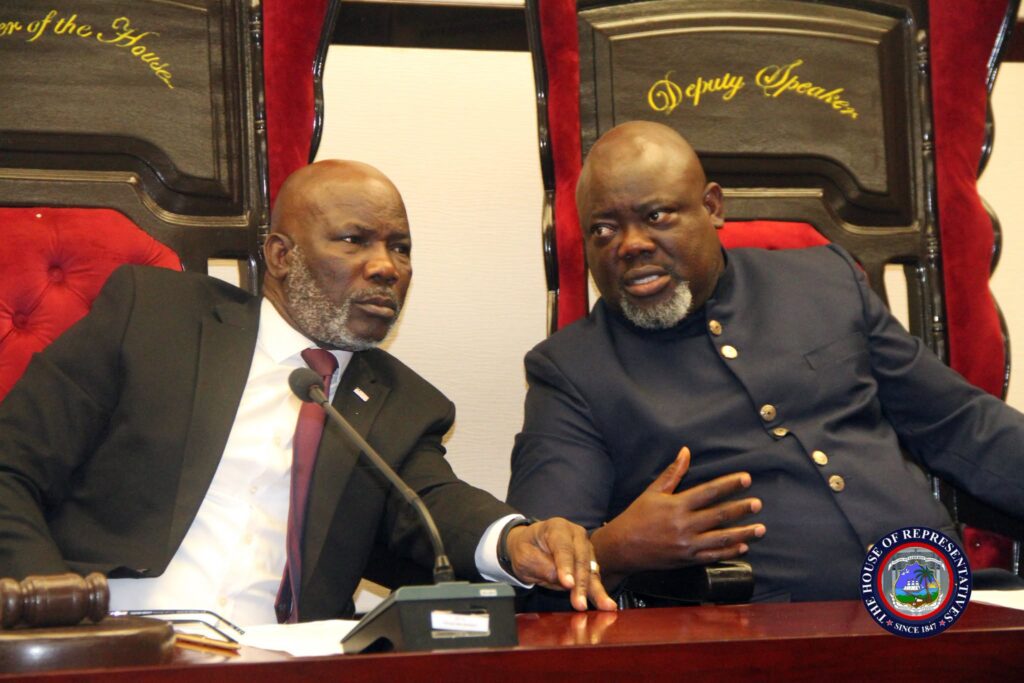
MONROVIA – House Speaker Richard Nagbe Koon and Deputy Speaker Thomas P. Fallah face their first real test Tuesday. That is when the House holds its first regular sitting since 40 lawmakers, more than half the chamber, signed on to a rival meeting instead of attending Friday’s reopening. If those lawmakers stay away again, the House will not have a quorum, and the leadership will have to explain why it cannot open the chamber it runs.
By Lennart Dodoo | News Analysis
The Liberian Investigator obtained the attendance sheet from the separate meeting, held in Paynesville. Rep. Jeremiah G. Sokan Sr., chairman of the Reformists Movement, headed it. At the Capitol, the reopening ceremony drew poor turnout, The Liberian Investigator observed.
Friday did not settle the question of control. The Liberian Investigator noted that the reopening was a ceremonial event, not a plenary session, and that attendance at a ceremony “must be distinguished from the constitutional quorum.” Tuesday is different.
Under Article 33 of the Constitution, a simple majority of the House forms a quorum. In a 73-member chamber, that is 37 members. If the 40 on the sheet hold together, the leadership cannot open a regular sitting. Removing a Speaker or Deputy Speaker for cause is a much higher bar: a resolution backed by two-thirds of the House, or 49 members. By their own count, the Reformists are nine short.
So the immediate danger to Koon and Fallah is paralysis rather than removal. It comes at the start of the session that must take up the 2027 budget.
A House that was already staying home
A boycott would build on a problem that predates this dispute. In the months before the July break, members repeatedly failed to show up.
On a Tuesday in May, a plenary sitting collapsed for lack of a quorum. Some lawmakers were at a graduation ceremony at the Gabriel L. Dennis Foreign Service Institute, while insiders described caucus consultations and political realignments. On June 2, only 15 lawmakers appeared, and the sitting was called off again.
Koon responded that day with a warning. “The leadership will take decisive measures against members who are always absent,” he said. He said those who repeatedly missed sittings without a valid reason could face salary deductions and other administrative sanctions. “We cannot continue to tolerate a situation where legislative business is repeatedly interrupted,” he said.
The lawmakers who stayed away Friday say the money is the problem, and that they haven’t been paid what they are owed.
Two leaders, one target
The Reformists are aiming at both men. The 12-count resolution they are reportedly circulating seeks the resignations of Koon, Fallah and the chair of the House Ways, Means, Finance and Budget Committee.
Not everyone on the sheet shares that aim. Rep. Sumo Mulbah, who attended the meeting, posted an open letter to his District 3 constituents on Facebook hours afterward, disowning any removal effort. “To be absolutely clear about today’s event, there is no major cause for removing the Speaker. Therefore, I did not join a majority to remove him,” he wrote. “I chose to participate in the majority quorum solely to ensure that the Speaker could answer questions and clarify legislative issues directly to us.”
If others on the list share his view, the Reformists are further from 49 than their own count suggests, though no closer to letting the leadership open a sitting.
The two leaders are not as tightly bound as the resolution suggests. Fallah, who represents Lofa County’s District 1, has his own political base. The Coalition for Democratic Change (CDC) expelled him in December 2024 after he joined the Majority Bloc that installed Koon. He now leads the National Independent Movement for Boakai (NIMBO).
He has also clashed publicly with the Speaker. In June, he said in a broadcast, “Koon is my man, but he has made a lot of blunders.” The House voted to refer his remarks to the leadership for investigation, and Fallah retracted them and apologized the same day.
Last October, social media posts claimed Fallah was about to be removed as deputy speaker. The House Press Bureau dismissed them as “false and misleading.”
Yet the Reformists’ complaint treats the two as a single leadership, and on the question of money they are. In the 2025 budget, Koon’s office received US$1.5 million and Fallah’s office US$1.28 million. Those are separate budget lines from the general House allocation that lawmakers say has failed to reach them.
Money at the root
Several lawmakers say they have not received theirs. Rep. Sam Jallah is listed on the sheet but said he was in his district Friday. He told Punch FM/TV he had received no benefits himself. He also said he could not accuse the leadership of mismanaging funds without evidence.
Mulbah described the grievance in more concrete terms. He wrote of “unexplained figures discovered within the national budget” that he said “directly impact and compromise the House of Representatives itself,” and said the lawmakers wanted “transparent, immediate financial clarity from our leadership.” The shortfall, he said, reaches down to the basics. “No representative should have to use personal money to run a public office or buy basic necessities such as toiletries and stationery,” he wrote.
The resolution alleges altered budget allocations, mismanaged constituency funds and more than US$5 million in legislative funds and benefits that have not been properly accounted for.
Inside the chamber Friday, a member of the budget committee conceded the point. “It is a legitimate concern for them,” said Rep. Dorwohn Twain Gleekia, the committee’s co-chair. “We ought to address it because it’s about their benefits.” He said the government releases funds quarterly and that a delay “doesn’t mean that it’s not forthcoming.”
That concession came from the committee whose chair the Reformists reportedly want removed.
Tuesday’s first sitting will show whether the Speaker and his deputy can still muster a quorum. The Reformists are nine votes short of removing them, but they have enough to stall the House, using the same boycott that brought both men to power.
The coalition turns on itself
Many of the names on the sheet belong to the coalition that brought Koon and Fallah to power, not to its old opponents.
In June 2025, the House voted to allow nine lawmakers to appear before the Liberia Anti-Corruption Commission. The commission was looking into allegations that money changed hands to win support for the October 2024 move against then-Speaker J. Fonati Koffa, The Liberian Investigator reported at the time. Marvin Cole, Frank Saah Foko, Alex Noah and Edward P. Flomo were among the nine, and all four appear on Friday’s sheet. None has been charged, and the allegations remain unproven.
Last December’s revolt followed the same pattern. Most of the 22 lawmakers who threatened to boycott President Joseph Nyuma Boakai’s State of the Nation Address and remove the leadership came from the Majority Bloc loyal to Koon. Koon met them for more than four hours on Dec. 30. Boakai delivered the address in January, and both men kept their posts.
December’s group numbered about 22. Friday’s sheet lists nearly twice that.
A playbook the leadership wrote
The very men now facing it have used the tactic before. In October 2024, the Majority Bloc fell short of the two-thirds needed to remove Koffa and met separately for nearly two months, first at the RLJ Hotel in Paynesville and later at Monrovia City Hall. In November 2024, the bloc declared Koon Speaker and Fallah his deputy. For about six months, the House had rival leaderships.
The Supreme Court deemed the bloc’s actions ultra vires and, on April 23, 2025, reaffirmed Koffa as the legitimate Speaker. However, Koffa resigned on May 12, 2025, citing the government’s insistence that it work with the Majority Bloc. The House elected Koon the following day.
The language of that fight has returned. Mulbah, who wrote that he “stood firmly with Honorable Koffa” for at least eight months before switching sides, defended Friday’s gathering in the same terms the Majority Bloc used in 2024. He cited Article 33 and wrote that “a majority quorum has the legal authority to keep the country moving forward.” Under Article 38, he added, “every leader in the House is answerable to its members.” The Supreme Court’s 2025 position runs counter to that reading: a majority meeting outside the chamber cannot conduct the House’s business while its presiding officers remain in office.
The executive as arbiter, again
Before Friday, the lawmakers met Vice President Jeremiah Kpan Koung, according to sources familiar with the meeting. Reports say they arrived at his residence in a convoy of about 64 vehicles. TLI’s sources said Vice President Koung promised to take their concerns to President Boakai once the president returned from the U.N. General Assembly, and gave the two sides seven days to resolve their differences. That window closed Saturday.
In December 2024, Koffa publicly accused Koung of masterminding the campaign to install Koon. Koffa said the vice president had asked him for “a white ballot for Richard Koon.” Koung’s account of those talks differed, and Koffa’s accusation was never established.
What comes next
Koon spent part of last week in Conakry for the opening of the Guinean National Assembly’s new session. He returned Thursday, the eve of the reopening, and the lawmakers met anyway. TLI’s sources said he opened a new chat group for lawmakers that night. No one could independently verify its purpose or membership.
Tuesday’s roll call will say more than any statement. A quorum would suggest the leadership can still bring members back to the chamber. A failed sitting would mean the House’s absentee problem has become a political strategy, aimed at the two men who once used it themselves.





Discussion about this post