


Published: May 6, 2026
Peter Massaquoi, chairman of ALJA’s External Relations Committee
KAKATA, Margibi County — Two of Liberia’s leading press freedom organizations are pressing the House of Representatives to drop a proposed amendment to the country’s landmark free speech law, warning that the bill would re-criminalize expression, silence dissent and reverse democratic gains made since the KAK Act was enacted in 2019.
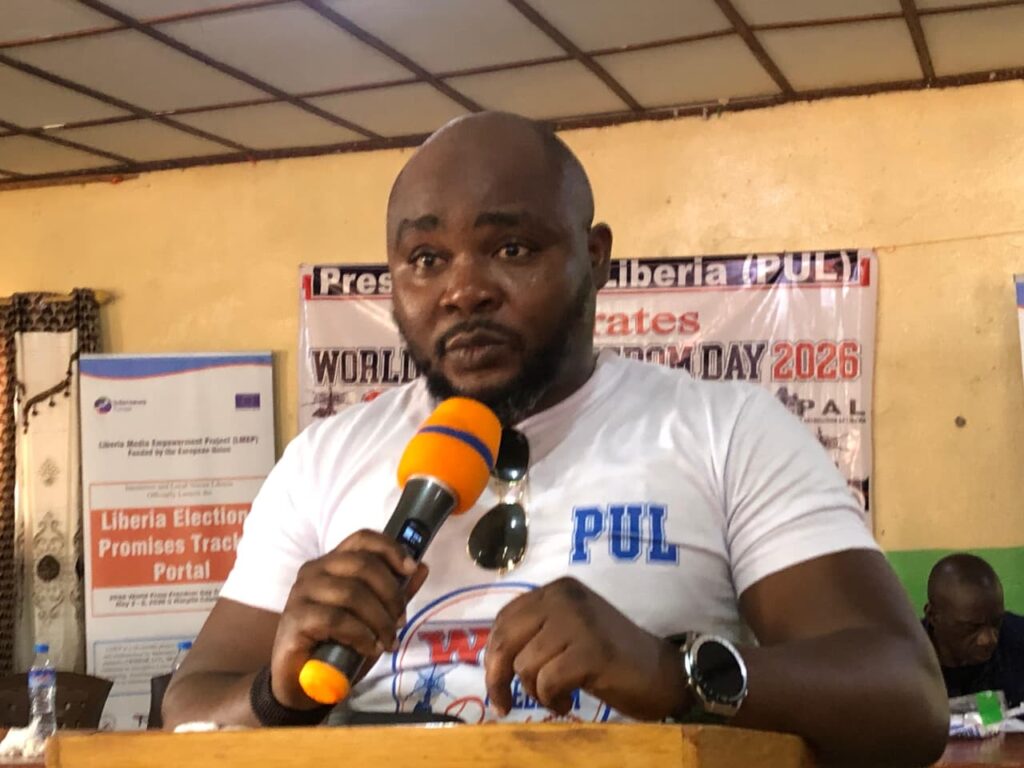
The Association of Liberian Journalists in the Americas delivered the warning during World Press Freedom Day activities in Kakata, calling the KAK Act “a cornerstone of Liberia’s democratic progress” and describing any effort to weaken it as “a troubling step backward.”
“Any attempt to weaken or roll back these protections undermines the significant gains made in advancing press freedom, transparency, and accountability,” said Peter Massaquoi, chairman of ALJA’s External Relations Committee, adding that such actions are “inconsistent with Liberia’s constitutional guarantees and its international commitments.”
The dispute centers on the draft Protection from Gender-Based Online Abuse and Harassment Act of 2026, introduced by Rep. Nyahn Flomo of Nimba County District 2. The bill seeks to amend the KAK Act and would make insulting, obscene or harassing language on social media punishable by up to two years in prison, fines of L$50,000 to L$500,000, or both.
The KAK Act, enacted in 2019, repealed criminal libel against the president, sedition and criminal malevolence — laws long used to jail journalists and critics. Press advocates credit it with significantly expanding civic space in Liberia’s post-war democracy.
Flomo has argued the measure is needed to address online abuse. Critics counter that it re-criminalizes speech and overlaps with existing provisions, including Section 17.3 of the Penal Law and a separate Cybercrime Act currently before the Legislature.
ALJA, speaking under the 2026 global press freedom theme “Shaping a World at Peace: Promoting Press Freedom for Human Rights, Security, and Development,” warned the proposed change “risks eroding public trust, stifling dissent, and creating an environment in which journalists and media practitioners may once again operate under fear.” The group called on lawmakers to instead strengthen protections for journalists and uphold the democratic values the KAK Act embodies.
The Press Union of Liberia raised similar concerns at a House public hearing in March. PUL President Julius Kanubah told lawmakers that amending the KAK Act would “constitute a significant reversal of hard-won democratic gains” and could set “a dangerous precedent” of jailing citizens for expression.
“While the PUL does not condone personal insults or abusive language, criminalizing such conduct is a disproportionate and dangerous response,” Kanubah said at the March 9 hearing.
Legal and human rights figures have also weighed in. Kwame Clement, founding president of the Liberia School of Law, and Ralph Nyuma of the Independent National Commission on Human Rights cautioned lawmakers about the bill’s impact on free expression. Rep. Sumo Mulbah, a member of the House Joint Committee, has opposed measures that would contravene Liberia’s obligations under regional and United Nations conventions.
The House Joint Committee has not yet voted on the draft. ALJA said it remains “steadfast in its commitment to advocating for a free, independent, and vibrant press.”





Discussion about this post