


Published: August 21, 2026
MONROVIA — Liberia’s drive to shift development closer to its citizens continues to face serious funding, institutional, and coordination challenges, prompting government officials, development partners, and civil society actors to call for stronger local governance, greater citizen participation, and predictable financing to turn county development plans into tangible results.
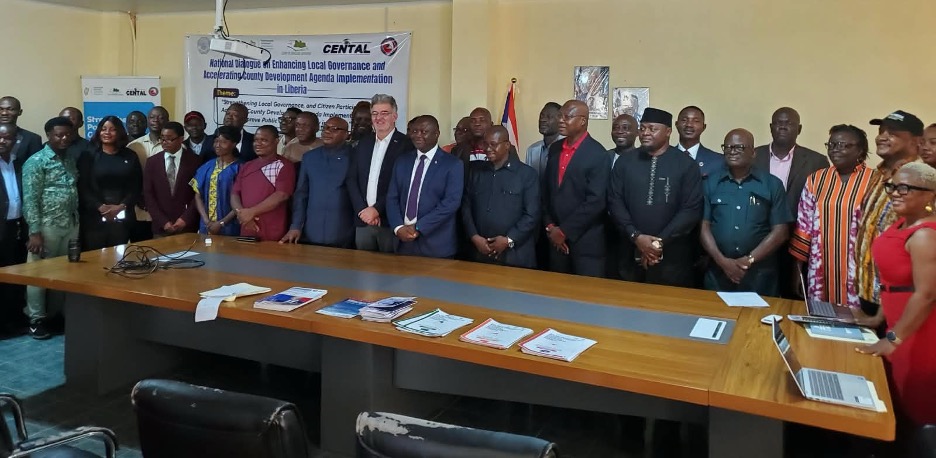
The concerns were raised during a national dialogue on “Strengthening Local Governance and Citizen Participation to Accelerate County Development Agenda Implementation and Improve Public Service Delivery in Liberia,” organized by Naymote Partners for Democratic Development in collaboration with the Governance Commission and Ministry of Local Government.
The forum brought together national and county officials, civil society representatives and development partners to assess progress in Liberia’s decentralization process and identify practical measures to accelerate implementation of County Development Agendas, or CDAs.
The dialogue was held under the Strengthening Political Governance and Accountability in Liberia Program, implemented through the Governance CSOs Consortium with support from the Embassy of Ireland.
Ireland’s Ambassador to Liberia, Gerard Considine, said Liberia has made meaningful progress in establishing the legal and institutional foundations for decentralization, including key legal frameworks and county councils.
He said the CDAs provide an important mechanism for citizens at county and district levels to influence decisions affecting their communities.
But Considine cautioned that those reforms have yet to produce tangible improvements for many Liberians.
Citing a Naymote assessment, he said county development agendas remain severely underfunded, leaving many priorities identified by citizens unimplemented. The situation, he said, has been compounded by delayed disbursements, incomplete devolution of signatory powers, institutional capacity gaps and weak coordination.
Considine urged stakeholders to move beyond repeatedly identifying the problems and instead develop a practical, time-bound and collectively owned action plan.
He reaffirmed Ireland’s commitment to supporting evidence-based advocacy, institutional strengthening and policy reforms aimed at making decentralization work for ordinary Liberians.
Speaking on behalf of UNDP leadership, Eric Boakai described local governance as central to sustainable and inclusive development, stressing that citizens must be active participants in development rather than merely beneficiaries.
Boakai pointed to the Local Government Act of 2018 and Revenue Sharing Act of 2021 as major milestones in Liberia’s decentralization efforts.
He said effective implementation of county development plans requires credible data, realistic financing, strong institutional coordination and effective monitoring.
Boakai particularly stressed the need to operationalize the revenue-sharing framework to provide counties with more predictable resources and reduce their dependence on central government allocations.
UNDP identified three priorities for advancing decentralization: strengthening local institutions and capacity, deepening citizen participation and accountability, and accelerating implementation through equitable financing and stronger monitoring.
The agency also announced continued support for local government capacity-building, including a proposed Local Government Training Institute in collaboration with the Ministry of Local Government. The institute is expected to provide training in planning, budgeting, public financial management, procurement and accountability.
Governance Commission acting Chairman Prof. Alaric K. Tokpa said Liberia cannot achieve sustainable national development through centralized governance alone.
Tokpa called for greater empowerment of local institutions and meaningful citizen participation, urging stakeholders to focus on realistic solutions that can strengthen county governance and improve public service delivery.
Providing an overview of the dialogue, Naymote Program Director Joshua Dennis Cleon said the gathering was intended to address a persistent challenge: translating Liberia’s decentralization laws and public resources into measurable improvements in citizens’ lives.
Cleon said a Naymote assessment conducted in Bong, Grand Bassa and Margibi counties identified continuing weaknesses in institutional coordination, financing, implementation, citizen participation and accountability.
He said the findings should serve as evidence for reforms that are implemented and measured rather than simply discussed.
Participants focused on strengthening county councils, improving coordination among institutions, expanding citizen participation, ensuring predictable financing and reinforcing accountability mechanisms.
The discussions underscored a broader concern surrounding Liberia’s decentralization drive: while laws and county development plans exist, inadequate financing and institutional weaknesses continue to threaten implementation.
Stakeholders maintained that Liberia’s decentralization agenda will succeed only when legal reforms are backed by adequate resources, capable local institutions, meaningful citizen oversight and sustained political commitment.
Without those measures, they warned, county development agendas risk remaining largely plans on paper rather than vehicles for visible development and improved public services.






Discussion about this post