


Published: March 20, 2026

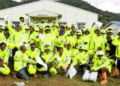
MONROVIA — Liberia has commissioned a modern composting facility in Monrovia as part of efforts to tackle mounting waste challenges, with officials signaling increased government funding for the sector in the 2027 national budget.
The plant, located in the Fiamah Community in Sinkor, was developed under the Solid Waste Management Transformation Pilot Project, a joint initiative led by the Environmental Protection Agency (EPA) with support from the Government of Canada through the MRV for Climate Action Initiative.
Implemented in collaboration with the Monrovia City Corporation (MCC), Liberia Water and Sewer Corporation (LWSC), and community-based organizations, the facility is designed to convert organic waste into compost for agricultural use while reducing pollution and greenhouse gas emissions.
Government Frames Shift as Structural Reform
Speaking at the commissioning, EPA Executive Director Dr. Emmanuel K. Urey Yarkpawolo described the project as a practical step toward transforming how Liberia manages waste.
“This facility reflects a shift in how we approach waste, not as a burden, but as a resource,” he said, noting that the initiative aligns with Liberia’s 2024 national solid waste management policy.
He said the model emphasizes private sector participation, community engagement, and environmentally sustainable practices, adding that local community groups will operate the facility under MCC supervision.
Mayor Flags Scale of Waste Crisis
Monrovia City Mayor John-Charuk Siafa underscored the urgency of the intervention, describing the city’s sanitation situation as unsustainable.
“Sanitation in Monrovia is at a critical point,” Siafa said. “What we are dealing with requires immediate and coordinated action.”
He disclosed that the capital’s landfill currently holds an estimated 60,000 metric tons of waste, far exceeding its original design capacity, placing increasing strain on surrounding communities and city resources.
Against that backdrop, he described the composting plant as a shift from disposal to processing.
“This is about moving from dumping to managing waste more productively,” he said.
Organic Waste Key to Strategy
Officials estimate that roughly 43 percent of waste generated in Monrovia is organic, largely from major markets including Fiamah, Waterside, and Duala, making composting a central component of the city’s waste strategy.
The facility is expected to ease pressure on the landfill, reduce methane emissions, and create jobs through community-based operations.
The city is also exploring a zonal collection system to improve efficiency and expand access to waste services.
Climate and Innovation Focus
Dr. Yarkpawolo emphasized the project’s environmental impact, particularly its role in reducing methane emissions from organic waste disposal.
He also disclosed ongoing discussions on a potential waste-to-energy initiative to convert municipal waste into cooking gas, signaling broader ambitions to modernize the sector.
Partners Back Pilot Model
Project partners described the facility as a scalable model for future expansion.
Representatives of the MRV for Climate Action Initiative and local implementing teams said the project has already strengthened technical capacity and demonstrated the viability of composting as a sustainable solution.
Community stakeholders, including market representatives, also pledged support for maintaining and utilizing the facility.
Funding Outlook
Officials say the project aligns with the government’s ARREST Agenda for Inclusive Development, particularly its focus on sanitation and environmental sustainability.
Representing the Ministry of Finance and Development Planning, Assistant Minister J. Wellington Barchue said the government is preparing to increase funding for waste management in the 2027 national budget.
“This is a priority area, and we are committed to supporting initiatives that deliver long-term impact,” he said.





Discussion about this post