


Published: April 24, 2026
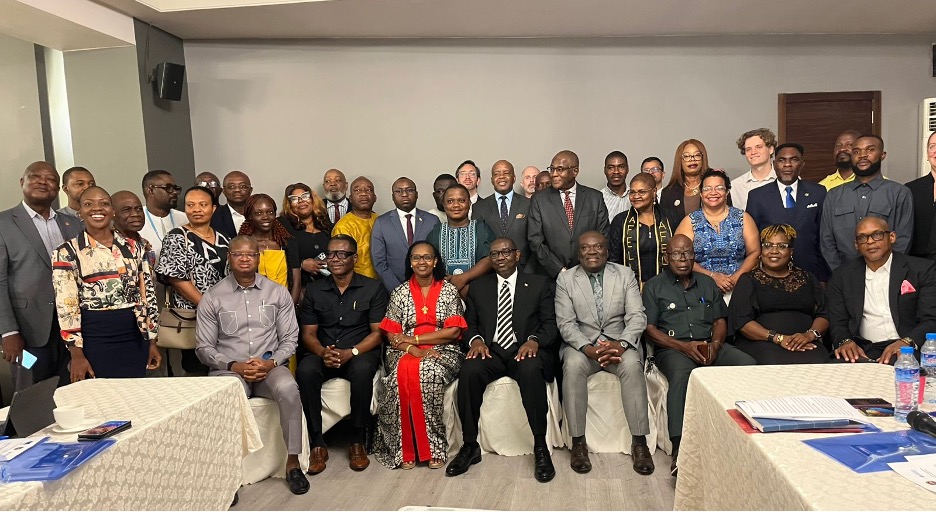
MONROVIA — The United Nations human rights office told Liberian officials and legal stakeholders Thursday that the country’s anti-corruption efforts will continue to fall short until the government stops treating corruption as a bureaucratic problem and starts treating it as a systematic violation of the rights of ordinary citizens.
The warning came at a high-level dialogue on corruption and accountability at the Mamba Point Hotel, where OHCHR Economic Affairs Chief Pradeep Wagle delivered a keynote address that reframed the country’s governance challenge in terms its legal and political establishments have largely resisted.
“We must recognize that without a human rights-based approach, our collective efforts to address corruption cannot succeed,” Wagle said, arguing that corruption deprives governments of the resources needed to deliver essential services and directly undermines citizens’ dignity. “When resources are diverted, the impact is immediate, weak health systems, underfunded education, limited access to justice, and growing inequality.”
Wagle said the focus of anti-corruption efforts must shift from perpetrators alone to the victims, the citizens whose rights are compromised every time public funds are stolen or mismanaged. He noted that globally, corruption drains trillions of dollars annually, funds that could otherwise support development and fulfill human rights obligations. “This exposes a deeper contradiction, not a lack of resources, but a failure to protect them,” he said.
Wagle noted a widening accountability gap between the volume of corruption complaints reported and the number of cases that result in successful prosecution. He said weaknesses in evidence gathering, poor data management and limited coordination among institutions are systematically undermining enforcement, and that corruption cases handled within general courts already burdened by heavy caseloads produce delays that further weaken prosecution outcomes.
To address the structural problem, he called for the establishment of a specialized anti-corruption court capable of efficiently handling complex financial crimes. He also pushed back against the argument that resource constraints are the primary obstacle to better enforcement. “The issue is not just the existence of laws, but the capacity to implement them,” he said, adding that corruption itself is the root cause of the resource scarcity that officials cite as a barrier.
Liberian National Bar Association President F. Juah Lawson reinforced the OHCHR’s position, describing corruption in Liberia as a full-blown human rights crisis rather than a governance inconvenience. “Corruption is not merely an economic or administrative challenge; it is, at its core, a profound violation of human rights,” Lawson said, noting that it continues to erode public trust, weaken institutions, and deny citizens, particularly vulnerable populations, access to justice and basic services.
Lawson identified Liberia’s central challenge not as a lack of legal frameworks but as a failure to enforce the ones already in place. “Accountability must never be selective; it must be consistent, credible, and rooted in justice,” he said.
While endorsing discussions around a specialized anti-corruption court, Lawson urged caution, warning that without adequate safeguards around due process and judicial independence, new institutions risk becoming instruments of political influence rather than justice. He called for a coordinated national response involving government, the judiciary, civil society, and international partners, and stressed that the legal profession must uphold the highest ethical standards. “The integrity of the justice system begins with the integrity of those who serve within it,” he said.
The dialogue produced a picture of a country with a reasonably developed legal architecture for fighting corruption but a persistent inability to translate that framework into results. Stakeholders agreed that without a genuine shift toward treating corruption as a human rights issue, backed by institutional reform, adequate capacity, and political will, Liberia’s enforcement record risks remaining largely symbolic.
The human cost of that gap, Wagle noted, is not abstract. In sectors such as healthcare, financial mismanagement translates directly into lives lost and services denied. The victims of corruption, he said, are not statistics; they are citizens whose rights are being violated every day that accountability is deferred.






Discussion about this post