


Published: July 17, 2026
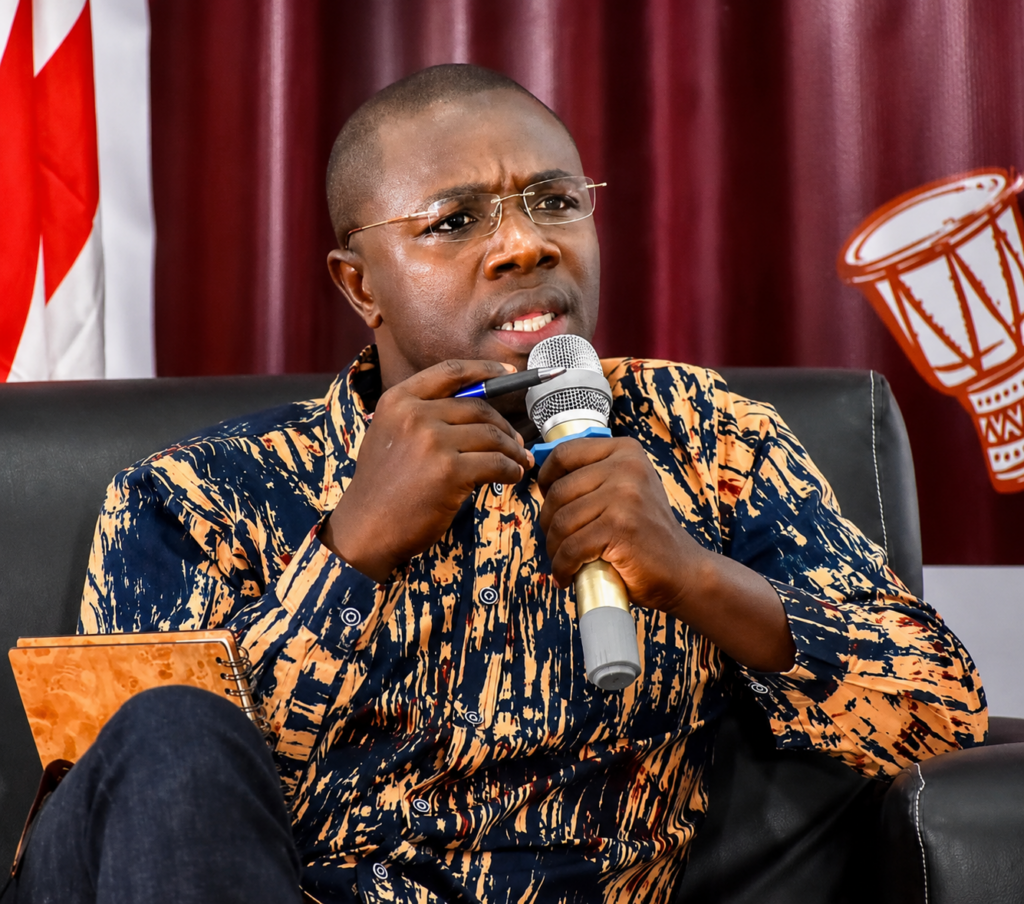
MONROVIA – The Secretary General of the Congress for Democratic Change has requested the U.S. Embassy in Monrovia to support an international investigation into Liberia’s $19 million cocaine case, alleging in a letter that Police Inspector General Gregory O. W. Coleman took vehicles from a drug cartel and distributed them to President Joseph Boakai, Vice President Jeremiah Koung, and the presiding officers of the Legislature.
Jefferson T. Koijee’s letter, dated July 15 and addressed to Chargé d’Affaires Joseph Zadrozny, outlines a series of allegations that he does not provide documentation for and requests the United States to help verify. He states that he is not making these claims to portray the government negatively, but because he believes they are serious enough to require an independent investigation capable of confirming them with credible evidence.
The main allegation concerns vehicles. Koijee writes that before the cocaine shipment was found, Coleman received gifts from what he calls a well-known cartel responsible for distributing among top government officials. He states that 10 Toyota Hilux vehicles were sent to the Liberia Drug Enforcement Agency and the Liberia National Police without being registered or coded through the General Services Agency, as Liberian law requires. He further alleges that seven Chevrolet Tahoes, which he estimates at about US$90,000 each, were given to Coleman and distributed as follows: two to Boakai, now part of the presidential convoy; one to Senate Pro Tempore Nyonblee Karnga-Lawrence; one to Koung; one to House Speaker Richard Koon; and two kept by Coleman. He estimates the total value at around US$630,000 and claims all the vehicles are visible in the convoys of those officials. He links the origin of the 10 Hiluxes to the military government in Guinea.
Koijee bases his claim on a simple arithmetic argument. He notes that the Liberia National Police’s 2026 budget is US$25.7 million, with US$17.7 million allocated for salaries and US$7.2 million for goods and services. Coleman, he points out, earns a gross salary of US$4,436. He questions how the police could distribute that many vehicles when no such allocation exists in the budget, and suggests that this gap increases his suspicion that the inspector general is being financially supported by a cartel.
The letter also questions Coleman’s travel. Koijee states that Coleman was in the United Kingdom on June 18 and 19, 2026, despite the investigation being active at the time, and notes that the United Kingdom was reportedly the intended destination of the cocaine. From this, he reasonably infers that Coleman was there awaiting the arrival of the shipment. He refers to an attached image. This inference is his own, and the letter provides no further evidence to support it.
A second line of argument runs through the leadership of the LDEA. Koijee writes that Abe Kromah’s 2024 removal as head of the agency was part of a political conspiracy orchestrated by Coleman, intended to allow a cartel in which Coleman is an active member to operate freely. He claims Coleman then manipulated Boakai into appointing Fitzgerald T. M. Biago, who was then a deputy commissioner working under Coleman at the police, as the officer in charge of the LDEA, and describes Biago as another individual reportedly recruited by the cartel. Kromah, he notes, is a graduate of John Jay College of Criminal Justice.
The pattern of placing senior police officers at the top of the drug agency has weakened its institutional independence and concentrated excessive influence over Liberia’s security structure, Koijee writes. He contends that this setup demonstrates a merging of organized crime and political power that any credible threat assessment would identify as a significant risk to national security.
Regarding the police handling of the case, Koijee states that the investigation has lacked the transparency and independence required for a case of this magnitude. He also notes that Coleman’s repeated public briefings have failed to address the key questions of where the cocaine originated and who owned it. Instead of providing clarity, he argues, the briefings have weakened public confidence.
Koijee frames the appeal in terms of American interests. The United States has long been Liberia’s main partner and continues to invest American taxpayers’ money in promoting democratic governance, peace, and stability, he writes. If the issue isn’t resolved, he argues, the American presence and Liberia’s peace could be at risk from trafficking syndicates whose reach goes beyond Liberia’s borders. He notes that many Liberians fear the truth may never be uncovered through domestic processes, citing what he calls a dangerous pattern of impunity in the criminal justice system.
The letter begins with Koijee’s credentials. He states that he is a former mayor of Monrovia, the current Secretary General of the CDC, and a professional with specialized knowledge in counter-terrorism, intelligence, and homeland security. He explains that he raises his concerns from this informed professional perspective.
The allegations in the letter are unverified. The Liberian Investigator has not independently confirmed any of them and has asked for comments from Coleman, the Liberia National Police, the Executive Mansion, the offices of the vice president, the Senate Pro Tempore, the House Speaker, the LDEA, and the U.S. Embassy.
The cocaine at the center of the case, 237.6 kilograms with an estimated street value of about US$19.2 million, was intercepted at Roberts International Airport, and prosecutions of several suspects are underway.




Discussion about this post