



Published: April 22, 2026
MONROVIA — A damning field assessment by Integrity Watch Liberia (IWL) has uncovered widespread illegal mechanized mining operations, environmental degradation, and weak regulatory enforcement in mining-affected communities across Gbarpolu and Bong counties, prompting urgent calls for decisive government intervention.
The report, released Wednesday, April 22, warns that Liberia’s artisanal and small-scale mining (ASM) sector is rapidly evolving into a loosely regulated, environmentally destructive industry, with growing risks to livelihoods, water systems, and national infrastructure.
Illegal Mechanization Undermines Mining Laws
Presenting the findings, IWL Policy Analyst Narvin N. Ireland said the assessment—conducted under the project “Strengthening Inclusive Governance and Accountability in Liberia’s Natural Resources Sector, Phase II”—revealed a troubling shift from traditional mining practices to mechanized operations.
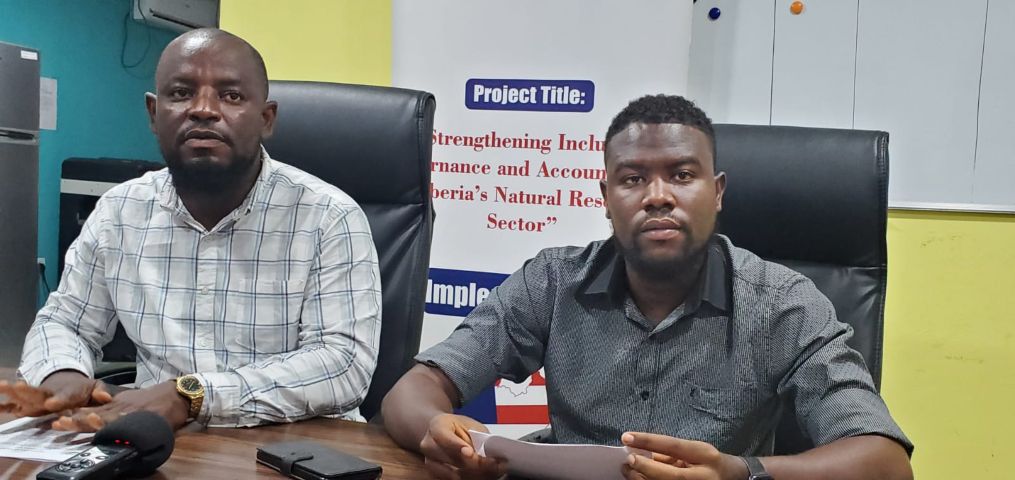
IWL Policy Analyst Narvin N. Ireland and team member addressing a press conference
The report documents the widespread use of suction dredges, pumps, and other heavy equipment in areas licensed for Class C mining, which legally restricts operations to manual methods.
“This practice directly contravenes Liberia’s Minerals and Mining Law,” the report noted, highlighting a growing disconnect between licensing provisions and actual mining practices.
Ireland emphasized that what was once a small-scale livelihood activity is now becoming a commercially driven sector operating under weak enforcement mechanisms.
Rivers Degraded, Livelihoods Threatened
The assessment further revealed extensive environmental damage, particularly along the Tuma River Belt and sections of the St. Paul River Basin.
Across multiple communities, investigators observed floating dredging platforms actively extracting sediment from riverbeds—transforming once-vital water sources into disturbed mining corridors.
According to IWL, rivers previously used for drinking, fishing, and domestic purposes are now heavily silted and discolored, with disrupted aquatic ecosystems.
Community members reported a sharp decline in fish populations, effectively eliminating fishing as a sustainable livelihood.
Mining activities have also left behind abandoned pits and degraded land, extending environmental damage beyond immediate mining zones.
Rise of Informal Financial Systems, Elite Capture
Beyond environmental concerns, the report highlights the emergence of informal and undocumented financial systems within mining communities.
“The report also highlights the emergence of informal financial systems within mining communities. Miners and operators reported making various undocumented payments to access and sustain mining operations,” the findings indicate. “These informal financial flows, operating outside official systems raise serious concerns about transparency, accountability, and potential corruption within the sector.”
Ireland noted that weak financial governance at the community level has enabled local elites to control mining-related revenues without transparency.
This has fueled perceptions of elite capture, where benefits are concentrated among a few individuals while environmental and social costs are borne by entire communities.
Weak Oversight Undermines Public Trust
The report attributes these challenges to limited government presence and logistical constraints in monitoring remote mining areas.
“Underlying these challenges is a broader issue of weak regulatory oversight. Government agencies face significant logistical and resource constraints in monitoring remote mining sites,” Ireland said. “The absence of a publicly accessible mining license registry further limits transparency and prevents communities and civil society from effectively verifying compliance. Persistent perceptions of inconsistent enforcement continue to undermine public trust in the sector’s governance.”
National Risks Loom Over Water Systems, Energy Supply
IWL warned that the implications of unregulated mining extend beyond local communities, posing serious national risks.
Mining activities in tributaries connected to the St. Paul River Basin threaten critical infrastructure, including the Mount Coffee Hydropower Plant—a major source of Liberia’s electricity.
“If left unchecked, the continued expansion of unregulated river-based mining could have far-reaching consequences, including damage to hydropower infrastructure, disruption of water supply systems, and long-term ecological degradation with national economic implications,” the findings stated.
Call for Immediate Government Action
In response, IWL is urging the Liberian government—particularly the Ministry of Mines and Energy and the Environmental Protection Agency—to take swift and decisive action.
“IWL specifically calls for the urgent enforcement of the legal distinction between Class C and Class B mining operations to prevent the continued misuse of artisanal licenses for mechanized mining activities and the establishment of a publicly accessible and regularly updated mining license registry to promote transparency, strengthen oversight, and empower communities and civil society to monitor compliance,” the group stressed.
Key Reform Recommendations
The organization further called for:
- Strengthened environmental monitoring, especially in river-based mining areas
- Clear community benefit governance standards, including transparency and inclusive decision-making
- Measures to prevent elite capture and ensure equitable distribution of mining benefits
- Improved occupational health and safety conditions for miners
- Deployment of coordinated security mechanisms, including support from national security institutions and the Armed Forces of Liberia
- Increased collaboration with the Ministry of Internal Affairs and traditional leaders to address enforcement barriers
Push for Comprehensive ASM Reform Strategy
IWL emphasized the urgent need for a national ASM formalization strategy that goes beyond licensing.
“Critically, IWL calls for the Government to prioritize the development and implementation of a comprehensive national ASM formalization strategy,” the CSO noted, adding that such a strategy must address regulatory gaps, environmental compliance, financial transparency, and community rights.
A Sector at a Crossroads
While acknowledging that ASM remains a vital source of income—particularly for unemployed youth—IWL warned that the sector’s current trajectory poses immediate and long-term risks.
“While IWL recognizes that ASM continues to provide critical income opportunities-particularly for unemployed youth in rural communities the current trajectory of the sector poses serious and immediate risks that demand urgent national attention,” Ireland said.






Discussion about this post