


Published: July 10, 2026
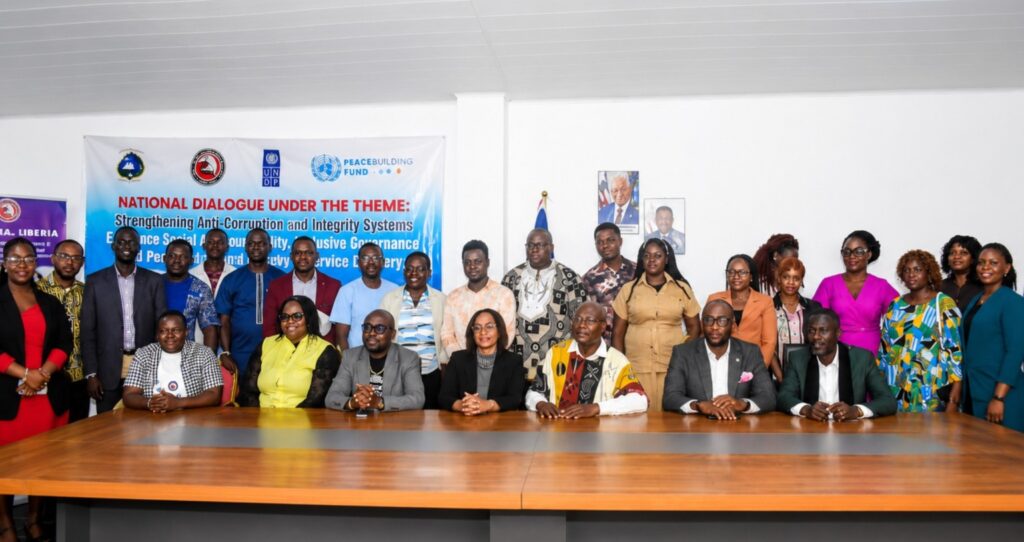
MONROVIA – Government officials, anti-corruption institutions, civil society organizations, development partners and county representatives have called for stronger coordination among Liberia’s integrity institutions and greater citizen participation to tackle corruption, restore public trust and improve service delivery across the country.
The call came during a one-day National Dialogue on Strengthening Integrity and Accountability Systems in Liberia, held at the Governance Commission Conference Hall in Sinkor under the theme: “Strengthening Anti-Corruption and Integrity Systems to Advance Social Accountability, Inclusive Governance, Public Participation, and Improved Service Delivery.”
The dialogue was organized by Naymote Partners for Democratic Development in collaboration with the Governance Commission, with support from the United Nations Development Programme (UNDP) and the United Nations Peacebuilding Fund (PBF).
Participants concluded that despite Liberia’s establishment of several oversight institutions to promote transparency and accountability, weak coordination, limited institutional capacity, delayed prosecution of corruption cases and inadequate enforcement continue to erode public confidence and undermine effective governance.
Representing the United Nations, UN Women Liberia Country Representative Abul Hasnat Monjurul Kabir urged stakeholders to ensure anti-corruption efforts extend beyond laws and institutions to address the daily realities faced by ordinary Liberians.
Kabir said women, persons living with disabilities, marginalized communities and people living in poverty are disproportionately affected by corruption because they often encounter the greatest barriers to accessing public services and justice.
While acknowledging the establishment of Anti-Corruption Commissions, Auditor General offices and other governance institutions, he argued that the “demand side” of accountability—citizens who experience corruption daily—has received far less attention.
According to him, strengthening governance requires more inclusive legal and judicial systems that allow women, youth, minority groups and disadvantaged communities to participate meaningfully in decision-making.
Kabir also challenged stakeholders to move beyond conferences and reports toward concrete action.
“We need actionable ideas and follow-up on recommendations. Too many discussions end with reports gathering dust while citizens continue to suffer from poor governance,” he said.
He reaffirmed the commitment of the United Nations system, including UNDP and UN Women, to supporting Liberia’s governance and accountability reforms.
Delivering the welcome statement, Governance Commission Acting Chairman Prof. Alaric K. Tokpa described the dialogue as timely, noting that Liberians are increasingly demanding transparent, ethical and accountable public institutions.
Tokpa welcomed county authorities and finance officers from Grand Bassa, Nimba, Margibi, Montserrado and other counties, emphasizing that local governments are critical to ensuring responsible management of public resources and transparent implementation of development projects.
He described integrity as the foundation of good governance, sustainable development, investment and lasting peace.
According to him, accountability is not only a legal requirement but also a moral obligation that demands collaboration among government institutions, civil society organizations, development partners and citizens.
Tokpa further stressed the importance of expanding participation by women, young people and marginalized communities, saying inclusive governance strengthens institutions and produces better development outcomes.
Providing an overview of the dialogue, Naymote Executive Director Eddie D. Jarwolo said the initiative forms part of the UNDP- and PBF-supported project titled “Empowering Citizens and Communities to Foster Social Accountability and Transparency in Governance and Public Service Delivery.”
Jarwolo explained that the project seeks to strengthen collaboration between government institutions and civil society while empowering citizens to demand transparency, accountability and responsive public service delivery.
He said the forum also provides implementing partners with an opportunity to share lessons learned, achievements and innovative approaches while generating practical recommendations to strengthen Liberia’s National Integrity System and sustain the National Integrity Forum as a credible platform for policy dialogue and oversight.
Jarwolo noted that the initiative aligns with Pillar IV of Liberia’s ARREST Agenda for Inclusive Development, which focuses on governance and anti-corruption reforms.
During discussions involving the General Auditing Commission (GAC), Liberia Anti-Corruption Commission (LACC) and the Liberia Extractive Industries Transparency Initiative (LEITI), panelists agreed that corruption continues to undermine governance, public trust, economic growth and service delivery.
Participants concluded that although oversight institutions have complementary mandates, they require stronger coordination and information sharing to improve investigations, prosecutions and enforcement.
They also identified limited institutional capacity, weak procurement oversight, poor compliance monitoring, delays in prosecuting corruption cases and weak implementation of audit recommendations as major challenges confronting Liberia’s accountability framework.
The panel further emphasized the importance of transparency in the extractive sector, calling for stronger beneficial ownership disclosure, public reporting of extractive revenues and enhanced oversight to reduce corruption risks.
Among the recommendations adopted were institutionalizing coordination among integrity institutions, strengthening implementation of audit recommendations, increasing lawful public disclosure of corruption-related cases, enforcing beneficial ownership requirements and improving information sharing and risk-based monitoring.
A second panel discussion examined the role of civil society organizations in advancing social accountability and citizen participation.
Participants noted that community-based accountability initiatives have improved transparency at the county level through digital monitoring platforms and civic engagement programs.
They also acknowledged increased participation by women, youth and persons with disabilities in governance advocacy, while observing that these groups remain underrepresented in formal decision-making processes.
Civil society organizations reported implementing Freedom of Information awareness campaigns, training community monitors in all 15 counties, establishing County Advocacy Teams and deploying digital accountability tools to monitor local development projects and public spending in real time.
However, participants expressed concern over persistent delays in approving county development plans and budgets, warning that the setbacks continue to undermine effective monitoring and implementation of local development initiatives.
Closing the dialogue, Governance Commission Executive Director Jallah C. Kesselly described the Commission as the catalyst for Liberia’s integrity institutions, noting that it played a leading role in recommending the establishment of several national oversight bodies.
Kesselly emphasized that promoting integrity and accountability is a shared responsibility that extends beyond government institutions to every Liberian.
“We hope today’s engagement goes beyond conversation and contributes to building a better Liberia through stronger integrity institutions and effective collaboration,” he said.
The National Dialogue was convened under the UNDP- and United Nations Peacebuilding Fund-supported “Empowering Citizens and Communities to Foster Social Accountability and Transparency in Governance and Public Service Delivery” project.
Organizers said the initiative seeks to strengthen Liberia’s governance architecture by improving collaboration among oversight institutions, empowering citizens to demand accountability and promoting transparent, inclusive and responsive public service delivery in line with the governance and anti-corruption pillar of the country’s ARREST Agenda for Inclusive Development.






Discussion about this post