


Published: April 20, 2026
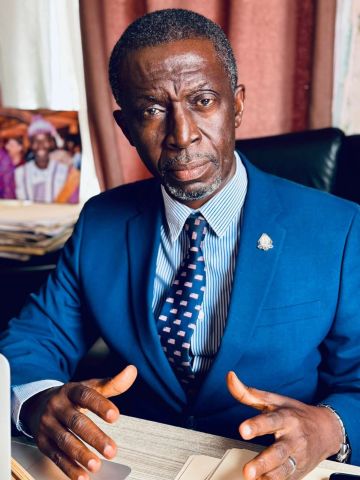
MONROVIA — Prominent legal scholar and human rights lawyer, Cllr. Tiawan Saye Gongloe has sharply criticized the House of Representatives’ decision to expel lawmaker Yekeh Kolubah, warning that the move undermines constitutional protections and raises serious concerns about the rule of law in Liberia.
In a statement issued Monday, April 20, Gongloe described the expulsion—reportedly linked to Kolubah’s comments on the Makona River boundary dispute—as not just an internal legislative action, but a major constitutional error.
He said the central issue is not whether Kolubah’s remarks were right or wrong, but whether Liberia remains governed by law rather than political sentiment.
Gongloe emphasized that all political actions must fall within the scope of the Constitution, noting that this is the foundation of democratic governance and the rule of law.
He referenced several provisions of the 1986 Constitution, including Article 14 on freedom of thought and conscience, Article 15 on freedom of expression, and Article 11 on equal protection under the law, stressing that these rights apply to all branches of government, including the Legislature.
Gongloe further pointed out that the Supreme Court of Liberia has consistently ruled that legislative authority must not violate fundamental rights, citing cases such as Wolo versus Wolo and Morlu versus the House of Representatives.
Addressing the substance of Kolubah’s remarks, Gongloe said even if the statement about the Makona River boundary was controversial or offensive, it does not constitute a crime under Liberian law.
He stressed that the statement does not amount to treason, incitement, or espionage, and therefore does not violate any provision of the Penal Law.
According to him, national boundaries are determined by treaties, international law, and diplomatic processes—not by the opinion of a single lawmaker.
Gongloe argued that the House’s decision appears political rather than legal and warned that punishing speech in a democracy sets a dangerous precedent.
He said in a democratic society, speech must be countered with more speech—not sanctions—adding that lawmakers had the opportunity to publicly challenge or correct Kolubah’s claims instead of expelling him.
Drawing comparisons with other democracies, Gongloe noted that lawmakers in countries such as the United States have made controversial statements without facing expulsion.
He also argued that the decision violates the public’s right to information under Article 15 of the Constitution and the Kamara A. Kamara Law.
Gongloe warned that suppressing free expression could have long-term consequences, recalling Liberia’s history and noting that restrictions on speech contributed to the April 12, 1980 coup and years of civil conflict.
To address the Makona River dispute, he recommended that President Joseph Nyuma Boakai establish a Special Commission of Inquiry to determine the facts and clarify the country’s boundary.
He concluded by stressing that the issue is a fundamental test of Liberia’s democracy—whether a lawmaker can express an opinion, no matter how controversial, without fear of punishment.
Gongloe warned that law must remain above politics if Liberia is to preserve its constitutional order.






Discussion about this post