



Published: November 12, 2025
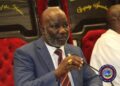
Kakata, Margibi County — Liberia’s Chief Justice, Yamie Quiqui Gbeisay, has taken a strong stand against ethnic stereotyping and pledged sweeping reforms in the judiciary, promising to restore integrity and discipline across the nation’s courts.
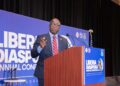
Speaking during the formal seating of Judge Victoria W. Duncan as Resident Judge of the 13th Judicial Circuit Court in Kakata, Chief Justice Gbeisay dismissed a long-standing notion that members of the Nimba community often “abuse power” when placed in authority.
“One day, I was going, and somebody pointed to my convoy and said, ‘Nimba people know how to abuse power,’” Gbeisay recalled. “But I told them, I will use power — not misuse it — and ensure things are done properly. I will act, and act decisively.”
The Chief Justice’s remarks drew both praise and scrutiny, as his attempt to defend his roots came amid recent criticisms of his leadership style. Observers noted that during his speech, Gbeisay asked an aide to hold his microphone, though his hands were free — a gesture some political pundits interpreted as symbolic of elitism.
Earlier this year, Gbeisay also faced backlash for recommending his son for nomination as an associate magistrate, a move widely condemned as nepotistic. The nominee later declined the appointment following public pressure.
Despite these controversies, Gbeisay said his leadership will be guided by integrity and national duty, vowing to end corruption and complacency in the judiciary.
“This will not be business as usual,” he declared. “Those who are corrupt will be weeded out. The court must change, and we will transform things with the little time we have.”
The Chief Justice outlined several key reforms aimed at tightening discipline and ensuring accountability within the judicial branch:
In outlining his reform vision, Chief Justice Gbeisay announced a series of sweeping measures aimed at restoring order and discipline across the judiciary. He said that all judicial staff will now be required to report to work by 9:00 a.m. each day, emphasizing punctuality and commitment as the foundation of public service.
To strengthen accountability, the Chief Justice revealed the creation of a new Judiciary Monitoring, Evaluation, and Accountability Division — an internal watchdog that will conduct both scheduled and surprise inspections of courts and administrative offices to ensure that judges and staff are performing their duties in line with established ethical standards.
Gbeisay further warned that any judicial officer found to be defiant or involved in corrupt practices will face the full weight of the law. Legal penalties, he said, will be enforced in accordance with the judiciary’s code of conduct to deter misconduct and restore public confidence in the courts.
He also disclosed the formation of a special supervisory committee charged with investigating allegations of corruption and recommending the dismissal of staff found guilty of unethical behavior. Through these measures, he vowed to “clean the system” and build a judiciary that commands both respect and trust.
He also congratulated Judge Duncan on her appointment and advised her to serve with humility, fairness, and respect for the law.
“Your judgments must be guided by fairness and a deep understanding of the law,” he said. “Peace, security, and development depend heavily on the judiciary’s integrity.”
Gbeisay reaffirmed that under his leadership, the Supreme Court will prioritize ethics, discipline, and institutional transformation as part of a broader effort to rebuild public trust in Liberia’s justice system.




Discussion about this post