


Published: July 27, 2026
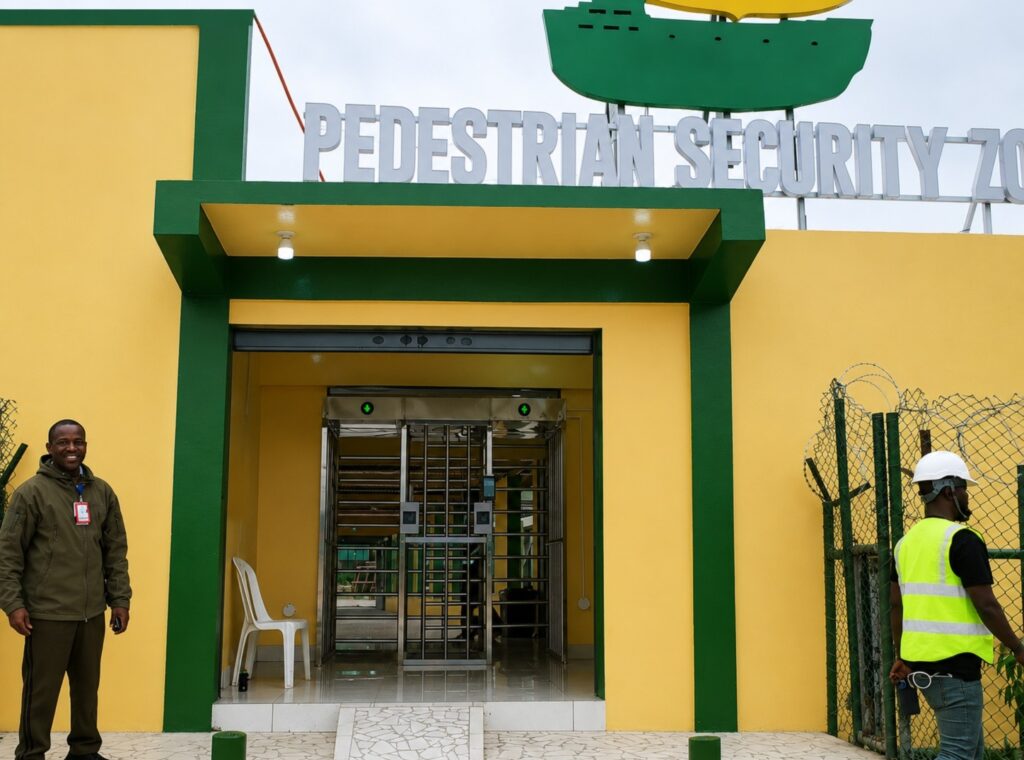
MONROVIA – Anyone entering the Freeport of Monrovia now needs an electronic access card and must clear biometric and facial recognition checks, part of a security overhaul the National Port Authority says is needed to keep Liberia off an international blacklist that constrained its shipping for about 15 years.
Expired or invalid credentials mean automatic denial at the gate, with entry resolved only at the administrative office, said James Richard Bernard, deputy managing director for administration and acting managing director. All port users must also complete occupational health and safety training and wear protective equipment in operational areas.
The measures are meant to bring the port into compliance with the International Ship and Port Facility Security Code, the framework governing port and ship security worldwide, ahead of the annual inspection the U.S. Coast Guard conducts at the Freeport.
“The leadership of the NPA emphasizes the critical importance of adhering to International Ship and Port Facility Security (ISPS) standards to avoid the severe economic consequences of being blacklisted,” Bernard told reporters.
Bernard said the port was blacklisted for roughly 15 years beginning in 2005 over security compliance failures. Ships arriving from listed ports face longer inspections and lower priority at destination, he said, and some carriers avoid such ports entirely.
“Because the country imports the majority of its food, port efficiency is a matter of national security,” Bernard said. “Any disruption in shipping directly threatens the domestic food supply.”
The automated gates read employee cards in seconds and screen visitors electronically, and the system tracks in real time who is inside the facility, which Bernard said would allow authorities to account for people during a fire or other emergency.
“A key component of this reform is the transition to an automated gate system,” he said. “This technology aims to reduce human interaction by minimizing manual intervention and potential security bypasses.”
The authority is also raising perimeter walls, cutting the number of access points and building an inspection facility with drive-through scanners for container trucks. Bernard said the government is recovering from 30 years of underinvestment in port infrastructure.
Sekou Kromah, manager of the information technology security and construction firm carrying out the work, [FIRM NAME TBC], said the project automates pedestrian and vehicle access to ISPS standards. Work under way includes automating the Bravo and BMC gates and building a perimeter fence from City Bureau to Senior Town to fully enclose the port. He said the firm was established in 2015 and has roots in Malaysia.
The screening system runs on backup power including battery supply, solar, generators and a manual override, Kromah said.
Scanning for weapons is not yet in place. “We are negotiating with the port management to integrate advanced scanning capabilities,” Kromah said. “This aims to detect arms, ammunition, and harmful goods to secure the port and the country without duplicating the specific customs work of the Liberia Revenue Authority.”
The contract covers the Freeport only. Kromah said a successful rollout could lead to similar work at other Liberian ports.
The demonstration was held during a media tour organized by the authority’s corporate communications department, headed by Pewee Baysah.






Discussion about this post