


Published: March 26, 2026
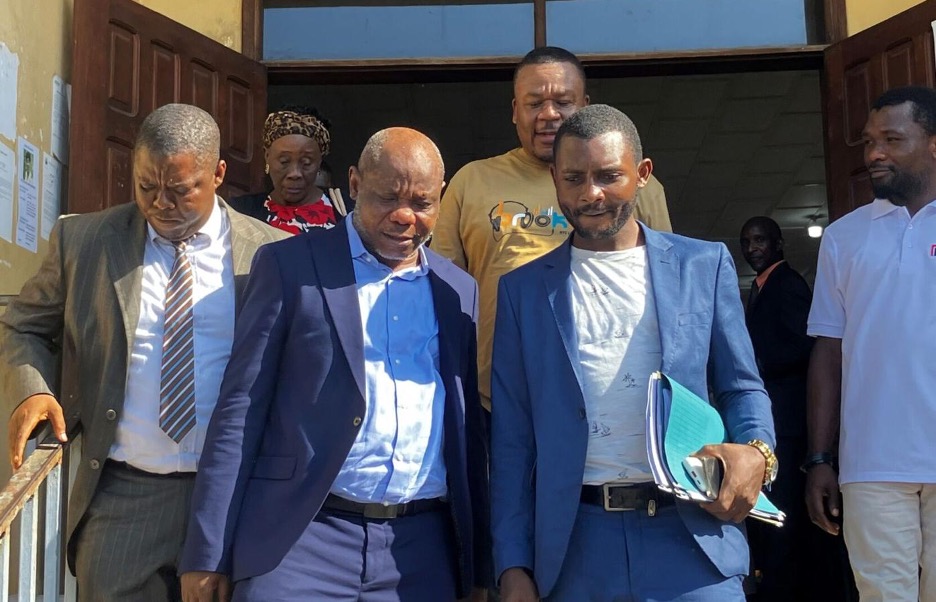
MONROVIA — The prosecution’s case suffered a significant setback Wednesday when a key subpoenaed witness from the Financial Intelligence Agency (FIA) told the court that no responsive documents could be located within the agency’s records.
Edward J. Blamah, chief of staff to the FIA director general, testified under oath that despite efforts to comply with a subpoena duces tecum, the agency was unable to produce the requested financial documents considered central to the case.
The disclosure came during proceedings at Criminal Court ‘C’, where the State had expected the records to support allegations tied to controversial 2023 financial transactions involving government accounts.
“I could not locate any of the documents requested,” Blamah told the court, effectively leaving prosecutors without anticipated documentary evidence in a case that hinges heavily on financial records.
A subpoena duces tecum compels an institution to produce documents relevant to a case. Prosecutors had sought records from the FIA to establish key elements of their claims, including the flow and authorization of funds.
Legal observers say the development could weaken the State’s position. In financial crime cases, documentary evidence, particularly from institutions such as the FIA, is often critical to proving intent, authorization and transaction trails.
Blamah’s testimony also raises broader questions, including whether the documents ever existed, were misplaced, destroyed or withheld, and whether the subpoena was sufficiently precise.
The inability to produce the records has intensified scrutiny of the FIA’s record-keeping systems, internal controls and cooperation with judicial authorities.
The subpoena was issued March 24, 2026, during the court’s 34th day of jury sitting before Judge Osuman Feika. Prosecutors successfully petitioned the court to compel both the FIA and the Central Bank of Liberia (CBL) to produce sensitive banking records linked to disputed transactions.
At the center of the case are transfers from a Government of Liberia account to the FIA—transactions prosecutors allege may not have followed established financial controls.
The court specifically ordered records that could indicate whether former Finance Minister Samuel D. Tweh Jr. authorized or approved the movement of funds. Correspondence involving former CBL Governor J. Aloysius Tarlue Jr. is also under review.
In addition, the court demanded original cheques and transaction records drawn on FIA accounts at the CBL, in both Liberian and U.S. dollars, covering the period between Sept. 8 and Oct. 17, 2023. The records are linked to D. Moses Cooper, then acting comptroller of the FIA.
Prosecutors aim to use the documents to trace the flow of funds and identify any irregularities or unauthorized withdrawals.
Earlier testimony from a Liberia Anti-Corruption Commission (LACC) witness, Baba Mohammed Boika, indicated that such documents exist and can be identified—raising the stakes for their eventual production.
With subpoenas targeting financial instruments and internal communications, the case is entering a critical evidentiary phase. But without the FIA records, prosecutors may be forced to rely more heavily on oral testimony and circumstantial evidence.
The court is expected to continue hearing testimony as efforts to obtain the requested documents from relevant institutions proceed.






Discussion about this post