


Published: September 16, 2026
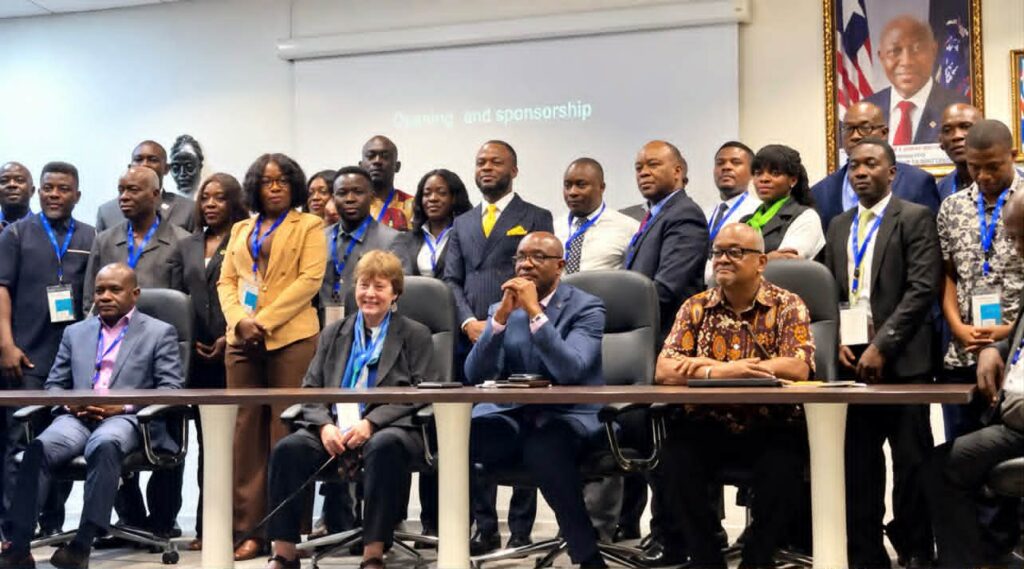
MONROVIA — The Central Bank of Liberia has concluded a two-day validation exercise for a new National Financial Inclusion and Education Strategy, with stakeholders calling for stronger digital infrastructure, financial literacy and coordination to ensure the proposed framework reaches Liberians who remain largely outside the formal financial system.
The draft strategy seeks to move Liberia’s financial inclusion agenda beyond access to mobile money and other basic financial services, with a broader focus on access to credit, savings, insurance, digital financial services and the knowledge needed to use those services effectively.
The exercise brought together stakeholders from across the financial sector and other institutions to review the draft, identify gaps and recommend changes before its finalization.
Former Central Bank Governor Milton Weeks, a consultant on the project, said the strategy is particularly important because much of Liberia’s economic activity takes place in the informal sector.
“The majority of the Liberian economy is really in the informal sector,” Weeks said.
He said many Liberians remain excluded from financial services despite the introduction of new products and services. “We keep saying we’re making progress. Yeah, we’re bringing in new products. We’re bringing in new services. But the majority of the people are not benefiting from them,” Weeks said.
Weeks told the gathering that meaningful financial inclusion should not stop at providing people with mobile money accounts, emphasizing that Liberians should also be able to access loans, savings and insurance as part of a broader financial services ecosystem.
The two-day validation, he said, allowed stakeholders to scrutinize the initial draft and recommend changes based on their experiences and institutional responsibilities.
“Some of the things that we had put in the initial draft, we’ll have to change,” Weeks said, adding that the process would help produce a document reflecting input from different stakeholders.
He described the strategy as a national initiative rather than one belonging solely to the Central Bank.
“This is a national strategy,” Weeks said. “This is a national effort that hopefully will have a national impact and be for the betterment of the majority of Liberians.”
Strategy Looks Beyond Access
Atty. Andrew A. Tellewoyan, Officer in Charge of the Development Finance Section at the CBL, said the views and recommendations submitted during the validation would inform the final document.
Tellewoyan also emphasized the importance of financial education, noting that literacy in reading and writing does not necessarily translate into the ability to manage money effectively.
The proposed strategy therefore links financial inclusion with financial education, seeking to improve not only people’s access to financial services but also their understanding and ability to use them.
The CBL says the strategy is expected to provide a framework for expanding financial inclusion while bringing together relevant actors to address barriers to participation in the financial system.
Stakeholders Identify Institutional Gaps
Lillian Best, a former central banker and co-lead of the financial inclusion pillar of the African Women Leaders Network, said the exercise went beyond simply validating the draft.
“It wasn’t just a validation workshop,” Best said. “Really, it was intensive, very lively, and we were actively strategizing.”
According to Best, participants identified interventions, potential institutions responsible for implementing them and dependencies that must be addressed to achieve the strategy’s targets.
Among the areas identified were the National Identification Registry, business registration and credit-reference systems. Best said Liberia needs a cohesive identification system that can be integrated with commercial banks and other institutions.
She also said the business registry needs to be decentralized to make it easier for businesses to register and become part of the formal credit system.
Technology, coordination, cooperation and liquidity management, she said, will also be important to expanding financial inclusion.
Best argued that financial education should not be left to the Central Bank or commercial banks alone. She called for commercial banks to educate their customers and borrowers about loan management, repayment and cash-flow management.
She also advocated for financial literacy to be incorporated into the K-12 education system, while urging businesses to invest in digital payments.
Best said churches and informal-sector businesses should also consider digitizing their transactions, while financial service providers work to build trust among users.
Foreign Exchange Sector Wants Digital Roadmap
Nimely Sayeh, president of the National Association of Foreign Exchange Bureaus of Liberia, who participated in the exercise, said Liberia remains behind in digital finance and needs a clear roadmap for moving forward.
“Liberia is way behind when it comes to digital financing,” Sayeh said. He disclosed that stakeholders discussed issues affecting digital financial services, including the role of agents and financial institutions.
Sayeh continued that he would take the financial inclusion message back to the foreign exchange sector, stressing that access to financial services should not depend on a person’s level of education.
He called for government to expand opportunities for Liberians to access digital financial services, arguing that increased digitalization could contribute to economic activity.
Implementation Is the Real Test
While the validation marks an important step in developing the new strategy, its eventual impact will depend on what happens after the document is finalized and launched.
The discussions identified actions requiring the participation of government agencies, financial institutions, businesses and other actors. Best said some proposed interventions would require legislative approval and judicial reforms, while others would require government budgeting and private-sector investment.
That makes implementation the central test for the strategy.
Weeks said the hard part would begin after the strategy is completed. He said the CBL would need to help ensure that the framework does not simply remain a document but is implemented in a way that produces tangible benefits.
The strategy is expected to cover a five-year period, although the precise implementation years could depend on when it is formally launched.
For ordinary Liberians, particularly those working in the informal economy, the measure of success will ultimately be whether the strategy improves access to affordable credit, savings, insurance and digital financial services — and whether people have the financial knowledge to use those services effectively.
The NFIES is designed to expand access to the full range of financial services, including credit, savings, insurance and digital finance, while improving financial literacy. It also seeks to address barriers such as weak identification and business registration systems, limited digital infrastructure and inadequate coordination among institutions.





Discussion about this post