


Published: November 24, 2025

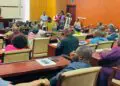
GBARNGA, Bong County — Bong County became the focus of national attention last weekend as it hosted President Joseph Nyumah Boakai Sr., top government officials, and hundreds of chiefs, elders, and traditional governors for the 2025 National Assembly of Chiefs and Tribal Governors. The two-day event, themed “Let’s Come Together and Build Liberia,” brought together national and traditional authorities to enhance coordination, strengthen grassroots engagement, and support the administration’s decentralization efforts.
Bong County Superintendent Loleyah Hawa Norris welcomed delegates “on behalf of the peace-loving people of Bong County,” expressing gratitude for what she called a historic moment for the county. She acknowledged the presence of Vice President Jeremiah Kpang Koung, lawmakers of the 56th Legislature, the Senate Pro Tempore, the Bong County Legislative Caucus, and a range of cultural leaders.
Norris reminded the assembly that Liberia’s foundation rests on unity and shared responsibility.
“As we face the challenges of rebuilding our nation, our communities and our institutions, the call to come together is not just a slogan, it is a moral duty,” she said.
She praised chiefs and traditional leaders as protectors of peace, culture, and community harmony.
“You are the bridge between government and the people,” she said, urging them to collaborate with the administration to resolve land disputes peacefully, empower youth and women, protect the environment and uphold cultural values. Norris reaffirmed Bong County’s support for the President’s national development agenda.
Her remarks were followed by a short agricultural exhibit, showcasing Panta Black Rice, Panta Red Rice, and locally tested kidney beans. The items were presented by Quanuquanei Karmue, founder of the Panta Pride Foundation, who emphasized the county’s growing potential in local food production and agro-processing.
Nimba County Superintendent Kou Meapeh Gono, serving as chair of the Superintendents Council of Liberia, delivered a message of solidarity. She described chiefs and elders as “the moral backbone of rural communities” and called for stronger collaboration between traditional authorities and county administrations.
Gono stressed the importance of better social services, stronger community leadership, and regular dialogue to support peacebuilding, land management, and youth empowerment. She reaffirmed the council’s dedication to President Boakai’s decentralization agenda.
Internal Affairs Minister Francis Sankilah Nyumalin Sr. provided a detailed overview of the assembly’s goals, describing it as a direct fulfillment of President Boakai’s promise to lead a people-centered government.
He said the assembly functions as a national platform for chiefs to connect with the President on governance, peace, resource management, land issues, youth and women’s involvement, and the modernization of traditional leadership.
Nyumalin outlined four key expected outcomes:
— Establishment of an Annual Forum of Traditional Chiefs to guide national dialogue on peace and development.
— A Framework Document outlining shared priorities between government and chiefs.
— A national consensus on eliminating harmful traditional practices, including FGM, while promoting positive cultural values.
— Clearly defined roles for chiefs in implementing the ARREST Agenda and supporting County Development Plans.
He reaffirmed the government’s commitment to decentralization and peacebuilding as Liberia prepares for upcoming international assessments, including its 2026 UN Security Council obligations.
President Boakai delivered the keynote address, highlighting the vital role of traditional leaders in maintaining Liberia’s peace and cultural heritage.
“You, our traditional leaders, have kept our communities together,” he said, thanking the chiefs for preserving national unity.
He criticized decades of over-centralized governance that left rural communities excluded from decision-making.
“For too long, centralized governments have failed our people,” Boakai said. “Development cannot be meaningful when decisions affecting rural communities are made far away from them.”
The President emphasized the new law establishing the Ministry of Local Government — the legal framework that will fully implement the Local Government Act of 2018 and bring power, resources, and decision-making closer to the people.
Boakai outlined key national priorities, including building roads and bridges to connect communities, expanding electricity and clean water access, strengthening schools, and investing in agriculture to decrease dependence on imported food.
He stressed that poverty declines when citizens have dependable roads, health services, education and functioning public infrastructure.
Boakai commended Liberia’s rising international profile, highlighting renewed global partnerships and an improved travel safety ranking. He expressed gratitude to traditional leaders for backing the reforms that have helped restore the country’s credibility.
“Let us come together and build Liberia,” he said in closing. “No county, no tribe, no individual can build this nation alone. We must love Liberia, sing Liberia and together build Liberia.”
The 2025 National Assembly of Chiefs and Tribal Governors represents an important step toward better collaboration between national leaders and traditional authorities. With Bong County hosting the event, the forum sets the stage for annual discussions, enhanced decentralization, and ongoing partnership in Liberia’s development process.




Discussion about this post