


Published: August 21, 2026
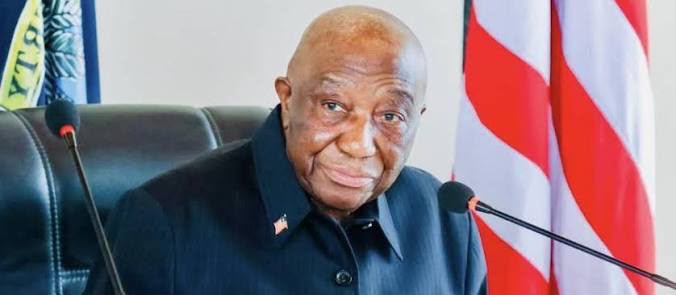
PAYNESVILLE – President Joseph Nyuma Boakai has signed into law the Cybercrime Act and the Data Protection Act, marking a major development in Liberia’s efforts to strengthen cybersecurity and protect personal information in the country’s rapidly expanding digital environment.
Post and Telecommunications Minister Sekou M. Kromah made the disclosure exclusively to Punch News Wednesday during the signing and adoption of the Liberia Telecommunications Authority’s Satellite Communications Guidelines in Paynesville.
“I also want to announce in this gathering today that the President has signed into law the Cybercrime Act and the Data Protection Act,” Kromah announced.
The two laws establish separate but complementary legal frameworks for Liberia’s digital space.
The Cybercrime Act targets offenses committed through or involving computer systems and digital networks, while the Data Protection Act establishes rules governing the collection, processing, storage, use and protection of personal information.
Kromah described the enactment of both laws as a significant achievement, saying the measures are important not only for Liberia but also for the wider sub-region and international digital environment.
“This is the first time in the history of this country … to see these two legal frameworks that are important, not only to Liberia, but in the sub-region and internationally,” he said.
The Cybercrime legislation has been under consideration for several years. The Senate passed the Cybercrime Act of 2025 with amendments on Nov. 4, 2025, following review by its relevant committees. The measure had previously gone through the House of Representatives before the Senate’s consideration of the amended version.
The legislation is intended to strengthen Liberia’s ability to prevent, investigate and prosecute cyber offenses, including unauthorized access to computer systems, digital fraud, identity theft, illegal interception and other forms of abuse involving computer systems and electronic data.
The law also provides a legal framework for handling electronic evidence and strengthens mechanisms for cooperation in investigating cybercrime.
The Data Protection Act, meanwhile, addresses the protection of personal data and privacy as more government services, financial transactions, communications and commercial activities move online.
President Boakai submitted the Data Protection Bill to the Legislature in June 2025 as part of efforts to establish a legal framework for the protection of personal information.
The enactment of the two laws comes as the Boakai administration accelerates its broader digital transformation agenda. In April, the President issued Executive Order 163, establishing the Office of Technology, Digitalization and Innovation and directing a government-wide shift toward secure and interoperable digital systems.
Kromah credited the Legislature, particularly the committees responsible for telecommunications, with helping advance the legislation.
“When we submitted the draft acts … you were forceful in supporting the process to the National Legislature,” he told LTA officials.
He also commended the Legislature for passing what he described as important legal frameworks for the country.
The signing gives Liberia new statutory tools to address the growing risks associated with digital crime while establishing stronger protections for citizens whose personal information is increasingly being collected and processed electronically.
For the government, implementation will now be the critical test, as the effectiveness of the two laws will depend on institutional capacity, public awareness, enforcement and the ability of regulators and law-enforcement institutions to apply the new legal requirements.







Discussion about this post