



Published: June 18, 2025
MONROVIA – President Joseph Nyuma Boakai has set up an emergency Presidential Task Force in a direct response to warnings from the United States that Liberia could face a travel ban over soaring visa overstays and security failures.
The move comes in the wake of a classified U.S. State Department memo, reported by The Washington Post, listing Liberia among 36 countries at risk of being hit with expanded travel restrictions. The memo cites Liberia’s alarming visa overstay rate and weak identity verification systems as key reasons behind the proposed ban—reviving elements of the controversial Trump-era policy.
To prevent Liberia from being blacklisted, President Boakai is personally chairing the newly formed Task Force, with Foreign Affairs Minister Sara Beysolow Nyanti as co-chair. Other members include the Ministry of Justice, Ministry of Health, Ministry of State for Presidential Affairs, the Liberia National Police, the Office of the National Security Advisor, and the National Security Agency.
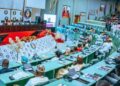
The Task Force held its first meeting on June 17 at the Executive Mansion. The high-level gathering brought together the heads of Liberia’s top security and diplomatic institutions, including the Justice Minister, the National Security Advisor, and the Inspector General of Police.
According to an Executive Mansion statement, the Task Force has already drafted a multi-sectorial work plan that will be implemented in close partnership with the U.S. Government. The plan, President Boakai said, will be “monitored and evaluated to ensure accountability and results.”
“We take this threat seriously and are moving swiftly to protect Liberia’s global standing and the rights of our citizens to travel freely,” Boakai said during the meeting. He reaffirmed his administration’s commitment to good governance, rule of law, and Liberia’s historic ties with the United States.
The threat of a travel ban comes amid mounting U.S. concerns over visa compliance. According to a June 2024 report from the U.S. Department of Homeland Security, nearly half—49.48 percent—of Liberians issued B-1/B-2 visitor visas in Fiscal Year 2022 failed to return home after their authorized stay. For student visa holders, the overstay rate was 29.95 percent, and the overall non-return rate across all visa categories reached 82.03 percent, making Liberia one of the worst offenders globally.
In October 2024, U.S. Ambassador to Liberia Mark C. Toner publicly warned that the Embassy’s visa officers were being guided by the country’s dismal compliance record. Speaking on the state-run ELBC radio, Toner said, “It’s just a reality that the overstay rate, which is over 50 percent, has an influence on how officers at the embassy judge the cases.”
The Ambassador made it clear that travel privileges depended on trust and compliance. “Liberians, when you travel to the United States, please come back within the period because that’s the only way the calculation can drop,” Toner urged.
Liberia’s visa rejection rate for the 2023/2024 fiscal year stood at 78.19 percent, the fourth highest globally—further straining the credibility of Liberian applicants and worsening their chances of securing entry into the U.S.
The State Department memo also highlights other structural issues affecting countries on the potential ban list. These include poor civil documentation systems, document fraud, and inadequate national ID verification processes. It further warns that countries unwilling to cooperate with U.S. deportation efforts or third-country resettlement schemes may face harsher penalties.
While the document did not specify a timeline for imposing the travel ban, it leaves little doubt that corrective action is expected swiftly. Analysts believe Liberia’s inclusion on the list is a result of years of neglect in addressing immigration red flags.
“This didn’t happen overnight,” said immigration expert Julius K. Doe. “The data has been damning for years, and the U.S. is finally taking a harder stance.”
President Boakai’s decision to chair the Task Force himself is widely seen as a strategic move to show seriousness and reassure Washington of Liberia’s commitment to reform.
“Our partnership with the United States is rooted in shared history and mutual respect,” Boakai stated. “We intend to protect that relationship through action, not just words.”





Discussion about this post