


Published: August 10, 2026
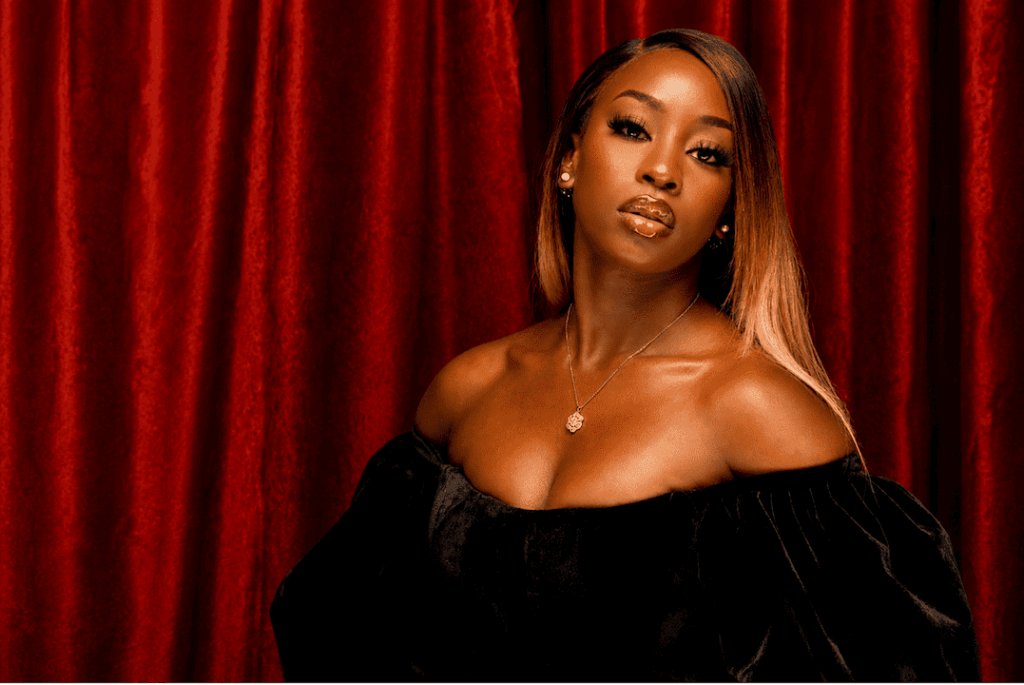
To carry a prominent surname in Liberia is to move with an advantage and a burden at once. The name opens the door before you knock, then makes the room wonder whether you earned the chair.
Benita Whitney Urey knows both halves of that bargain, and she says so without flinching.
“Some opportunities come to me easily because of who my father is, with the family that I come from,” she says. Then the other side. When she goes looking for sponsors for her football club, she meets a wall built out of the same assumption. “Sometimes I lose a lot of opportunities because of this mindset,” she says. People decide she already has everything, and stop returning the call.
At 28, Urey is chief executive of three things she built rather than inherited: Shaita Angels Football Club, the Healing Liberian Foundation and The Liberian Influence, the blog that has become one of the country’s largest online platforms. She is the youngest of three sisters, daughter of a Kpelleh father and a Kru mother, and she grew up in Careysburg, where she lived most of her life and where her club still hails from.
She does not describe any of it as arrival.
“I haven’t really felt like I have achieved so much because I feel like I always have a goal that I need to meet,” she says. “I feel I could do more, and I want to achieve more.”
Building a team where women are still asking for room
The club is where the argument about her name gets settled, week by week.
Shaita Angels has won the Lower League Championship, taken the FA Cup, known as the Orange Cup, twice, and won the Super Cup. For three consecutive seasons it has finished league runner-up. Urey puts the growth down to the same restlessness that will not let her sit still. “That’s why, within a short time, my team has grown to be one of the most competitive female teams in the country,” she says.
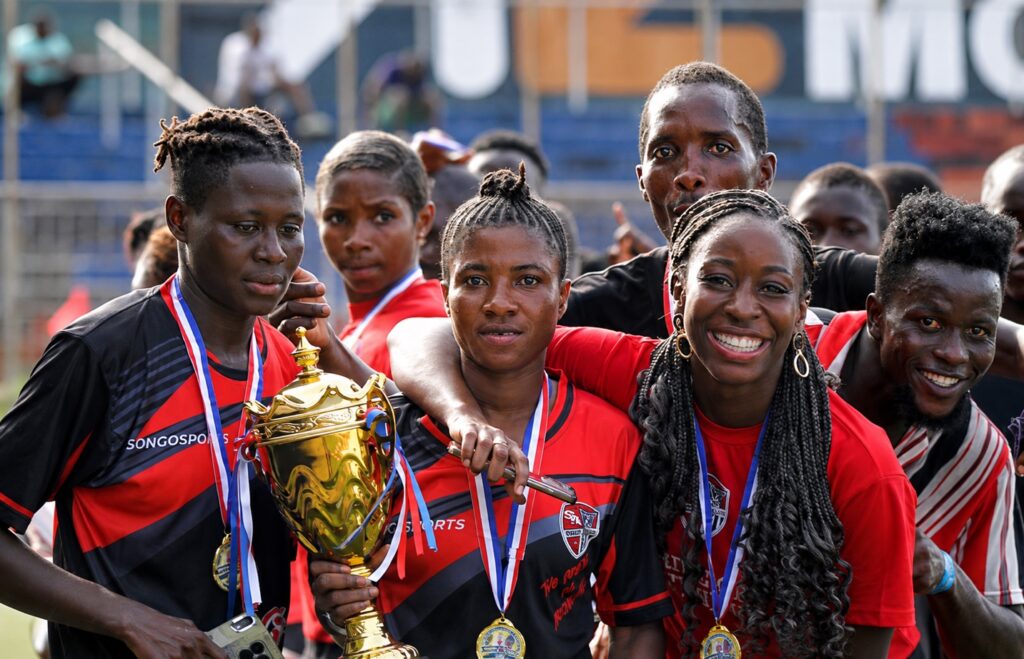
What the trophy list does not show is the part with no crowd in it. The sponsorship letters. The partnerships negotiated one at a time. The fans and supporters she keeps close because a women’s club in Liberia runs on goodwill as much as on gate receipts.
She is direct that her father is not the one making those calls. He gives her enough to live comfortably, she says, and no more.
“My dad gives me enough for me to be okay and live my life, but my dad does not spoil me and still gives me the opportunity to try to do more for myself and learn what it means to achieve for yourself,” she says. “So like with my team I’m constantly reaching out to sponsors, finding partnerships on my own, not with the help of my father.”
The surname gets her the meeting. It does not get her the check.
Hundreds of surgeries, and a platform she did not expect
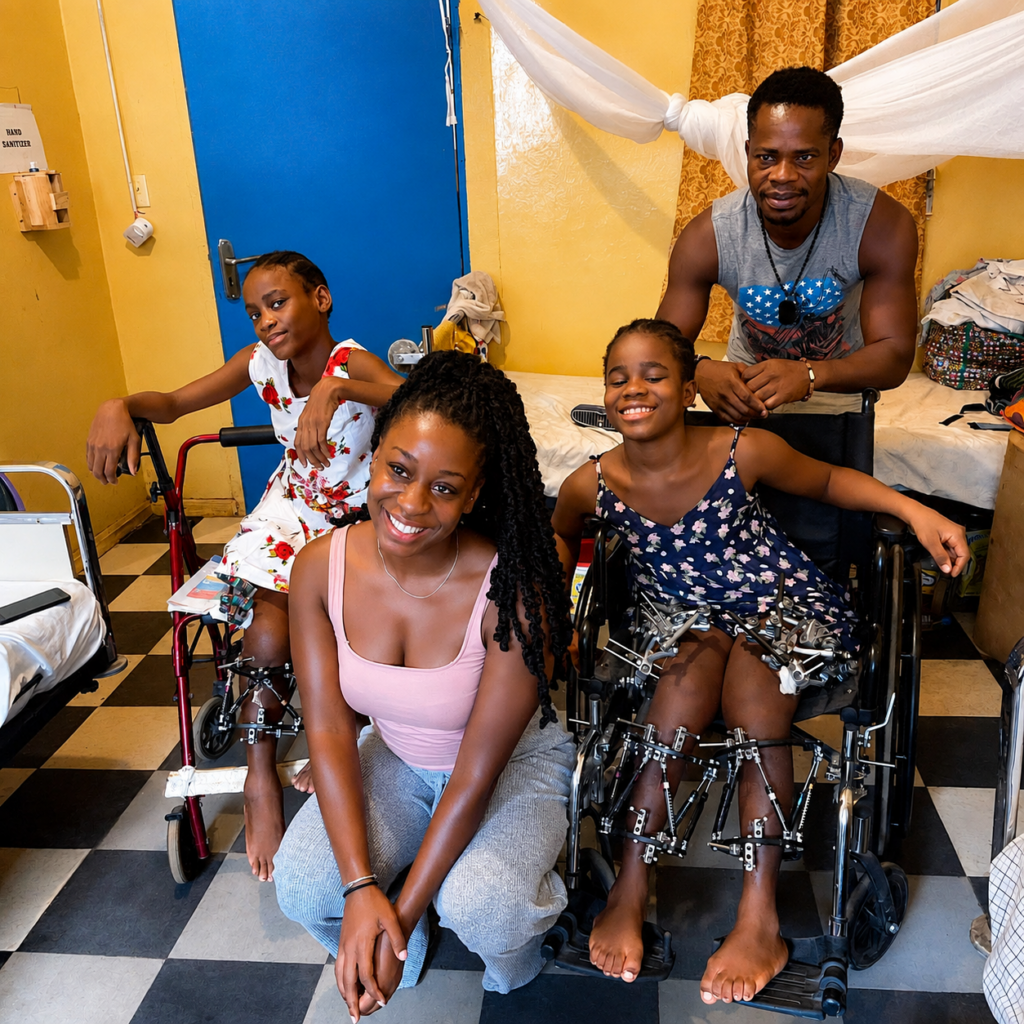
Through the Healing Liberian Foundation, Urey says she has helped hundreds of Liberians reach life-changing surgeries and medication, and has created opportunities for patients to travel abroad for specialized care.
That work is the one she measures herself against.
“I always feel like my life is more meaningful when I can impact more people,” she says.
The Liberian Influence started as a personal blog and grew into a platform with more than 300,000 followers on Facebook, alongside audiences on X and Instagram. The scale of it has not made her comfortable with the visibility that came attached.
She calls herself a public figure who never wanted to be one, someone who would rather the achievements arrived without the commentary. They did not. The criticism came, and it has been steady.
“If you’re rude to me, I will be rude to you”
Urey has not adjusted her personality to make the criticism stop.
“If you’re rude to me, I will be rude to you. If you are productive towards me, I will be productive towards you,” she says.
She describes herself as strong-minded and outspoken, willing to say exactly how she feels about a subject regardless of the backlash. She also thinks some of the reaction has less to do with what she says than with who is saying it.
“A lot of times, being a young lady in Liberia, being outspoken, knowing what you want for yourself, exactly what you want, sometimes it can be intimidating to other people,” she says.
She has not made herself smaller to fix that.
Why she walked away from activism
There was a period when Urey was one of the loudest voices in Liberia’s anti-rape movement. She describes the campaign she took part in as one of the most successful of its kind in the country, mounted alongside figures including Titus Kpakala and Duku Jallah, part of a wider demand for an end to rape and the abuse of women and children.
She came into that work through people she still names with admiration: Aaron Ireland, Satta Sherif and Abraham Keita. “Those brilliant young people who were part of the struggle. You know, I learned a lot from them,” she says.
Then she left it. Not because the cause stopped mattering, but because she concluded the country would never let her advocacy be read on its own terms.
“You can never be an independent activist in Liberia. You have to be a political activist,” she says. Her father is a politician. So is her sister. “Everything that I did was overshadowed by the political undertone of Liberia. And I felt like it wasn’t being proactive. And I wasn’t being effective anymore, because people were looking at my actions the wrong way when actually we just want these children to stop being raped and sodomized.”
She wanted safer environments for women and for young boys. What she got was a debate about her surname. She stepped back completely.
The days that go backward
Urey is candid that the work does not run on momentum.
Some days she wakes intending to be productive and reality pushes the plan back, sometimes several times in a month, sometimes several times in a day. She could stop. She could take the easier life that is available to her and enjoy it.
She says what keeps her in it is arithmetic she cannot argue with. “A lot of people depend on me not giving up, so giving up is not only just about me.”
Her sisters are the counterweight. When she treats something she has done as small, they tell her it could be bigger.
What failure taught her
She does not perform invulnerability. She says she has failed many times and been disgraced publicly and privately, and that none of it ended her.
“It never hurts to fail,” she says. She looks at her failures and improves, on the reasoning that without the mistake she would still be doing it her own way, unaware there was a better one.
Her advice to the girls watching is not that the road is smooth. It is that a wrong turn is not a verdict. If the first field does not work, try another. “Always be able to re-engage and do something for yourself to push yourself forward,” she says.
And then the line she keeps coming back to.
“There’s no way you can go from down. You can go down again. You can only go up. So once you fall flat on your face, always be able to get up and try again.”
At 28, she is still building. The name commands recognition on its own. What she does with it is the part she intends to be remembered for.






Discussion about this post