


Published: October 20, 2026
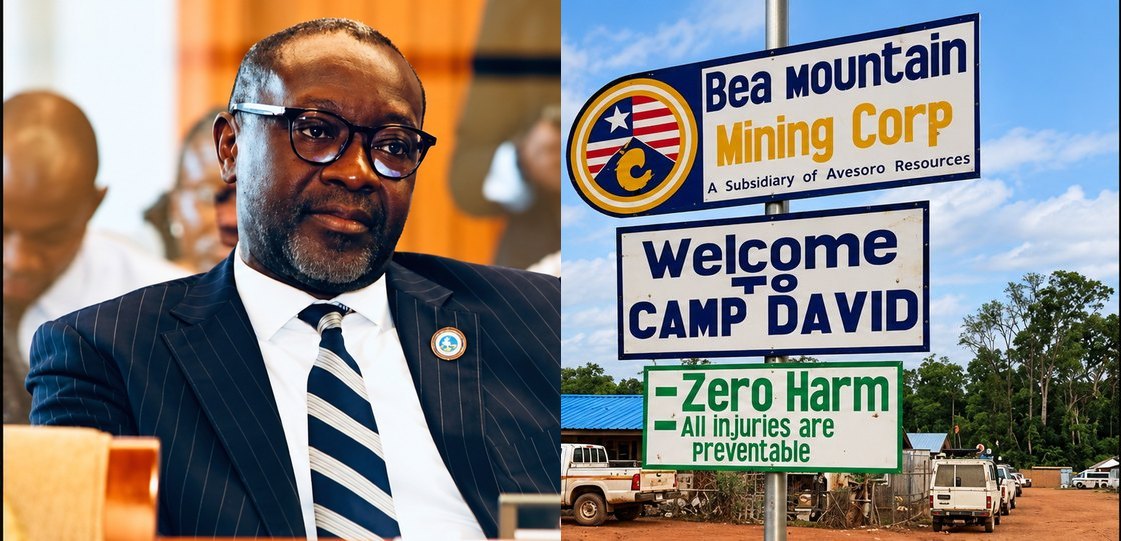
MONROVIA — Bea Mountain Mining Corp. lifted 16.4 million gallons of diesel over nine months without paying any of the petroleum levies that fund county equipment and community development, Gbarpolu County Sen. Amara M. Konneh said Tuesday. He said the company accounts for more than half of the money importers failed to pay.
By Lennart Dodoo
Sen. Konneh chairs the Special Senate Committee to Review Petroleum Levies to Fund Counties’ Equipment and Communities’ Social Development. He told the Senate that the committee’s preliminary reconciliation found 21 of 25 importers underpaid. The review compared Liberia Petroleum Refining Co. lifting records with Liberia Revenue Authority collections from October to December 2025 and from Jan. 1 to June 30, 2026, a period in which importers lifted about 107 million gallons.
“The largest single variance is Bea Mountain Mining Corporation: 16.4 million gallons of AGO lifted, zero dollars paid,” Konneh said in a statement delivered on the Senate floor after the legislative break. He said the company owes $1.8 million, or 55% of the total gap.
Sen. Konneh said Bea Mountain claims a duty-free exemption. He said the Senate will ask the minister of finance to produce the legal basis for that exemption within 72 hours.
“Until then, no company is above the law this Senate has made that funds our counties,” he said.
The committee met with the LRA, the LPRC and every petroleum importer except Bea Mountain, Konneh said. He said the final report will recommend a “No Pay, No Lift” rule, under which the LPRC could not release fuel without real-time LRA confirmation of payment through a digital system backed by a commercial bank.
Konneh also warned colleagues against building the fiscal 2027 budget on what he called a windfall. He said fiscal 2026 revenue was lifted by a one-off US$200 million concession bonus. Without it, he said, structural revenue is US$1.1 billion, not the US$1.3 billion headline. The fiscal 2026 budget was approved at US$1.249 billion and rose to US$1.303 billion with a supplementary budget.
“We must not treat windfall as permanent space and plan expenditures around it,” he said. He warned that keeping spending at US$1.3 billion would create a structural deficit of US$100 million to US$150 million.
He said citizens are not feeling the country’s growth because inflation has outpaced it every year. In fiscal 2026, by his figures, growth was 5.5% and inflation 5.9%. He said growth is concentrated in mining, which expanded 16.6% but employs few Liberians, while agriculture grew 1.3%. He said execution of the Public Sector Investment Program in health and education stands at about 4%.
Konneh said diesel prices rose from L$840 to L$1,235 a gallon between October 2024 and September 2026, a 47% increase, while gasoline rose from L$775 to L$985. He said an earlier Senate investigation he co-chaired with Sen. Nuquay found consumers were overcharged L$131 million because the wrong exchange rate was used.
He proposed that the LPRC be required to publish its full pricing formula every week. He also proposed that, if the US$3.24 million in levy leakage is recovered, gasoline prices be cut by 5 cents for six months for keke and motorbike operators.
Sen. Konneh closed by asking the Senate to summon the Liberia Drug Enforcement Agency, the Ministry of Health and the Ministry of Youth and Sports to a joint hearing on drug abuse before budget debate begins. He said the LDEA received less than US$2 million for operations in fiscal 2026, and that no public rehabilitation center exists outside Monrovia.
“Let us fund prevention, not just funerals,” he said.
He said elders and mothers in Gbarpolu raised drugs with him before roads or schools during his constituency visits to Nguowolala and Gbarma districts.
Nyumalin Disowns Deputy’s Announcement on Dissolution of 108 Cities
By Alphanso G. Kalama
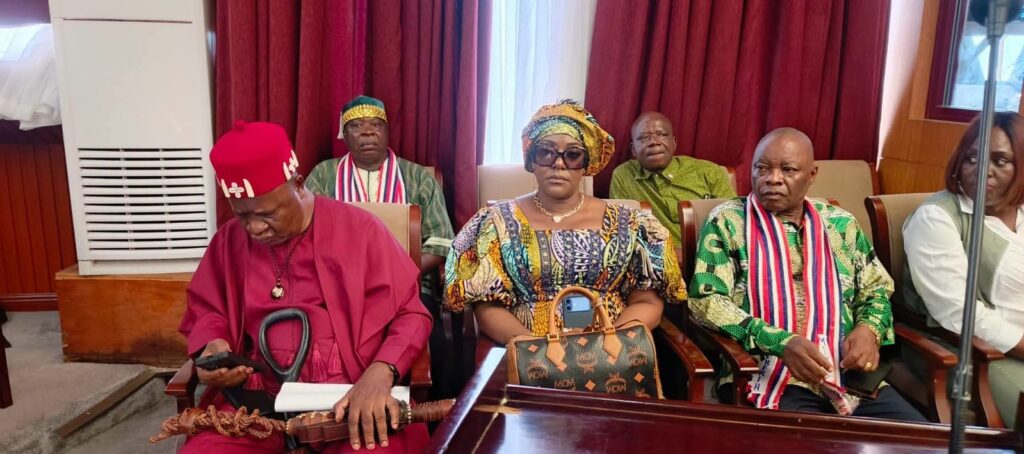
MONROVIA — No Liberian city has lost its legal status, Local Government Minister Francis Sakila Nyumalin told the House of Representatives on Tuesday. He disowned his deputy’s announcement that 108 of the country’s 141 cities had been dissolved and said any change in a city’s status must go before the Legislature.
Nyumalin told House plenary that statements by Deputy Minister for Urban Affairs Fatima Bintu Sirleaf on state broadcaster ELBC on Oct. 7 did not represent the ministry’s position. He apologized to lawmakers for the confusion and public alarm they caused.
“I’m aware the Deputy Minister was on Radio ELBC. If for any reason you heard something contrary, it is not involved,” Nyumalin said.
His appearance followed a communication from Sinoe County District 3 Rep. Alex S. Noah. Noah raised concerns that the reported dissolution violated the Local Government Act of 2018.
On ELBC, Sirleaf had said a government assessment found that 108 cities no longer met the legal requirements for city status, leaving 33 qualified cities nationwide. She said Sinoe County would lose 43 of its 44 cities, Maryland would keep two of its 17 and Grand Kru would lose 32. She said Lofa would keep three of its six cities, Voinjama, Foya and Kolahu; Margibi would lose Marshall; and Nimba would keep all six of its cities.
The announcement alarmed lawmakers, local officials and residents over the possible loss of municipal administrations, jobs and public services.
Nyumalin said the ministry, working with other government institutions and partners, had conducted a nationwide review to determine whether existing cities meet the act’s requirements. He said the review involved consultations with local authorities, lawmakers and residents, followed by a validation workshop in Kakata, Margibi County, in September. He said no action has been taken to dissolve or downgrade any city.
He said the ministry is preparing the assessment report for submission to the Legislature, which will decide what to do. The ministry is also studying the administrative, economic and employment effects of downgrading cities, he said. A city that loses its status could lose its mayor, and the civil servants assigned to its administration would be affected.
“We are assessing how many people will be affected to properly guide our recommendations,” Nyumalin said.
Section 2.16(d) of the Local Government Act sets the minimum requirements for city status. They include a population of at least 10,000, electricity, pipe-borne water, sewage services, waste collection, schools, health facilities, recreational facilities, demarcated wards, cemeteries, transport and communication networks, and business facilities.
Section 2.16(c) provides that existing cities, except Monrovia and county capitals, keep their legal status pending a review seven years after the law’s passage. Under that section, the minister must report to the Legislature on the status of each city for reaffirmation, and cities that fail the criteria are subject to relegation to town status. Section 9.2 provides that counties, cities and townships are established by the Legislature.
Senate Judiciary Committee Chairman Cllr. Augustine S. Chea, former Senate adviser James Brooks and Cllr. Mmonbeydo Joah have argued that only the Legislature can create or change the status of a city. In their view, the ministry’s role is limited to assessing cities, verifying whether they comply with the law and making recommendations.
“The Ministry may verify and recommend; it may not unilaterally legislate,” Chea said.
Liberia Looks to Rwanda to Make Local Government Deliver
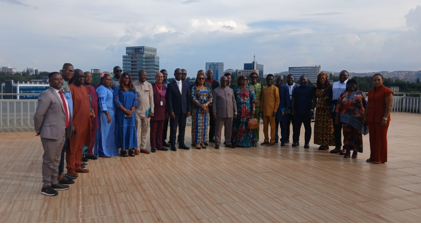
KIGALI, Rwanda — Liberia is looking to Rwanda’s postwar recovery for ways to help county governments deliver better services, as a government delegation began talks here this week on getting the country’s natural wealth to communities beyond Monrovia.
“We have gold, we have diamonds, we have bauxite and we have the ocean of affection. But how can we translate these resources into benefits for our people?” said Deputy Minister Edward Mulbah, who heads the delegation.
The team includes officials from the Ministry of Finance and Development Planning, the Ministry of Internal Affairs, the Governance Commission, and the U.N. Development Program. Rwanda Cooperation, the agency that shares Rwanda’s development experience with other countries, is coordinating the program. The tour runs from Oct. 18 through Oct. 29.
Mulbah said Liberia wants to understand how Rwanda rebuilt its institutions after the 1994 genocide against the Tutsi and turned that recovery into a wider national development program. Liberia has put local governance structures in place, he said, but they still need the capacity to deliver services and respond to citizens.
The visit comes as the government works to bring governance closer to communities, strengthen local institutions, and ensure public money delivers better services across all 15 counties. Liberia emerged from 14 years of civil war in 2003. The challenge since then has been to spread the gains of peace, growth, and public investment beyond the capital.
Liberia’s decentralization rests on the Local Government Act of 2018 and related laws and policies. Together, they are intended to strengthen local administration, citizen participation, and the management of public resources at the county and community levels. Making those structures work, particularly in local planning, revenue collection, budgeting, and service delivery, remains the government’s task.
Richard Niwenshuti, chief executive officer of Rwanda Cooperation, welcomed the delegation. He said his agency was set up to help other countries learn from Rwanda’s homegrown development approaches through South-South and triangular cooperation.
Since the agency’s founding in 2018, Rwanda has hosted delegations from more than 70 countries, Niwenshuti said. Those exchanges have covered governance, public financial management, digital services, social protection, and other areas.
He said Rwanda’s recovery after the genocide was driven by national unity, ambitious development goals and accountability. He said it also drew on homegrown solutions and lessons from abroad.
The Liberians were introduced to three of Rwanda’s signature tools. The first is Imihigo, a performance-contract system that ties agreed development targets to the performance of officials and institutions. The second is Umuganda, a monthly community work program. The third is a set of digital government platforms meant to make public services easier to reach.
Over the coming days, the delegation will study how Rwanda coordinates planning and implementation across levels of government, monitors performance, and engages citizens in local development. The team will also examine how central and local authorities divide responsibilities, funding, and accountability.
The program continues Wednesday with Rwanda’s Ministry of Local Government and its Ministry of Finance and Economic Planning, among other institutions.
The delegation’s learning is expected to shape discussions on strengthening Liberia’s decentralization framework and turning existing reforms into real improvements in people’s lives.
UN Day 2026: Liberia Puts Youth Aspirations at Center of 2030 Vision
By Roseline Gbessagee
MONROVIA — Young Liberians will lead this year’s United Nations Day commemoration on Monday, Oct. 26, presenting their vision for the country under the theme “The Liberia We Want by 2030” at an event the Ministry of Foreign Affairs will host for the first time.
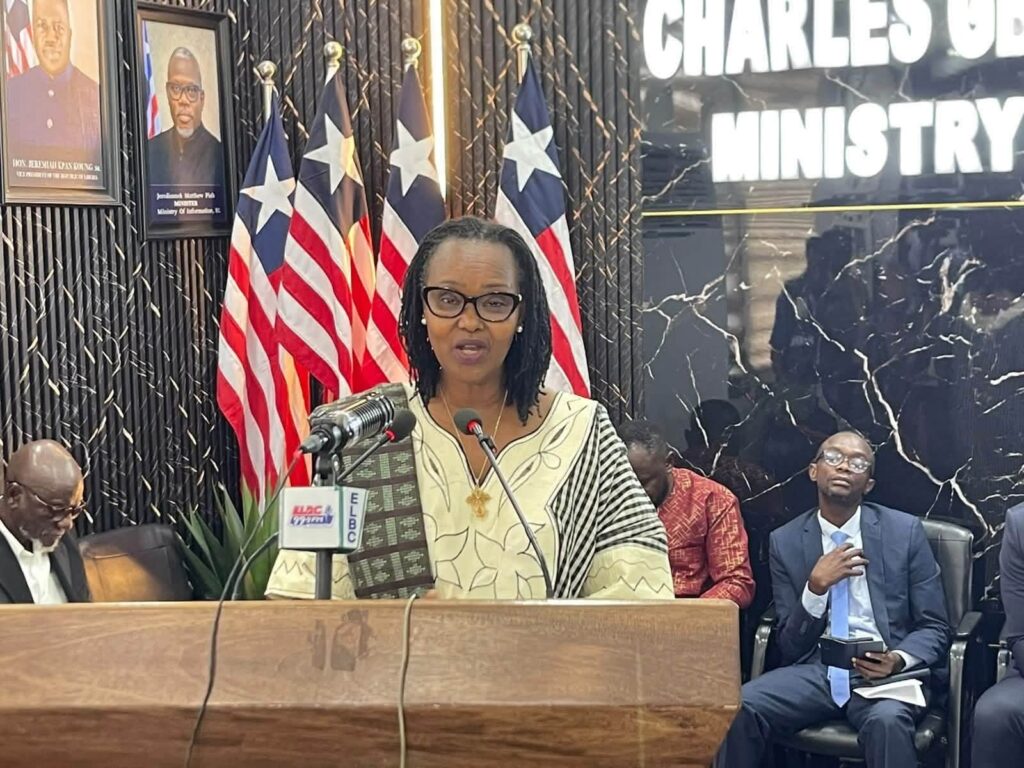
UN Resident Coordinator Christine N. Umutoni announced the plans Tuesday at the Ministry of Information, Cultural Affairs and Tourism’s regular press briefing in Monrovia. She said young people are expected to speak on employment, education, peace, economic opportunity and national development.
“We understand that many young people are particularly interested in the theme they have identified as ‘The Liberia We Want by 2030.’ This will provide them with an opportunity to share their aspirations and their vision for the country’s future,” Umutoni said.
The United Nations normally marks United Nations Day on Oct. 24, the anniversary of the UN Charter’s entry into force. The government moved this year’s observance because the date falls on a Saturday.
“United Nations Day is normally celebrated worldwide on October 24, marking the anniversary of the entry into force of the UN Charter, the founding document of the United Nations. Since October 24 falls on a weekend this year, the Government of Liberia has decided to observe the occasion on October 26,” Umutoni said.
Umutoni said involving young people matters because many were born after the civil conflict and have grown up with different expectations about governance, jobs and development. She said they see Liberia through the opportunities open to them and the country’s growing role in international institutions.
“For them, Liberia is a country looking toward the future, serving on the Security Council, and building global partnerships,” she said.
She described Liberia’s seat as a nonpermanent member of the UN Security Council as an achievement reflecting the country’s progress from conflict to peace and democratic governance.
“It recognizes the country’s progress in peacebuilding and democracy, as well as its growing role in advancing regional and global solutions to common challenges,” she said.
Umutoni said that international standing must be matched by work at home on unemployment, limited economic opportunity and social cohesion.
“We will celebrate the achievements of the Liberian people and the power of the partnership between Liberia and the United Nations. At the same time, we will reflect on the work that remains to be done to achieve sustainable development, particularly by creating opportunities for young people, strengthening social cohesion, and building resilience to emerging challenges,” she said.
She said young Liberians want more than political participation. They also want decent jobs, better living conditions and a peaceful society.
“If speaking with a young entrepreneur, for example, they will tell you that they want to find a job, access better opportunities, and enjoy a better quality of life. They also want peace and stability,” Umutoni said.
Past commemorations were held at the UN House compound and, on one occasion, in the counties. Umutoni said the move to the Foreign Ministry grounds reflects Liberia’s partnership with the United Nations.
“This year’s commemoration is particularly significant, and we are pleased that, for the first time, United Nations Day in Liberia will be celebrated on the grounds of the Ministry of Foreign Affairs,” she said.
The event is expected to bring together government officials, UN representatives, development partners, young people and others. It will feature cultural performances, exhibitions and activities highlighting cooperation between Liberia and the United Nations.
“As a UN family, we are honored that this program has received the full support of the country’s leadership. We look forward to the messages from the Government, national leaders, and young people who will participate in the programme,” Umutoni said.
She said Liberia cannot reach its development goals through government action alone. She called for stronger cooperation among public institutions, the private sector, civil society, women, young people and development partners.
“Building a better future is not the responsibility of the Government alone. It is not solely the responsibility of the private sector, young people, women, the United Nations, or development partners. It is a collective responsibility,” she said.
Umutoni asked the media to carry the day’s messages beyond Monrovia so that people in all 15 counties can follow the activities and join the national conversation about the country’s future.
“As we mark this 81st commemoration of United Nations Day, I wish to emphasize the commitment of the United Nations family to continued collaboration. We want to keep working closely with Liberia because we recognize that our objectives are aligned around peace, dignity, equality, opportunity, and prosperity for all,” she said.
Kouyateh Calls for Resistance Against Liberia’s Concession Agreements

By Masefane Konneh
MONROVIA — Former Ambassador Sheikh Al-Moustapha Kouyateh has called on Liberians to resist the country’s concession agreements and demanded they be renegotiated. He accused successive governments of handing the country’s natural wealth to foreign investors while citizens remain poor and jobless.
“There is nothing called concession that will benefit Liberia,” Kouyateh said Tuesday in an interview with Focus Online News.
He described his appeal as a call for a revolution of resistance against economic injustice and said it should not be read as an endorsement of violence.
“Revolution does not mean violence. Revolution means resistance: resistance to lies, resistance to continued poverty, resistance to maltreatment, resistance to injustice,” he said.
Kouyateh said Liberia must move beyond collecting royalties and use its mineral, agricultural and other resources to secure Liberian ownership, jobs and local industry. He said successive administrations have failed to negotiate deals that protect the country’s long-term interests, and that royalty payments alone cannot deliver development if Liberians are shut out of owning and managing resource industries.
He pointed to rubber, saying decades of production should have built a domestic industry that makes finished products and employs Liberians. He said the country’s continued reliance on raw exports shows the need for a different approach to concession talks.
Kouyateh questioned extending and renegotiating concession agreements with ArcelorMittal Liberia and Bea Mountain Mining Corp. He said no extension should be approved without a full assessment of the financial returns, jobs, infrastructure and benefits each company has provided to affected communities.
He did not present documents showing specific contract violations by either company.
Kouyateh also argued that Liberia should gain more jobs from its international shipping registry. He proposed arrangements to place more Liberians on ships flying the Liberian flag, and offered a hypothetical: 15 Liberians on each of 1,000 vessels would mean 15,000 jobs.
He said Liberia’s resources belong to its citizens and that elected officials hold them in trust. He compared the government to a vehicle the people own, with leaders as drivers bound to go where the owners want, and said officials must not treat national resources as personal property.
Kouyateh warned that continued hardship and public frustration could lead to demonstrations and louder demands for accountability.
“The people will not continue to endure poverty when there is no need to be poor,” he said.
Kouyateh rejected suggestions that his criticism comes from a personal dispute with President Joseph Nyuma Boakai. Asked about reconciling with the president, he said there was no personal conflict to resolve.
“I do not have any personal problem with him,” Kouyateh said. He added that he would meet and greet the president if the opportunity arose, and said his criticism is aimed at government policy, not at Boakai personally.
Liberian Businessman Meets Dangote, Eyes Petroleum Supply Deal
By Blamo N. Toe
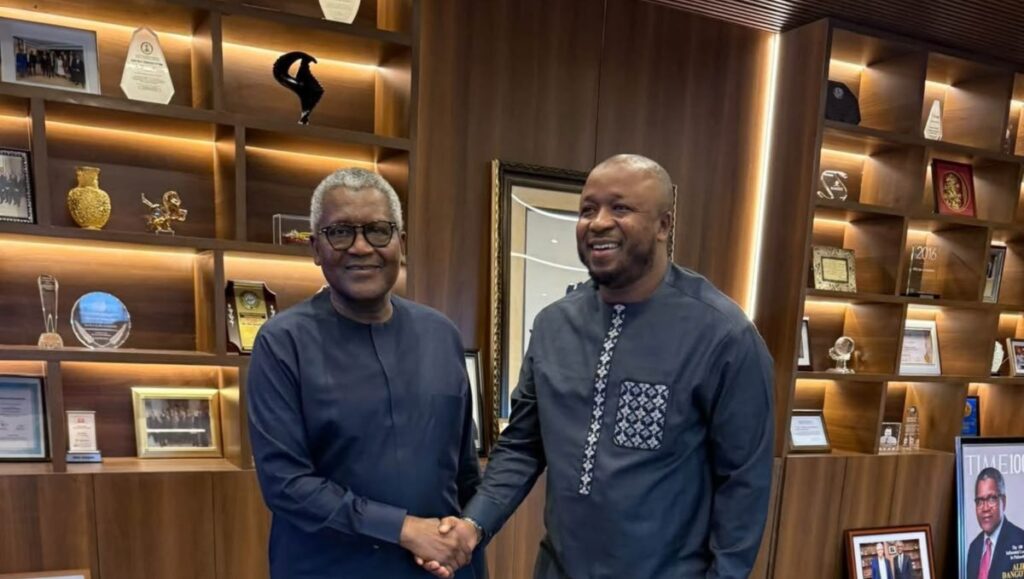
MONROVIA— Liberian businessman and petroleum sector stakeholder Morris Kamara met with Nigerian billionaire Aliko Dangote in Lagos, Nigeria, to discuss potential partnerships to strengthen Liberia’s petroleum supply, improve fuel availability, and expand investment opportunities in the country’s energy sector.
Kamara, chief executive officer of Easy Oil and Gas, met with Dangote on Monday, Oct. 12, 2026, at the Nigerian industrialist’s office in Lagos, where they discussed opportunities for Liberia to benefit from the Dangote Petroleum Refinery, one of Africa’s largest petroleum processing facilities.
The engagement comes as Liberia seeks to strengthen its petroleum infrastructure, expand storage capacity and attract private investment to improve the reliability and affordability of petroleum products in the domestic market.
The Dangote Refinery, located in the Lekki Free Zone in Lagos, has a reported processing capacity of approximately 650,000 barrels of crude oil per day, positioning it as a major potential supplier of refined petroleum products to African markets.
Kamara’s engagement with Dangote focused on identifying possible commercial arrangements that could connect Liberia’s petroleum market with the refinery’s production and distribution network.
Although the meeting did not result in a formal supply agreement, the discussions could lay the groundwork for future cooperation between Liberian petroleum businesses and the Dangote Group.
Kamara highlighted Liberia’s ongoing efforts to modernize its petroleum infrastructure under President Joseph Nyuma Boakai’s administration, particularly initiatives being undertaken by the Liberia Petroleum Refining Company (LPRC).
He pointed to the leadership of LPRC Managing Director Amos Tweh, whose administration has prioritized expanding petroleum storage capacity, improving infrastructure and encouraging private-sector participation in the industry.
According to Kamara, strengthening Liberia’s petroleum storage and distribution systems could create a more favorable investment environment and position the country to participate more effectively in the growing West African petroleum market.
He maintained that improved infrastructure, combined with strategic commercial partnerships, could diversify petroleum supply sources and strengthen the country’s energy security.
The Liberian businessman also expressed appreciation for the infrastructure development and reforms the LPRC management is pursuing, describing them as important to creating opportunities for private-sector investment.
Kamara emphasized that collaboration between government institutions and petroleum businesses remains essential to improving supply reliability and supporting the sector’s long-term development.
The meeting also comes amid growing interest among West African countries in sourcing refined petroleum products from within the region rather than relying exclusively on supplies from markets outside Africa.
For Liberia, access to petroleum products from the Dangote Refinery could provide an additional regional supply option, although any impact on domestic fuel prices would depend on commercial terms, transportation costs, taxes, distribution expenses, and other market conditions.
Kamara expressed optimism that continued engagement with Dangote and other regional investors could create commercial opportunities that support the availability and affordability of petroleum for Liberian consumers.
He reaffirmed his commitment to working with government institutions and private-sector stakeholders to attract investment and strengthen Liberia’s petroleum industry.
The Easy Oil and Gas chief executive also underscored the importance of expanding business relationships between Liberian entrepreneurs and major African industrial investors.
He said such engagements could support broader economic cooperation, encourage investment, and create opportunities for Liberian businesses to participate in regional petroleum trade.
Dangote, whose business interests span petroleum refining, cement manufacturing, and other industries, has expanded his group’s involvement in Africa’s energy sector by developing the Lagos refinery.
The facility is expected to play an increasingly important role in regional petroleum supply as African countries seek to strengthen energy security and reduce dependence on imported refined products from outside the continent.
Liberia Pledges Top Backing for Investors Who Process, Manufacture
By Blamo N. Toe
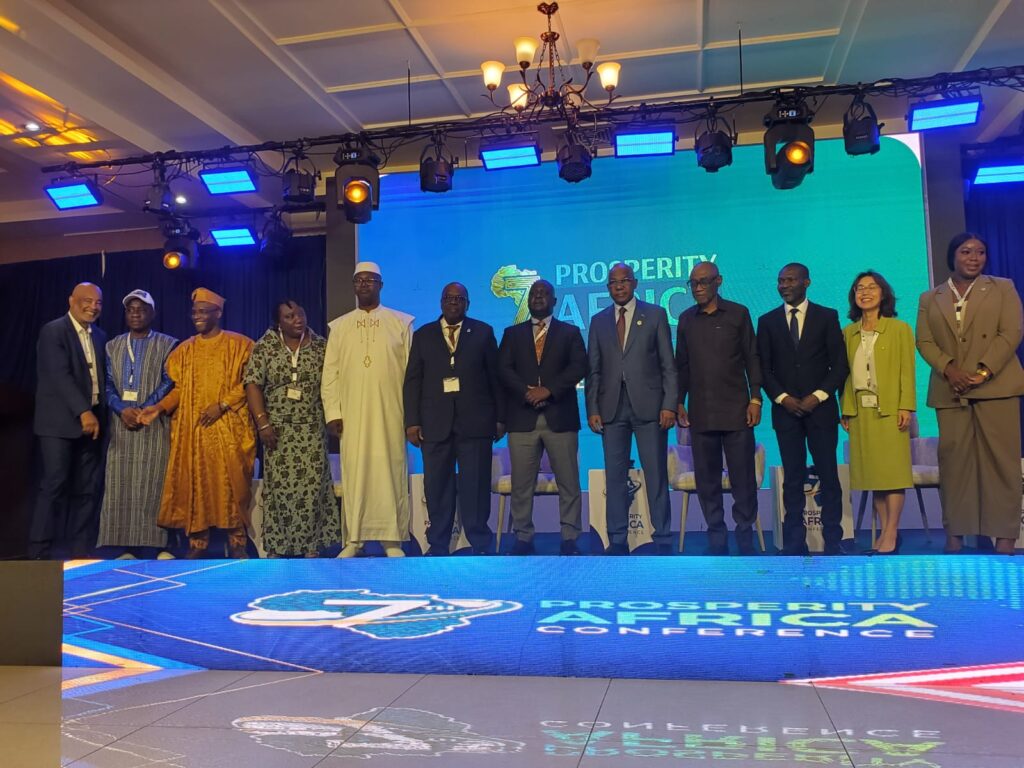
MONROVIA — Liberia will give its strongest government support to investors who process raw materials, manufacture goods, generate power and create jobs. Acting Commerce and Industry Minister Stephen M. Yekeson Jr. told African business leaders Tuesday that the country can no longer rely on exporting raw commodities.
“Invest in production, not only trade. The greatest returns, and the greatest support from Government, will go to investments that process, manufacture, generate power and create jobs,” Yekeson said in the keynote address, which he delivered on behalf of President Joseph Nyuma Boakai at the 7th Biennial Prosperity Africa Conference and Liberia Investment Forum.
The conference opened at the Ellen Johnson Sirleaf Ministerial Complex under the theme “Innovation in Business Leadership and the Economics of Tomorrow.” The Liberia Chamber of Commerce and the Pan-African Chamber of Commerce and Industry co-host it, bringing together investors, development partners and policymakers from across Africa.
Yekeson said the government is working to simplify import and export procedures, digitize business registration, strengthen contract certainty and cut administrative barriers. He said the Ministry of Commerce and Industry’s 2025-2029 strategic plan prioritizes trade facilitation, competitiveness, enterprise development and transparent market regulation.
“Investors should learn of a new rule from a notice, not from an inspector,” he said.
He acknowledged that Liberia’s economic stability has not yet translated into industrial growth or jobs. Citing the International Monetary Fund, he said the economy is projected to grow 5.5% in 2026, driven largely by mining, manufacturing and construction.
“The World Bank has told us, correctly, that stability is not the same as transformation,” he said.
“The economics of tomorrow will not reward countries that only export raw materials. It will reward countries that add value, that move goods and money quickly and cheaply, and that make rules businesses can plan around,” Yekeson said.
He named agriculture and agro-processing, manufacturing and mineral value addition, and digital and financial services as priority sectors. He pointed to opportunities in rice milling, cassava processing, palm oil, gold refining, iron ore processing and timber, as well as electricity generation, transport and ports. He also listed the Monrovia and Buchanan special economic zones and the Monrovia Industrial Park as sites for industrial investment.
“Liberia is open for business. Not as a slogan, but as a commitment: to be predictable, to be fair, and to be a partner you can build with for the long term,” he said.
He presented Liberia as a production base for a market of more than 1 billion consumers under ECOWAS and the African Continental Free Trade Area.
Liberia Chamber of Commerce President O. Natty B. Davis II asked visiting investors to partner directly with Liberian businesses. He said investment must translate into jobs, financing and contracts for local firms.
“Prosperity means a growing business that can employ another young person. It means a farmer securing a reliable buyer, a woman entrepreneur obtaining finance to expand, and a local supplier winning a contract that allows that enterprise to invest, improve, and compete,” Davis said.
He said the chamber is supporting local enterprises through the Liberia Investment, Finance and Trade Project and the Youth Entrepreneurship Investment Bank initiative. The aims, he said, are to develop suppliers and connect Liberian businesses with financing and procurement opportunities. He said the chamber took part in validating the Draft Local Content Policy, and he welcomed proposed regulations to strengthen enforcement of the Liberianization policy.
“As co-hosts, our hope is that the value of this conference will be evident in the months ahead: in new commercial relationships, stronger enterprises, investment opportunities that move forward, and jobs created,” Davis said.
Mamadou Baldé, third vice president of the Federation of West African Chambers of Commerce and Industry, spoke on behalf of the federation’s president, Jani Ibrahim. Baldé, who also heads the West Africa Zone of the Pan-African Chamber of Commerce and Industry, urged governments to remove cross-border trade barriers, improve infrastructure and speed up implementation of the ECOWAS Trade Liberalization Scheme and the African Continental Free Trade Area. He said regional integration must move beyond policy talk to signed deals, investment projects and measurable results.
Over 20 Sierra Leoneans Arrested at Liberia Border, Face Immigration Probe
By Destiny D. Jabula
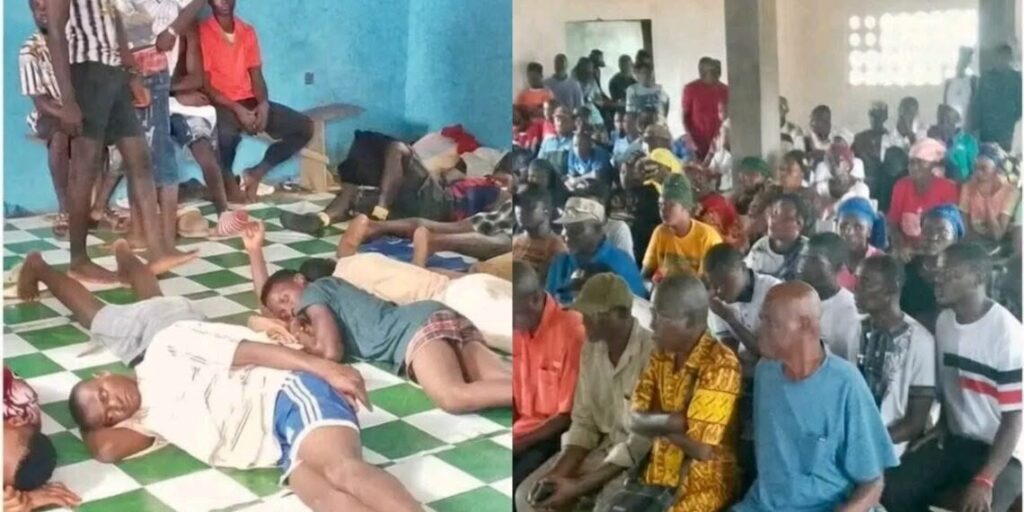
MONROVIA — More than 20 Sierra Leonean nationals arrested near the Bo Waterside border in Grand Cape Mount County for allegedly entering Liberia without valid travel documents have been turned over to the Liberia Immigration Service (LIS) for further investigation, the Liberia National Police (LNP) has disclosed.
The individuals, who reportedly crossed into Liberia over the weekend, allegedly told investigators they were traveling to Sinoe County in southeastern Liberia to engage in mining activities.
Speaking at a press briefing, police authorities said joint security personnel encountered the group near the Liberia-Sierra Leone border and launched an investigation into their entry.
According to the LNP, the individuals could not present valid travel documents when security personnel questioned them.
“After a thorough investigation by the joint security and the police, the Sierra Leoneans were subsequently handed over to Sierra Leonean authorities, furthering their transfer to the Liberia Immigration Service for investigation,” the police said.
However, the police account did not clearly explain the sequence of transfers between Sierra Leonean authorities and the LIS, or where the individuals are currently being held.
The LNP said investigations remain ongoing and pledged to provide further updates as additional information becomes available.
Meanwhile, the Sierra Leone Monitor reported that local community members initially apprehended the group, believed to have traveled from northern Sierra Leone, after they allegedly crossed the Mano River near Bo Waterside.
According to the publication, the migrants reportedly used a boat to cross the river in search of artisanal mining opportunities in Liberia.
The report said authorities held the individuals at the Jendema Police Station in Sierra Leone while they investigated their identities and the circumstances surrounding their attempted entry into Liberia.
The report did not officially establish their names or specific communities of origin at the time.
The Sierra Leone Monitor also reported that Sierra Leone’s Ambassador to Liberia, Eddie S. Mansally, convened an emergency meeting with stakeholders in Jendama after the arrests.
The meeting reportedly focused on the welfare of the detained nationals and efforts to engage Liberian authorities to ensure they handle the matter appropriately.
According to the publication, the Sierra Leonean Embassy in Monrovia had not issued an official statement at the time of its report, although diplomatic engagements were reportedly underway to verify the individuals’ identities and ensure due process.
Sando Tells Graduates to Turn Diplomas Into Service, Enterprise
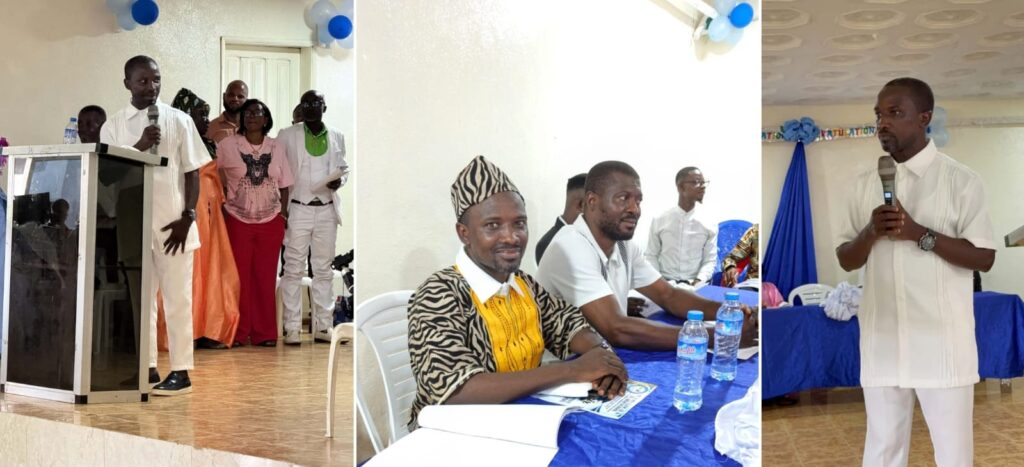
MONROVIA — Joseph Fatorma Sando, CEO of the Youth Entrepreneurship and Investment Bank Management Company, urged graduating high school students in Upper Caldwell on Saturday to turn their education into businesses and service to their communities. He told them a diploma alone will not change their lives or the country.
Sando was the guest speaker at the graduation of more than 50 students of St. James Foundation Elementary, Junior and Senior High School in Peace Community, Upper Caldwell. Speaking on the theme “Beyond the Diploma,” he gave the Class of 2026 five rules for life after high school: keep learning, guard your integrity, solve problems, stay resilient, and serve your community.
“Do not just do things; learn to do them very well. Excellence should be your signature. Whether you become a doctor, teacher, entrepreneur, or farmer, strive to be the best at what you do,” Sando said.
He told the graduates that graduation marks the start of lifelong learning, and that only people who stay curious will keep up in a fast-changing world. He said certificates without character are worthless and urged them to protect their integrity, even when it’s inconvenient or unpopular.
Sando said Liberia does not need more people who complain about problems. He said it needs young people who can identify their communities’ challenges and solve them.
“You will be disappointed, you will fail at times, you will be rejected, but never surrender. Your ability to rise after every fall is what defines you. Be resilient, be determined, and keep moving forward,” he said.
His final point was service. He called on the graduates to give back to Peace Community and to Liberia by volunteering, mentoring younger students and taking part in community development. He also urged them to embrace entrepreneurship, discipline and patriotism as they move on to further study or work.
The school’s principal and senior faculty gowned Sando in recognition of his support for the school. The school administration said he has backed the institution with financial, moral, spiritual and academic support, and has invested in the education of less privileged children in Peace Community.
Sando called the honor humbling and motivating and pledged continued support for education and youth empowerment.
The ceremony ended with certificates and awards for students who excelled in academics and conduct, and the valedictorian delivered a vote of thanks on behalf of the graduating class.
Judiciary Plans Vehicles, Motorbikes and Pay Raises for Public Defenders
GOMPA CITY, Nimba County — The Judiciary plans to give public defenders 15 vehicles, 35 motorbikes, laptops and higher salaries to help them reach courts across the country, Court Administrator Cllr. William B. Kollie said Tuesday.
Kollie announced the plan at an in-house training for public defenders organized by the James A.A. Pierre Judicial Institute. He said the Judiciary recognizes the difficulties public defenders face in reaching circuit and magisterial courts to provide access to justice. He said the package is part of Chief Justice Yamie Quiqui Gbeisay Sr.’s push to build the Judiciary’s capacity.
He urged the public defenders to take the training seriously, calling it an integral part of the judicial system.
Cllr. Bestman D. Juah, national coordinator of the Public Defense Program, thanked the chief justice for approving the quarterly training. He said it would sharpen the defenders’ skills and widen access to justice.
“Every day, you step into courtrooms where the playing field is uneven as a result of biases expressed against your clients by the court of public opinion; resources are strained, and the pressure is relentless. It is easy to feel overwhelmed by the volume of caseloads. But we must never forget that every single file represents a human life, a family, and a story that deserves to be told with dignity and fierce excellence,” Juah said.
Cllr. Moses S. Soribah, the institute’s executive director, urged the defenders to treat every case seriously. He urged them to challenge evidence where the law requires it, identify violations of their clients’ constitutional rights and pursue remedies through lawful procedures.
“The Supreme Court of Liberia established the National Public Defenders Office to strengthen access to legal representation for indigent persons accused of criminal offenses,” Soribah said.




Discussion about this post