


Published: May 20, 2026
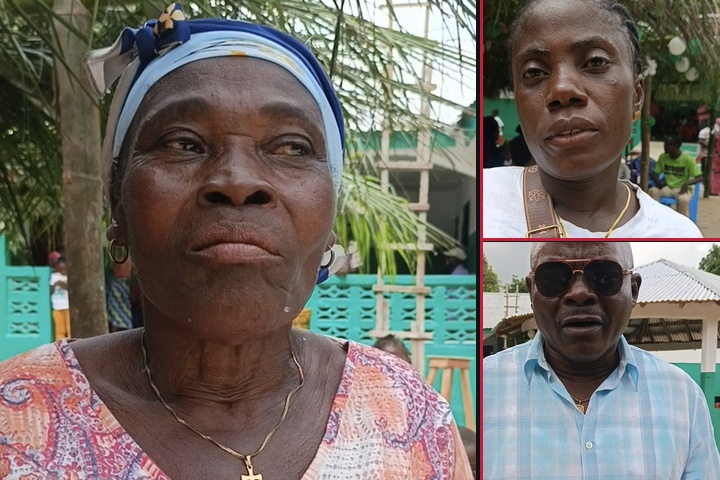
ARTHINGTON, Montserrado County — Madam Massa bled to death 18 years ago while being carried in a hammock for two and a half hours toward the nearest clinic. She never made it. Her death was not an anomaly in Arthington Back Bush. It was a warning.
Today, the same dirt roads that killed Massa still trap the sick during rainy season and swallow motorbikes in the dry. Pregnant women are still carried in hammocks over muddy tracks that stretch for hours. There is no paved road, barely any phone signal, and until recently, no clinic. More than 37 communities in this corner of Montserrado County say they have lived this way for decades.
The irony cuts deep. This is Montserrado County — home to Liberia’s capital and the political base that produced two presidents. Yet its back country communities say they have been systematically ignored.
“Since 1985, no motor grader has been here,” said Momolu Dolo, the late Massa’s brother and a longtime community advocate. “People have been brushing the road with their bare hands.”
Dolo believes politics explains the neglect. He said the area fell out of favor after former President Samuel Doe turned against it when Charles Taylor launched his rebellion from here in 1989. Former President Ellen Johnson Sirleaf’s 12-year administration, he said, offered little improvement.
“When Ellen won in 2005, she did not want to come where Charles Taylor came from,” Dolo said. “All through her 12 years, attention was less in this place.”
But he resists framing the community’s suffering as a consequence of Taylor’s legacy. “The government should go everywhere, irrespective of the population,” he said. “We are calling on the national government to come and look after this place. It’s really, really difficult for us.”
The rainy season transforms the roads into trenches. “If you come here during the raining season, you will want to cry,” Dolo said. “Dry season, cars are almost getting stuck. That tells you how the rainy season can be.”
The isolation has made pregnancy a source of dread. With no reliable transport and no communications network, women in labor often deliver on the roadside before reaching help. Memah Moore, the area’s chairlady, said the walk to the nearest facility in Arthington exceeds four hours. “We mostly carry our patients in hammocks, especially pregnant women. They sometimes give birth on the road during the journey,” she said.
For years, traditional midwife Bandu Kamara made that journey in the dark with patients in crisis. “It hasn’t been easy. We have been traveling long distances, sometimes in darkness,” she said. “The situation became so severe that they often had to refer us to Redemption Hospital.”
After years of advocacy by Dolo, a private clinic operated by Refuge Place International, founded by Dr. Mosoka Fallah, recently opened in the community. Kamara called it “a rescue.” But the clinic cannot pave the roads, restore phone service, or reverse the broader underdevelopment that residents say is pushing people out.
“The citizens are tired of brushing the road with our hands every day, nothing happening,” Dolo said. “That’s why it’s this deplorable. We are pushing many people away from here.”
Massa’s death, 18 years on, remains the defining symbol of what happens when geography and politics decide who receives healthcare. In the county that sent two presidents to the Executive Mansion, Arthington Back Bush is still waiting for a road.






Discussion about this post