

Published: October 26, 2026
MONROVIA – African governments are handing a growing share of their revenue to creditors even as their total debt falls. The African Forum and Network on Debt and Development (AFRODAD) says this year’s annual meetings of the International Monetary Fund and World Bank in Bangkok did nothing to change the rules that keep those costs high.
By Lennart Dodoo
At a press briefing after the meetings, AFRODAD cited IMF Managing Director Kristalina Georgieva’s own figures. Georgieva said the average cost of servicing debt in low-income countries has risen from 6% to 14% of government revenue over the past decade, despite a decline in overall debt.
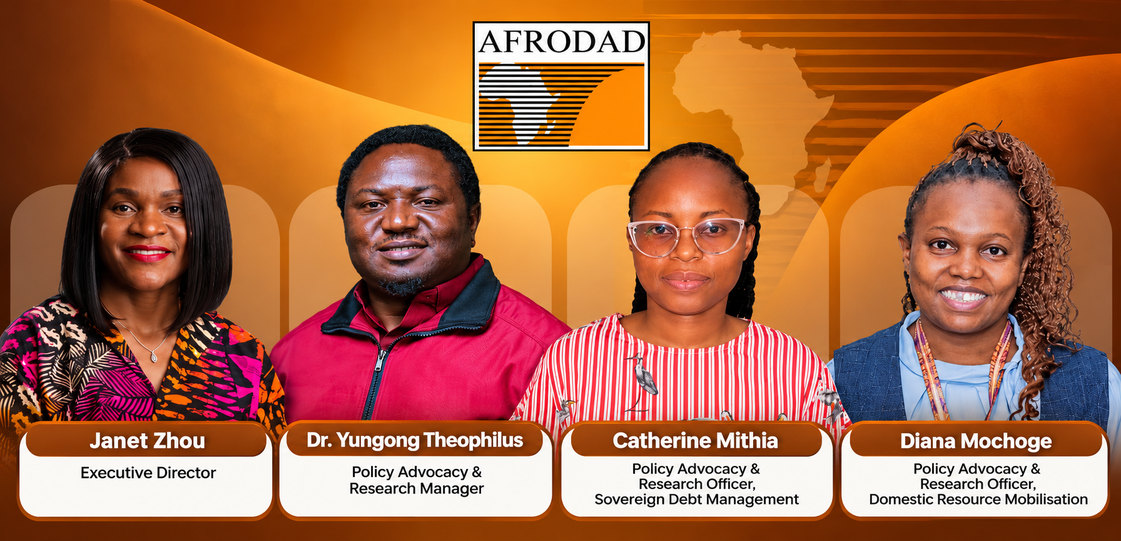
“This growing gap between debt levels and the cost of servicing that debt is a central concern for our advocacy,” said Janet Zhao, AFRODAD’s executive director.
Yungong Theophilus Jong, AFRODAD’s policy, advocacy and research manager, said that in four out of five countries in the sub-saharan region, interest payments on public debt now exceed public spending on health, on education or on both. By the end of 2025, he said, external public debt service in the region had reached about 18.2% of export earnings. Twenty-eight of the region’s 48 countries were at high risk of debt distress or already in it.
Jong said the Bangkok meetings refined the existing system instead of restructuring it. Instead of reforming the global financial architecture, he said, the IMF and World Bank are pressing African governments for “fewer but deeper” structural reforms that amount to fiscal consolidation.
“These reforms are fiscal consolidation, another word for it is austerity,” Jong said. “For AFRODAD, the current system is not fit for purpose.”
He acknowledged that proposals discussed at the meetings included better stress tests, treatment of domestic debt, and the inclusion of climate and development needs in debt sustainability analyses. He said none of those would change who sets the rules.
“On the ground, changes to debt frameworks, such as considering domestic debt, climate and development needs, and stress tests, may adjust the existing system, but they do not reform it. In our view, they preserve it,” he said.
Zhao said the communiqués from the meetings showed no substantial shift. The International Monetary and Financial Committee, the 25-member body that advises the IMF, repeated what she called familiar language on the G20 Common Framework, the debt restructuring mechanism launched in 2020. She said the revised joint IMF-World Bank Debt Sustainability Framework for Low-Income Countries, its first overhaul since 2017, was published shortly before the meetings but does little to reform the system.
“As I reviewed the discussions, submissions and communiqués from the Annual Meetings, I saw little evidence that the global financial architecture is changing,” Zhao said.
The network singled out Senegal as the next test of whether the restructuring process has improved. Catherine Mithia, AFRODAD’s sovereign debt management officer, said Senegal has become the fifth African country to request a debt treatment under the Common Framework. The request followed the discovery of previously undisclosed borrowing, which the IMF estimates at more than US$11 billion and S&P Global puts closer to US$13 billion.
Mithia said Senegal has reached a staff-level agreement with the IMF on a proposed US$2.2 billion program that still needs approval from IMF management and the Fund’s Executive Board. Because Eurobond holders hold a significant share of Senegal’s debt, she said, the country could face a long restructuring and the same fights over equal treatment of creditors that have dragged out other African cases.
AFRODAD is calling on the IMF to suspend fiscal consolidation measures and grant Senegal a standstill on debt payments while its program and restructuring are pending.
Mithia said the seventh progress report of the Global Sovereign Debt Roundtable, released during the meetings, presents Ghana’s and Zambia’s restructurings as largely complete. The IMF, the World Bank and the G20 presidency co-chair the roundtable, and Georgieva, World Bank Group President Ajay Banga and Erin Browne, the U.S. under secretary for international affairs, issued the report. According to Mithia, the report notes that talks with a few commercial creditors remain in both countries.
Ethiopia has concluded an agreement with its official creditors and is moving ahead with bilateral deals, she said. In June 2026, the Ethiopian government reached a new agreement in principle with a bondholder committee holding about 45% of its defaulted US$1 billion Eurobond. The Official Creditor Committee later judged the terms comparable, but the bond exchange was still pending when the report was published, Mithia said.
She said the roundtable treats better coordination as success while overlooking the process’s cost to debtor countries. Because the forum runs on voluntary consensus, its agreements are not binding and cannot stop creditor holdouts, she said. Lenders outside the Paris Club can still exploit procedural loopholes in the Common Framework.
“During negotiations, countries continue to service their debts, and interest continues to accumulate,” Mithia said. She said Zambia and Ghana cut social spending, including domestic debt haircuts that severely affected pension funds.
Mithia also criticized the IMF-World Bank “three-pillar approach,” under which countries facing liquidity problems may be given fiscal space if they keep up certain macroeconomic reforms. “However, African countries are facing solvency problems, not liquidity problems,” she said. Treating insolvency as a cash-flow problem risks pushing governments deeper into domestic borrowing, crowding out private lending and creating domestic debt traps, she said, citing AFRODAD research on Kenya and Senegal.
AFRODAD’s main proposals included:
- Early restructuring. Restructuring should begin as soon as a country’s debt becomes unsustainable, and the IMF and World Bank should publish the fiscal adjustment, thresholds and warning signs built into their debt sustainability analyses.
- Binding social spending floors. Health and education budgets should be protected by spending floors that rise over time and are enforced like any other IMF or World Bank disbursement condition.
- A UN sovereign debt convention. A UN Framework Convention on Sovereign Debt, which the group says is backed by the Common African Position on Debt and the Sevilla outcome document, would give African countries an equal voice on the cost of finance, lending and restructuring rules, and how credit ratings are determined.
- Cancellation or standstills. Where possible, debt should be cancelled unconditionally, or payments should stand still during negotiations.
Diana Mochoge, AFRODAD’s domestic resource mobilization officer, rejected the World Bank’s argument that Africa lacks the resources to fund its own development and must rely on private capital.
“We believe this is a misleading narrative, because countries can mobilize resources, for example, from their own mineral wealth,” Mochoge said. “Economic growth does not equate to economic transformation.”
She said IMF program conditions can push governments into regressive taxes on everyday goods such as bread and sugar. She instead called for taxing wealthy individuals and ensuring multinational corporations pay their share. She also backed automatic debt-suspension clauses that would pause repayments when a country is hit by a shock such as a climate disaster or an epidemic, and called for budgets to set aside emergency funds in advance.
The network pointed to two openings. The first is the Borrowers’ Platform, a new group of debtor countries. More than 30 developing countries attended its first Governing Council meeting in Bangkok, held alongside the IMF and World Bank meetings.
“Creditors have been more coordinated than borrowers, and that coordination has helped them shape the rules of the system,” Jong said.
Zhao said questions remain about whether the platform will survive pushback while it positions itself as a technical group. She noted that it has not committed to collective negotiation or to backing a UN debt convention.
The second opening is the United Kingdom’s G20 presidency in 2027. Zhao said the UK has pledged to make debt restructuring and refinancing a key priority, which AFRODAD sees as a chance to reform the Common Framework after what she called setbacks during the U.S. presidency of the G20.



Discussion about this post