

Friday, October 23, 2026
THE LIBERIAN INVESTIGATOR
No Result
View All Result
  • Home
  • Investigations
  • Cocaine Case
  • News
    • General News
    • National News
    • County News
    • Health
    • Human Interest
    • Press Release
    • Media
    • Environment
  • Politics
  • Business
  • International
  • Opinion
    • Opinions
    • Letters from the Editor
    • Letters to the Editor
    • Editorial
    • Commentary
  • Fact Checks
  • Lifestyle
    • Entertainment
  • Sports
  • Women & Grit
THE LIBERIAN INVESTIGATOR
No Result
View All Result
Home Commentary

Africa: Women in Low-Income Countries Bear the Brunt of Ovarian Cancer

by Melody Chironda
September 20, 2024
in Commentary, Featured
Reading Time: 4 mins read
0

Published: September 20, 2024

“But conversely, when it comes to healthcare dollars spent per capita on ovarian cancer, middle- to lower-income countries spend significantly more.”

“Current estimates suggest that by 2040, 70% of all cancer mortality will occur in lower and middle-income countries. These numbers serve as a call for action. We cannot let it stand,” said Jeff Dunn, President of the Union for International Cancer Control (UICC) at the opening of the 2024 World Cancer Congress in Geneva.

The burden of ovarian cancer goes beyond health concerns and extends to economic strain, where obtaining advanced treatments is extremely difficult. This is often due to a lack of resources and inadequacy in the healthcare systems of these regions to handle the complex needs of cancer patients. The high cost of diagnosis and care can be catastrophic for families already struggling with poverty, exacerbated by this inadequacy.

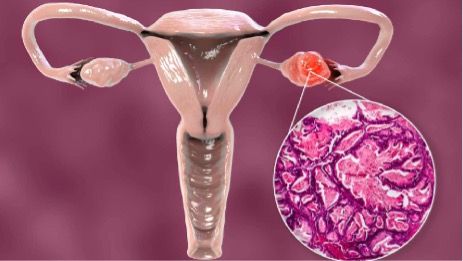
Ovarian cancer is the eighth most commonly diagnosed cancer in women around the world. The World Ovarian Cancer Coalition reports that ovarian cancer accounts for 324,000 new cases each year and 207,000 deaths from cancer among women worldwide.

“Despite recent advances in the treatment of ovarian cancer, it remains one of the most lethal of women’s cancers. Globally, more than 900,000 women have been diagnosed with ovarian cancer in the last five years, with around 7 out of every 10 women diagnosed in advanced stages,” said Clara MacKay, CEO of the World Ovarian Cancer Coalition.

“By 2050, the number of ovarian cancer diagnoses is expected to increase by more than 55% and deaths by more than 70%,” said MacKay.

“This is a global concern,” she said. “If current trends continue, nearly 8 million women will die from ovarian cancer by 2050, with the heaviest burden, falling on low and middle-income countries where 70% of those diagnosed live.”

Ovarian cancer imposes a major burden on society, disrupting lives, health systems, and national economies.

Globocan projections indicate a significant increase in ovarian cancer incidence by 2050, with 70% of cases expected to be diagnosed at advanced stages, adversely affecting survival rates. These rises are due to aging populations and shifts in risk factors linked to socioeconomic development. It is estimated that ovarian cancer will cost 11 countries $70 billion in lost income by 2023 as a result of ovarian cancer.

“This study is the first of its kind to quantify the socioeconomic impact of ovarian cancer across multiple countries, in this case, 11 countries. This study quantifies the overall societal cost of ovarian cancer using the value of a statistical lifetime,” said MacKay. “It quantifies the healthcare expenditure for diagnosis, treatment, and palliative care. It quantifies the loss to national economies through productivity losses when you take women out of the workforce due to ovarian cancer. And importantly, it quantifies the unrecognized cost of unpaid caregiving time.”

“RTI International, a U.S.-based agency, commissioned the study, which we conducted in collaboration and with a significant amount of support from the WHO, who provided significant input and data access,” says Mackay. “This study provides insight into ovarian cancer’s true burden, a burden that extends far beyond healthcare expenditures.”

The countries studied for their socioeconomic burden of ovarian cancer included Australia, Canada, Colombia, India, Kazakhstan, Kenya, Malawi, Malaysia, Nigeria, the United Kingdom, and the United States. The countries were selected based on their population size to ensure a geographical spread across all continents and a mixture of income groups, as defined by the World Bank.

“Middle- to lower-income countries spend significantly more per capita on ovarian cancer, indicating that diagnosing and treating ovarian cancer places a greater burden on countries with the least available healthcare resources,” she said.

There is a higher financial burden associated with ovarian cancer in wealthier countries, according to the study. For example, in the U.K., costing 0.24% of gross domestic product. In contrast, in lower-income countries, they face a smaller financial impact. For example, Malawi has just 0.02% of GDP. This difference is partly because newer, advanced cancer treatments are more available in richer countries, and there’s a higher emphasis on the value of worker productivity and statistical lives.

“Diagnosing and treating ovarian cancer places a greater per capita burden on countries with the least available healthcare resources, as specialist treatments like chemotherapies are significantly more costly compared to basic healthcare services. We also found that women spend nearly 3,700 years traveling to or receiving treatment,” says MacKay.

“Patients in low- and middle-income countries spend almost twice as much time traveling compared to receiving treatment, resulting in a labor productivity loss equivalent to 2.5 million workdays and leaving over 9,400 women missing from the workforce.”

“We need to ensure that in low- and middle-income countries, where ovarian cancer treatments are often unaffordable, we improve global access to affordable care. We must also recognize the significant contribution of caregivers and align strategies with existing global women’s health initiatives to enhance outcomes for those living with ovarian cancer, enabling them to make a more substantial contribution to society,” said MacKay.

This article was originally published on AllAfrica.com

Tags: ovarian cancer
ShareTweetSend
Melody Chironda

Melody Chironda

Next Post
Former Speaker Fonati Koffa

Speaker Koffa: ‘We’ve Lost Control of Budget Process’, Urges Reforms

Ministry of Commerce Destroys Over $35,000 Worth of Unwholesome Goods in Nimba County

Discussion about this post

Search The Investigator

No Result
View All Result

Recommended

Liberia's Largest Ethnic Group Urged to Convert Cultural Pride Into Measurable National Progress KAKATA, Margibi County — The executive director of Liberia's Environmental Protection Agency called on the Kpelle people Friday to transform ethnic pride into structured national service, proposing a six-point unification compact and a dedicated education scholarship initiative as the country's largest ethnic group marked its annual Unification Day. Dr. Emmanuel K. Urey Yarkpawolo, delivering the keynote address at the National Kpelle Unification Day celebration here, told traditional leaders, government officials, women leaders and youth representatives that unity without measurable outcomes amounted to flowers without fruit. "Celebration alone is not development," he told the gathering, invoking a Kpelle proverb: "Trees which bear flowers do not always bear fruit." The Kpelle people represent more than 20 percent of Liberia's population, making them the country's largest ethnic group, with communities spread across Bong, Margibi, Gbarpolu, Lofa and Bomi counties and extending into Guinea. Yarkpawolo said that demographic weight carried an obligation rather than a privilege. "To be the largest is a burden of responsibility," he said. "The largest must also be peaceful, organized, generous, disciplined, and committed to the common good. If the Kpelle people are divided, Liberia feels it. If we are united, Liberia benefits." A Compact With Six Pillars The centerpiece of his address was a proposed Kpelle Unification Compact structured around six commitments: rejecting county and clan division; preserving and modernizing the Kpelle language; committing to leadership and national service; educating youth and empowering women; protecting forests, rivers and farmland; and ensuring that Kpelle unity strengthens, rather than fractures, Liberian national identity. He also called on Kpelle leaders, professionals and members of the diaspora to establish a Kpelle Education and Scholarship Initiative targeting rural students, girls, vocational training, teachers and young people pursuing agriculture, medicine, environmental science and public administration. "No unification is complete if children remain uneducated and parents remain economically poor," he said. Language as Archive, Not Accessory Yarkpawolo devoted a significant portion of his address to language preservation, warning that cultural erosion was accelerating as younger generations abandoned the Kpelle tongue in favor of English at home and in schools. "When a people lose their language, they lose a library of memory," he said. "Language carries wisdom, prayer, history, place names, family names, and the soul of a people." He noted that ongoing English-Kpelle machine translation work demonstrated the language's potential in the digital age, but argued that technology alone would not save it. Parents, he said, must speak Kpelle to their children; radio stations must broadcast in it; and churches and mosques must use it in worship. He quoted Marcus Garvey: "A people without the knowledge of their past history, origin, and culture is like a tree without roots." Women and Youth at the Center Yarkpawolo was pointed in his call for women's inclusion, arguing that any unity that organized men while leaving women behind had only organized half of the house. He cited the historical authority of Chief Suah Koko as evidence that Kpelle tradition had already legitimized women's leadership in difficult periods of Liberian history. "Kpelle unification must include women's leadership, girls' education, protection from violence, access to land and finance, and respect for women's dignity," he said. To youth in the audience, he said pride without education was dangerous and energy without direction could destroy. He invoked a line in Kpelle, translating it as a challenge: "Do not only say, I am Kpelle. Ask yourself: Am I honest, hardworking, respectful, learning, serving, building?" Land as Covenant Speaking as someone born in Gomue Village, Kpaquellie Clan, Zota District, Bong County, who said he began school at age 14 before eventually rising to lead the country's top environmental regulatory body, Yarkpawolo warned that the Kpelle homeland faced threats from illegal mining, river pollution, deforestation and unsustainable land use. "A people cannot claim love for their ancestors while destroying the land those ancestors protected for them," he said, adding that development through roads, mining and agriculture was necessary but must respect communities, protect water sources, follow the law and benefit local people. Naming the Divisions In an unusually candid passage for a unification address, Yarkpawolo named the specific fault lines he said were weakening the Kpelle: political bitterness, clan disputes, jealousy, economic inequality, the distance between Monrovia and rural communities, and disrespect for elders and youth alike. He referenced a Kpelle proverb — "If you are not inside a house, you do not know where it leaks" — and told the audience they were inside the Kpelle house and could see the damage. "Because this is our house," he said, "we must repair it together." The celebration was held in Kakata under the theme "Kpelle Unity for Cultural Renewal, Peace, Development, and National Progress."

Liberia’s Largest Ethnic Group Urged to Convert Cultural Pride Into Measurable National Progress

5 months ago

New LIA President Unveils REACH Agenda to Strengthen Liberia’s Insurance Industry

2 years ago

    Home

    About Us

    Investigations

    News

    Politics

    Business 

    Editorial

    Contact Us

    Privacy Policy

    Advertise with us

    Stay updated with the latest news by subscribing to our WhatsApp Channel

    Click Here to Subscribe

    © 2026 THE LIBERIAN INVESTIGATOR. All Rights Reserved and subject to the Terms of Use Agreement. Developed By: Klariba Holdings, Inc

    No Result
    View All Result
    • Home
    • Investigations
    • Cocaine Case
    • News
      • General News
      • National News
      • County News
      • Health
      • Human Interest
      • Press Release
      • Media
      • Environment
    • Politics
    • Business
    • International
    • Opinion
      • Opinions
      • Letters from the Editor
      • Letters to the Editor
      • Editorial
      • Commentary
    • Fact Checks
    • Lifestyle
      • Entertainment
    • Sports
    • Women & Grit

    © 2026 THE LIBERIAN INVESTIGATOR