


Published: June 22, 2026
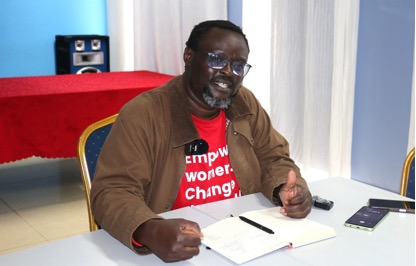
MONROVIA — The first visit to Liberia by ActionAid International Secretary General Arthur Larok has left the global development leader with what he described as a deeper appreciation for the resilience of Liberian communities and a renewed commitment to advancing women’s leadership, youth empowerment, and the fight against harmful traditional practices across Africa.
Addressing a press engagement with journalists in Monrovia last Thursday, Larok reflected on his experiences in Liberia, describing the trip as a journey of “learning and solidarity” that exposed him not only to the country’s challenges but also to inspiring examples of grassroots leadership and community transformation.
For the Ugandan-born development advocate, based in South Africa, where ActionAid International maintains its headquarters, the visit marked his first time setting foot in Liberia. Yet, despite the geographical distance between Liberia and Uganda, Larok said the similarities between the two African nations were striking. “I see lots of similarities between Liberia and my home country, Uganda,” he said. “The difference I see here is that Liberia has a vast coastline compared to Uganda, which is landlocked. But the challenges are similar.”
Those challenges, he noted, include female genital mutilation, early and forced marriages, unemployment among young people, environmental degradation, and limited opportunities for women and marginalized communities. “These are not challenges unique to Liberia,” Larok emphasized. “We too face the same issues. Many African countries are confronting similar realities.”
Beyond Statistics and Reports
While ActionAid’s annual reports provide numerical evidence of the organization’s global reach, Larok said his visit reminded him that development work is ultimately about people, not statistics. According to him, ActionAid’s 2025 report showed that the organization works with approximately 3,000 staff members worldwide, collaborates with 3,805 partners — including 1,700 women-led organizations — and engages nearly 24,000 volunteers globally.
However, he stressed that such figures only tell part of the story. “These statistics are meaningless unless you come and interact with the people involved and impacted,” he said. “I understand the reports when I read them, but it is very powerful to visit and see for myself the people behind the numbers.”
His trip included visits to communities in Gbarpolu County, where ActionAid supports projects that empower women and promote sustainable livelihoods. The experience, he said, was deeply moving. While in Gbarpolu, community members gave him a local name-“Varney,” a gesture he said he would cherish long after leaving Liberia. “My name going forward now is Arthur Varney Larok,” he joked. “I love it. It is part of my remembrance of the lovely people of Liberia.”
Women at the Center of Change
Perhaps the strongest message emerging from Larok’s visit was the importance of investing in women and supporting women’s leadership at all levels of society. Throughout his engagements, he listened to stories from women confronting deeply rooted social and cultural barriers. He heard accounts of harmful traditional practices affecting women and girls, but he also witnessed examples of women overcoming those obstacles and becoming agents of change within their communities. “The voices and stories of women in the communities and how harmful traditional practices are hurting them could never have made me feel so inspired to work more compared to reading reports,” he said.
Larok praised women who have begun claiming space in public life despite operating within what he described as a deeply patriarchal environment. He spoke of meeting women who confidently participate in public discussions and others seeking traditional leadership positions that have historically been dominated by men. “I was touched to hear stories of women who confidently speak in public spaces,” he said. “I was also happy to hear stories of women who are vying to be chiefs in a deeply patriarchal society.”
He also highlighted initiatives led by women, including efforts to establish community-based art schools that teach young people practical and creative skills. Such initiatives, he argued, demonstrate the transformative impact that can occur when women are empowered and supported. “My takeaway is that we must continue to invest in women and women leadership,” Larok said. “This is so important.”
Youth Are Leaders Today
Another key theme of Larok’s message focused on young people and the need to move beyond rhetoric when discussing youth participation in governance and development. During meetings with Liberian youth groups, he challenged the commonly repeated phrase that young people are “leaders of tomorrow.” Instead, he argued that young people must be recognized as leaders today. “In our meeting with them when I arrived, we agreed that youths are not leaders of tomorrow but today,” he said. “They are leaders of today because tomorrow has never come for many young people.”
The statement reflects a growing movement among youth advocates across Africa, who argue that young people should be actively involved in decision-making rather than merely prepared for future leadership roles. Larok stressed that meaningful investments in education, skills development and employment opportunities are essential for creating pathways toward sustainable national development. “Investment in young people should not be taken lightly,” he said.
Building Partnerships for Development
During his visit, Larok held discussions with representatives from Liberia’s environmental, gender and development sectors. He met officials from the Environmental Protection Agency, Gender, Children and Social Protection Ministry, United Nations agencies and various development partners.
According to him, those conversations reinforced the importance of collaboration in addressing the continent’s development challenges. “We need to work collaboratively, especially where development is really under trial,” he said. He argued that governments, civil society organizations and international partners must work together to improve service delivery and ensure that development programs directly benefit communities. “A lot of the work that we do must connect with the communities at district, town and village level,” he noted. “The people should be directly impacted by our work as organizations and governments.”
Larok also underscored the responsibility of governments to use public resources effectively. “The government collects our taxes for delivery of public services,” he said, adding, “We must work with them to support initiatives that help bring about progress for people.”
Confronting Harmful Practices Through Opportunity
A recurring theme throughout Larok’s remarks was the need to address harmful traditional practices through community engagement and economic empowerment rather than condemnation alone. He called for increased investment in alternative livelihood opportunities, particularly for women and young people, arguing that economic vulnerability often contributes to the persistence of harmful practices. “We need to avail to the people alternative livelihood opportunities,” he said.
He acknowledged that development efforts often face resource constraints and political challenges, but insisted that governments and development organizations must remain intentional about including those who are meant to benefit from interventions. “More women and young people need to be given more opportunities to contribute to national development and governance,” he said.
Telling Africa’s Story
Larok concluded his reflections by emphasizing the need for Africans to tell their own stories more effectively. He noted that many African societies are rooted in oral traditions, making it difficult at times to communicate development successes to broader audiences. “Part of the challenge we have is being able to tell our story in a compelling way,” he said.
Despite the obstacles, he expressed confidence that ActionAid’s nearly three decades of work in Liberia are yielding positive results. ActionAid has operated in Liberia since 1997, supporting initiatives focused on women’s rights, education, governance, climate resilience and community development. As he departed Liberia, Larok said he was leaving with optimism and inspiration. His message was ultimately one of unity, dignity and shared responsibility. “ActionAid is a very diverse organization,” he said. “We should focus on the positive things that bind us together as a people and do away with fighting over our differences.”
He added that governments, civil society organizations and citizens alike must work collectively to protect people from harmful practices, promote human dignity and improve living standards. “The dignity of the human being is the most important thing we should protect and respect,” Larok said. “We should work on uplifting the living standards of people.”






Discussion about this post