


Published: November 26, 2026
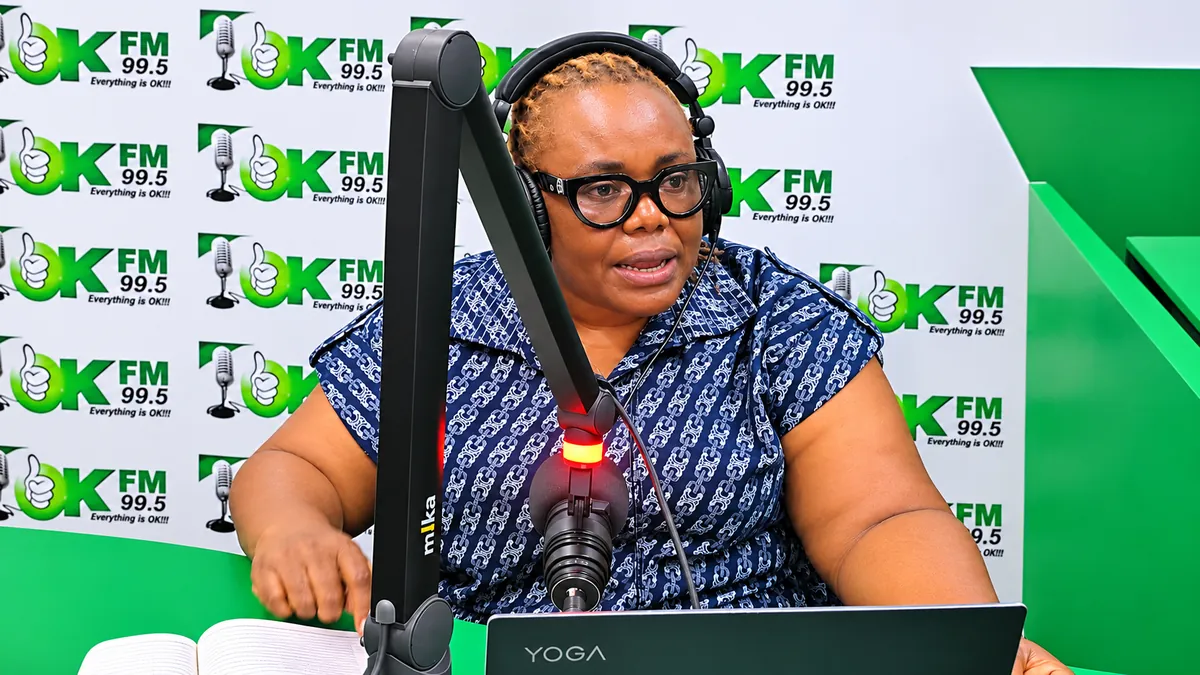
MONROVIA — Former Public Works Minister Ruth Coker-Collins has rejected allegations of mismanagement over a stalled US$900,000 street-paving project in Bopolu, Gbarpolu County, saying the contract was awarded before she took office. She also accused her successor, Roland Layfette Giddings, of running the ministry on “borrowed ideas.”
“I always say this: It’s a mistake to have that minister at that ministry. It’s a mistake because he talks through borrowed ideas,” Coker-Collins said Wednesday on OK FM in Monrovia.
She credited Giddings’ deputy minister for technical services, Prince Tambah, with technical knowledge, and suggested that Giddings relies on him while speaking loosely about engineering matters he does not fully understand. She said pavement is only the final stage of road construction, and that any discussion of a project’s cost must also account for earthworks, drainage and surface preparation.
Her remarks responded to allegations by Giddings and journalist Charles Yates about the 2.9-kilometer Bopolu City Chipseal Project and the management of public money during her tenure. In an interview on Freedom FM this week, Giddings said a company was paid up to about US$700,000 to pave streets in Bopolu but did not complete even 10% of the work, and that the matter had been referred to the Liberia Anti-Corruption Commission and the Ministry of Justice’s asset recovery task force.
In a statement, Coker-Collins said the contract was awarded on Nov. 14, 2019, under former President George Weah, to YSM Incorporated, represented by its chief executive officer, Ali Harkous. She said it was signed by then-Public Works Minister Mobutu Vlah Nyenpan and approved by the ministries of Finance and Development Planning and Justice. She said that was before she became deputy minister for technical services.
“I was neither the Minister responsible for awarding the contract nor the official who negotiated or signed the original agreement,” she said.
She said the project, funded by the National Road Fund, carried an original value of US$900,000 for about 2.9 kilometers of urban streets. An advance payment of US$315,000, or 35% of the contract value, was made after verification against the bank guarantee and payment records, she said.
Coker-Collins said work stopped for about nine months after the outbreak of COVID-19, and that the ministry later negotiated the contractor’s return to keep the project from being abandoned.
She cited a Dec. 4, 2022, technical assessment covering three road sections: Administrative Roads 1 and 2, measuring 900 meters; King Sao Boso Street, measuring 800 meters; and the road from Fawenta to the Eric Scott United Methodist Church. She said the assessment found outstanding work that included surface correction, vegetation clearing, stone pitching, culvert installation, regraveling and removal of structures in the right-of-way.
“These findings are important because they show that the project required considerably more than simply applying chipseal to the roads,” she said.
She said a Feb. 24, 2023, project update documented payment delays, inadequate equipment, a limited workforce, unexplained work stoppages and the contractor’s failure to finish on time. She said YSM was instructed in June 2021 to subcontract the chipseal work to a company that met the ministry’s technical requirements but never did so. She said the contractor later submitted a revised budget citing higher fuel prices, and told a Nov. 30, 2022, meeting that it could not remobilize without payment.
Concerns about the contractor’s technical and mechanical capacity led the ministry to consider bringing in another company, she said, and the proposed additional costs and procurement arrangements went through legal and procurement reviews.
Coker-Collins said project delays and contractor failures do not automatically amount to misuse of public money. She challenged her accusers to submit documentary evidence to the appropriate accountability institutions and said any investigation should examine the project’s full history across successive administrations, including the amount actually disbursed and the work completed. It is not the first time she has publicly disputed her successor’s claims.
“I welcome accountability, but accountability must be fair, impartial and evidence-based. It must apply to everyone involved in the life of a project, regardless of their position or political affiliation,” she said.






Discussion about this post