


Published: November 23, 2026
MONROVIA — The National Elections Commission (NEC) has submitted a proposed US$89.5 million budget to the National Legislature and the Ministry of Finance and Development Planning to finance Liberia’s 2029 presidential and legislative elections, citing an anticipated increase in registered voters, expansion of voting precincts and investments in biometric technology.
The proposed budget, totaling US$89,545,353.92, represents a 40% increase over the cost of the 2023 general elections and is intended to cover electoral preparations and operations from 2027 through 2029.
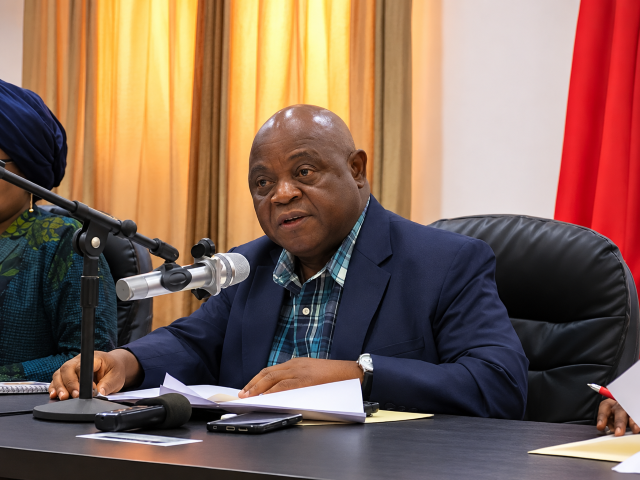
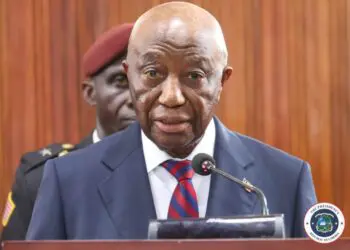
NEC Chairman Jonathan K. Weedor disclosed the figures Monday, Nov. 23, 2026, during a news conference at the commission’s headquarters in Sinkor, Monrovia.
Weedor attributed the proposed increase to three major factors: the expansion of voting precincts, improved internet connectivity and the procurement of additional biometric verification equipment to strengthen electoral transparency.
According to him, the commission intends to increase the number of voting precincts nationwide from 2,080 to 2,500, representing an additional 420 precincts.
The expansion is intended to accommodate an estimated national population of 5,885,979, with approximately 2.7 million eligible voters expected to participate in the voter registration exercise scheduled for the first quarter of 2028.
The NEC chairman said the commission also plans to introduce Starlink internet services to improve communication between its headquarters and field offices, particularly in areas where reliable connectivity remains a challenge.
Additionally, the commission intends to procure more than 10,000 biometric verification devices to strengthen voter identification, support its information and communication technology systems and safeguard the principle of one person, one vote.
“We have submitted a budget in the tune of US$89,545,353.92 to the National Legislature and the Ministry of Finance and Development Planning to support the Commission’s electoral operations over a three-year period,” Weedor disclosed.
The proposed budget is divided into three phases, beginning with US$32,500,581.58 for 2027.
According to Weedor, the first phase will prioritize preparations and the procurement of biometric equipment, which the commission intends to complete by the end of March 2027.
The second phase, covering 2028, is estimated at US$12,903,002.11 and will finance voter registration, personnel expenses and logistical arrangements for the deployment and retrieval of electoral materials.
The final phase, covering the 2029 elections, carries the largest allocation of US$44,141,770.23.
That amount will support balloting, personnel expenses and other election-related operations.
Weedor explained that the proposed funding also covers public communication, civic and voter education, geographic information systems, electoral mapping, political affairs and stakeholder engagement.
The commission intends to strengthen voter education programs to improve public understanding of electoral procedures and reduce the number of invalid ballots.
The budget also provides for operations at NEC headquarters and its 19 magisterial offices across Liberia’s 15 counties, including preparations for a possible presidential runoff election.
Beyond the proposed three-year election budget, the commission is seeking a separate US$14,374,284.92 to modernize its infrastructure and strengthen institutional operations.
The additional funding would support the establishment of a modern NEC Data Center to improve electoral data storage, processing, management and information security.
It would also finance the construction of 17 NEC guesthouses across 14 counties, excluding Montserrado.
According to Weedor, the initial construction phase will cover four guesthouses in Nimba, Bong and Grand Bassa counties.
The infrastructure proposal further includes the relocation of some magisterial offices to reduce distances between voter populations and electoral deployment points.
The NEC chairman maintained that improved infrastructure and technological capacity are essential to ensuring timely preparations and effective management of future elections.
However, the proposed expenditure comes at a time when Liberia continues to face competing demands for limited public resources, placing greater attention on the commission’s ability to justify its financial requirements.
Weedor acknowledged the substantial financial commitment involved and pledged that the commission would manage public resources responsibly, transparently and in compliance with applicable financial and procurement regulations.
He emphasized that credible elections require adequate funding, early planning and sustained institutional investment.
“Credible elections are not organized overnight. They require extensive planning, technical preparation, institutional investment, adequate resources, and sustained coordination,” he said.

Discussion about this post