


Published: November 17, 2026
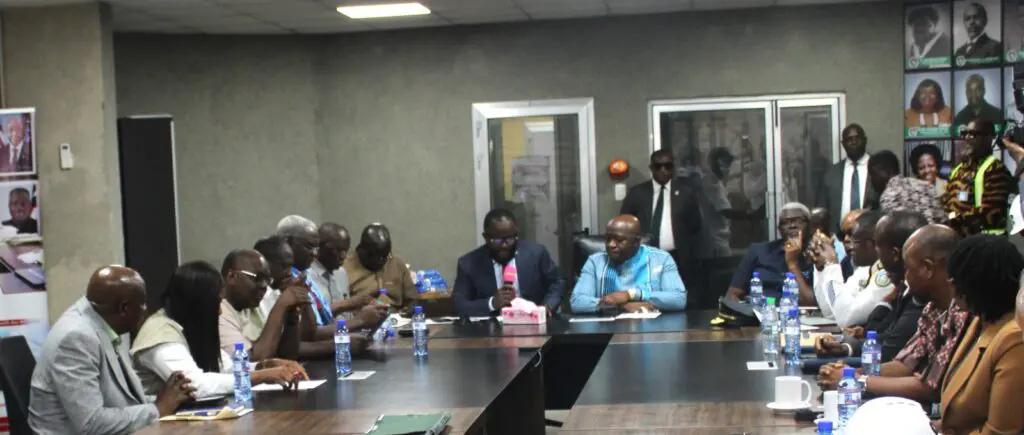
MONROVIA – Importers at the Freeport of Monrovia are receiving 30 additional days of free container storage and relief from certain vessel charges, as part of a broad package of measures the government announced Monday to reduce the cost of doing business. Round-the-clock port operations could begin as early as next week, and shipping lines are expected to eliminate their delivery order fee.
Finance and Development Planning Minister Augustine Kpehe Ngafuan announced the package on Monday, Nov. 16, 2026. He spoke at a meeting with the government’s Economic Management Team, the National Security Council, shipping lines, importers, and business groups. He said shipping lines are expected to complete consultations with their principals on removing the delivery order fee within a week.
Ngafuan said that moving the port from conventional working hours to 24-hour operations is essential to increasing productivity, reducing delays, and lowering costs. He said government agencies and private operators will work nights and weekends to meet operational needs, and he urged everyone along the port service chain to prepare for the change.
He said informal charges must stop. All legitimate fees, he said, must be governed by transparent rules and communicated to businesses before they take effect. He said the government will also engage stakeholders to remove the MSC-related surcharge.
National Port Authority Managing Director Sekou Dukuly said containers that have been at the port for up to a year will get an additional 30 days of free storage on charges the authority controls. He urged importers to use the window, warning that normal storage charges will resume when it ends.
Dukuly also announced the suspension of the 30% and 100% charges on vessel movements and departures during the peak season. He said the suspension is intended to lower costs for shipping lines and encourage more efficient scheduling. He added that the authority is reviewing its approach to tariff adjustments with concessionaires and shipping lines to keep charges competitive while covering port investment and operating costs.
Customs Commissioner Saah Sarmoa said the Liberia Revenue Authority, the Central Bank of Liberia, and commercial banks will launch digital customs payments via the National Switch on Jan. 1, 2027. Businesses and clearing agents will be able to pay at any time, removing a bottleneck that has long delayed cargo clearance. Sarmoa said user acceptance testing is complete and that customs brokers have been briefed. He said the launch was set for January to avoid disrupting the December import peak.
Ngafuan said the revenue authority has assigned additional staff to handle business complaints regarding inspection and clearance, and the government expects meaningful progress within 14 days. He added that the government will also help prepare a truck parking and servicing area around the old Bong Mines section of the port.
Police Inspector General Gregory Coleman announced new measures to regulate trucks leaving the Freeport. He said the measures focus on roadworthiness, traffic management and public safety, and will tighten coordination among the police, port authorities and transport operators.
To prevent congestion from returning, Dukuly said the government will work with the Legislature to reform laws governing abandoned and uncleared containers. He said the current rules limit authorities’ ability to clear long-stay containers and free up space. Participants also stressed pre-clearance, closer coordination among importers, clearing agents, and shipping lines, and better use of designated truck arrangements.
The government said a more efficient Freeport is central to its economic agenda: lowering the cost of imported goods, easing trade, improving revenue collection, and making Liberia more competitive for investors.





Discussion about this post