


Published: October 26, 2026
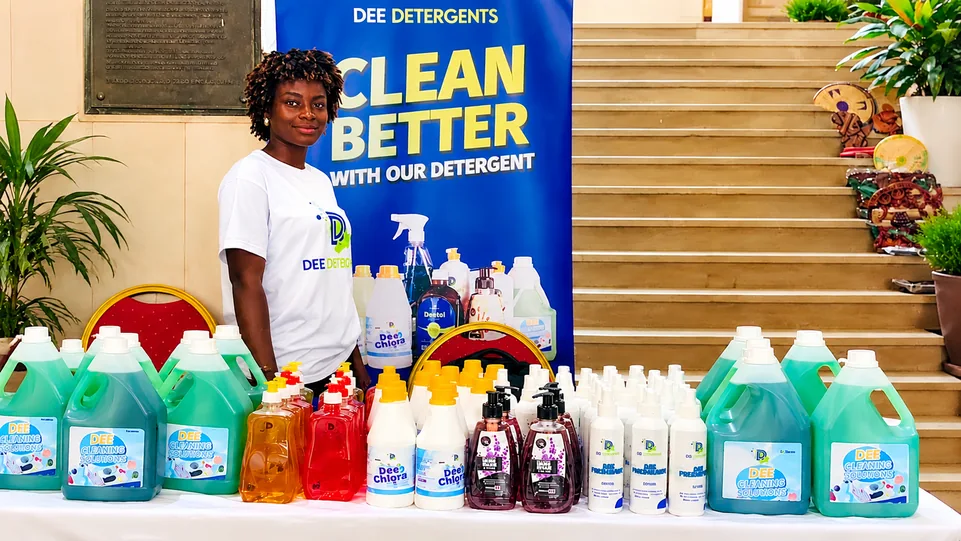
Sometimes the beginning of a business is not a factory, a shop or a room full of workers. Sometimes it is a plan on paper, US$750 and the willingness to try something you have never done before.
For Deerah Mensah, that something was making soap.
In 2019, Mensah won a non-refundable US$750 grant in a pitch competition that followed an entrepreneurship training hosted by Mercy Corps Liberia. She had a business idea and a reason to pursue it. What she did not have was any idea how to make the product she planned to sell.
“The honest truth is I had no prior knowledge of making soap,” she said. “So from that grant, I hired a trainer to teach me how to make the bar soap made from palm kernel oil, and that was my very first product.”
That was how Dee Detergent began. Her parents’ garage became the production floor, and her family became her first staff.
Business had never been far from home. Mensah grew up in Brewerville in a large household she shared with her grandmother, parents and cousins, a house she remembers as full of fun.
“My mom worked a full-time career and my dad ran his own businesses, so business was never a distant idea in our house; it was just life. And they didn’t only model it, they encouraged it,” she said.
As a girl, she organized events and ran a small neighborhood business. The idea of building something bigger took hold at BlueCrest University.
“My entrepreneurship class at BlueCrest University was a game changer for me, and around the same time I read Rich Dad Poor Dad, and the idea of the rat race just stuck with me,” she said.
Her finance studies and the Mercy Corps training pushed her from earning a living toward making work for others.
“Instead of just running a livelihood-scale business, I felt it was time to create jobs for others who had minimal opportunities with the knowledge and skills I had acquired,” she said.
Making the soap was the first hurdle. Packaging it was the next. Mensah said there were no bottling facilities in Liberia at the time, so she packaged her products in recycled Aqua Life bottles and later began ordering empty bottles from Ghana.
Her first shipment came by air, and the freight bill swallowed her entire profit. She tried shipping by road next. The empty bottles arrived crushed under heavier cargo, and the bus station refused her a refund.
Her mentor stepped in with guidance and covered the cost.
“It taught me that a good mentor is not someone who just advises you, sometimes they stand in the gap for you, and that kind of support can be the difference between a business that survives and one that closes,” she said.
The loss also changed how she makes decisions.
“The biggest lesson is that profit is fragile; one bad decision can wipe it out,” Mensah said. “I’d rather ask and be sure than move fast and lose.”
“Now I know that good decisions come from planning carefully and not being too smart to ask for help,” she said.
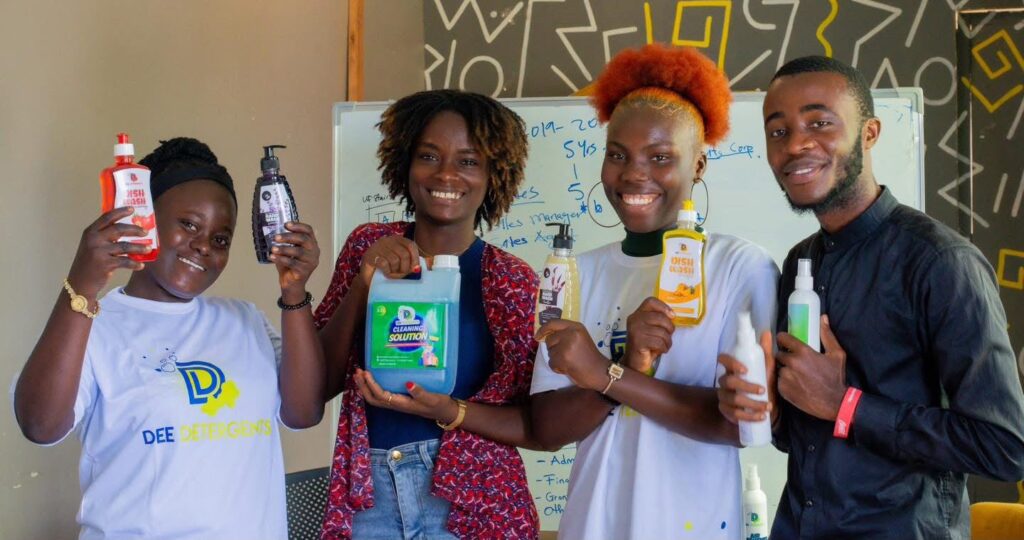
The business has reshaped her in other ways, too.
“Entrepreneurship has reshaped me in ways I didn’t expect. It has taught me to be a good judge of character, to trust wisely, and to appreciate small wins because in this journey, the small wins are often what keep you going,” she said.
It has also cost her rest.
“My brain never fully shuts down. I’m always researching, always spotting opportunities in the middle of chaos, even when I’m supposed to be resting,” she said. “What I’ve lost in numbers I’ve gained in quality. It’s not a perfect balance, but it’s an honest one.”
The moment that has meant the most to her came when Dee Detergent moved its production out of her parents’ garage and onto private property.
“It might sound simple to someone on the outside, but for me it was everything,” she said. “A garage says ‘we’re trying.’ A private property says ‘we’re here to stay.’”
Deerah Mensah won US$750 to start a soap business before she knew how to make soap. Seven years on, Dee Detergent has left her parents’ garage and she wants it to train the next generation of entrepreneurs.
Not every test has been about money. Mensah once approached a supplier who assumed she wanted only a small quantity, because that was what women usually ordered. Once the manager heard the size of her order, she said, she was served and given free delivery.
“People reveal their assumptions, and you get to answer with preparation instead of emotion,” she said. “I’ve learned that respect in business isn’t given, it’s earned.”
She does not try to win over people who have already decided about her.
“I don’t waste energy proving myself to people who have already made up their minds. I go straight to where the decision is made, and I make sure I’m prepared enough that I can’t be dismissed,” Mensah said.
Her plans for Dee Detergent go beyond soap.
“Beyond the product, I want Dee Detergent to be a hub of talent; a place where entrepreneurs are born,” she said.
She wants to give new graduates the experience employers demand, a wall she ran into herself.
“I know how it feels to leave school with a qualification and meet a job market that wants years of experience you couldn’t possibly have yet, so that’s the wall I want this business to break down,” she said.
“A factory is bigger than its production line,” Mensah said.
Her advice to anyone thinking of starting out is drawn from her own garage.
“You don’t need to know everything to start,” she said. “You don’t need a fancy office or paid staff either; I started in my parents’ garage with my family as my staff. What you do need is a plan. I wrote mine down and presented it, and it opened a door I didn’t expect.”
“When things go wrong, and they will, don’t build alone. Seek guidance early, especially before big moves, because a good mentor can stand in the gap for you,” she said.
Asked what she hopes other women take from her story, Mensah said determination alone is not enough. It “has to be paired with planning, humility to learn, and the courage to ask for help,” she said.
Dee Detergent started with US$750, a hired trainer and a family garage. The garage is behind her now. What she took from it is the lesson she most wants other women to hear: starting small is not the same as thinking small.




Discussion about this post