

Published: October 23, 2026
MONROVIA — Liberia’s Law Reform Commission and civil society organizations are calling for sweeping reforms of the country’s mining laws, warning that outdated legislation, weak enforcement and inadequate community participation could undermine efforts to ensure Liberians benefit from the nation’s mineral resources.
The call comes amid growing concerns over inconsistencies in Liberia’s legal framework governing mineral exploration and extraction, environmental protection, land ownership and the rights of communities affected by mining operations.
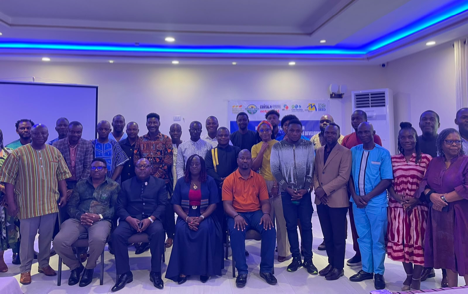
The concerns were raised Wednesday, Oct. 21, during a multi-stakeholder dialogue on minerals, mining and inclusive sustainable development organized by the Civil Society Consortium on Minerals, Mining and Inclusive Sustainable Development in Monrovia.
Addressing the gathering, Law Reform Commission Chairperson and Chief Executive Officer Cllr. Bornor M. Varmah stressed the need to modernize Liberia’s Minerals and Mining Law of 2000 to reflect subsequent legislation and emerging challenges in the extractive sector.
According to Varmah, the existing mining law has not kept pace with developments in land rights, environmental governance, concession management and extractive industry transparency.
He specifically identified inconsistencies between the mining law and the Land Rights Act of 2018, emphasizing the need for legal harmonization to strengthen regulatory oversight and protect affected communities.
Varmah also raised concerns about gaps in the existing legal framework, including provisions governing mine safety, explosives management and mechanisms for resolving grievances involving mining companies and local communities.
He disclosed that the Law Reform Commission will lead the technical legal secretariat responsible for reviewing and drafting proposed amendments to Liberia’s mining legislation.
The exercise, he explained, will involve collaboration with the Legislature, relevant government institutions and other stakeholders, with support linked to the Millennium Challenge Corporation (MCC) Compact.
Varmah outlined seven priority areas for the proposed reforms: harmonizing mining laws with existing legislation, strengthening community rights, promoting gender inclusion, improving transparency, protecting the environment, encouraging responsible investment and formalizing artisanal and small-scale mining activities.
The commission’s proposed approach seeks to address regulatory weaknesses while establishing clearer responsibilities for government institutions, mining operators and communities.
For his part, prominent environmental advocate Silas Siakor, representing the civil society consortium, emphasized that the reform process must prioritize the interests of Liberians and ensure that mineral resources contribute meaningfully to national development.
Siakor said several important laws governing natural resources were enacted after the passage of the Minerals and Mining Law in 2000, creating inconsistencies that require legislative attention.
He maintained that the review presents an opportunity to strengthen accountability, improve transparency and ensure greater public participation in decisions affecting mining communities.
According to Siakor, mining remains an important contributor to government revenue and employment, but stronger governance is necessary for the sector to realize its broader development potential.
He stressed that reform efforts should focus on improving the management of mineral resources while ensuring that communities affected by mining activities are adequately considered.
Meanwhile, Environmental Protection Agency (EPA) Deputy Executive Director for Technical Services Dweh S. Boley welcomed the proposed reforms but cautioned that stronger laws alone would not resolve the challenges confronting Liberia’s mining sector.
Boley emphasized that effective implementation requires adequate technical capacity, institutional coordination and enforcement mechanisms.
He underscored the importance of cooperation among government agencies, civil society organizations, mining companies and affected communities to balance economic development with environmental protection.
The EPA official also expressed concern about the environmental challenges associated with natural resource extraction, stressing the need for regulatory measures that protect communities and ecosystems.
He maintained that any revised mining framework must be supported by institutions equipped to monitor compliance and enforce environmental standards.





Discussion about this post