

Published: October 23, 2026
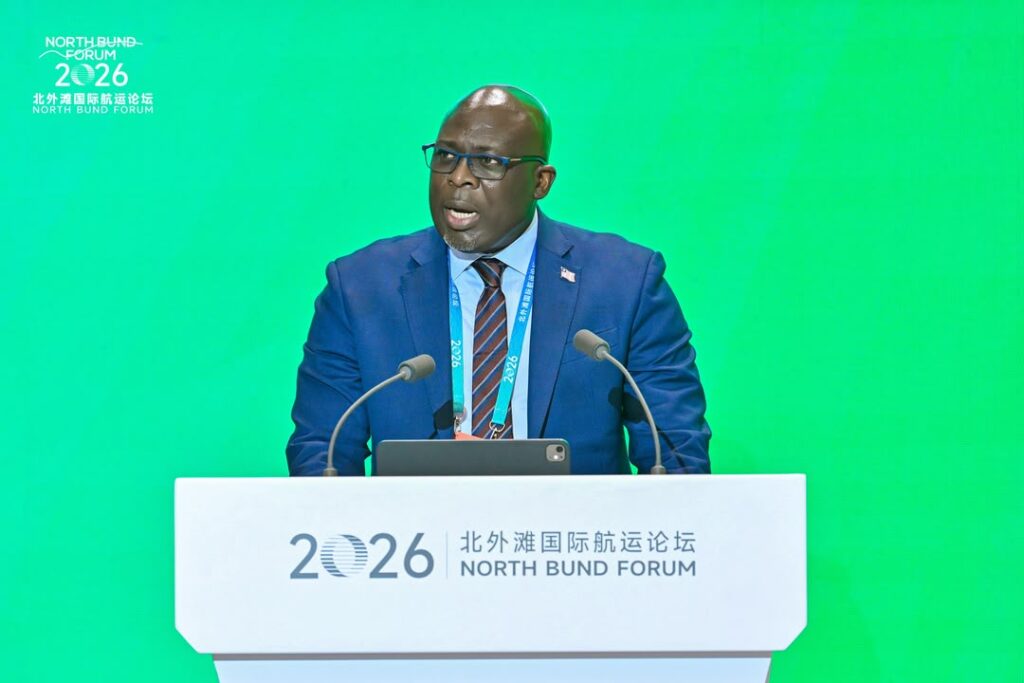
SHANGHAI, China — Developing countries need sustainable financing, technology transfer, and technical assistance to shift to green shipping without being left behind, Liberia Maritime Authority Commissioner and CEO Neto Zarzar Lighe Sr. said Wednesday.
Lighe set out Liberia’s position on maritime decarbonization during an address at the sixth North Bund Forum at Shanghai Maritime University.
“Liberia broadly supports the transition to green shipping,” he said, reaffirming the country’s commitment to protecting the marine environment and to global efforts against climate change.
But the transition must reflect the principles of common but differentiated responsibilities, climate justice and equitable development, Lighe said, because developing countries need adequate, predictable and sustainable support to manage the structural, economic and operational changes that decarbonization brings.
“No country should be left behind,” he said.
Green shipping is fast becoming the global standard by which ships, ports, fuels and maritime technologies are judged, Lighe said, and the shift must balance environmental goals with the development priorities and financial capacity of poorer nations.
He named alternative and low-carbon fuels, energy-efficient vessel technology, better operational practices, emissions monitoring and investment in port infrastructure as the main routes to cutting shipping’s environmental footprint. Each, he said, poses challenges for developing countries in securing affordable fuel, financing, new technology and the infrastructure to use it.
Wider use of methanol, ammonia and hydrogen will require proper safety standards, technical expertise, compatible vessels and reliable bunkering infrastructure, Lighe said, and the environmental benefit of those fuels depends on how they are produced and on their lifecycle emissions.
He said green shipping cannot be achieved through regulation and technology alone. It requires stronger international cooperation, coordinated policy and sustained investment in maritime infrastructure, education and training.
Lighe cited the International Maritime Organization’s Energy Efficiency Existing Ship Index and Carbon Intensity Indicator, along with the European Union’s monitoring, reporting and verification requirements, as examples of rules that strengthen accountability and improve vessel efficiency. Developing countries will need trained personnel, reliable data systems and institutional capacity to apply such rules effectively, he said.
He also called for regulatory certainty, saying predictable, internationally coordinated rules are essential to give shipowners, financiers, seafarers and port operators the confidence to invest and innovate, and to avoid fragmenting the industry.
As one of the world’s leading ship registries, Liberia remains committed to constructive engagement in international negotiations on green shipping, Lighe said. He said the Liberia Maritime Authority will support the safe adoption of emerging fuels and technologies and work with owners and operators of Liberian-flagged vessels to promote compliance with international regulations.
Lighe named governments, international organizations, academic institutions, research centers, shipowners, financiers and technology providers as essential partners in the transition, and recognized Shanghai Maritime University’s role in maritime education, research and international cooperation.
He described the shift to green shipping as both a challenge and an opportunity to modernize the industry, drive innovation and strengthen environmental protection. Its success, he said, will depend on countries’ willingness to cooperate, share knowledge, mobilize resources and distribute the costs and benefits of decarbonization fairly.
For Liberia, Lighe said, the goal is a greener, safer and more sustainable shipping industry that respects the development aspirations and circumstances of all nations.





Discussion about this post