

Published: October 22, 2026
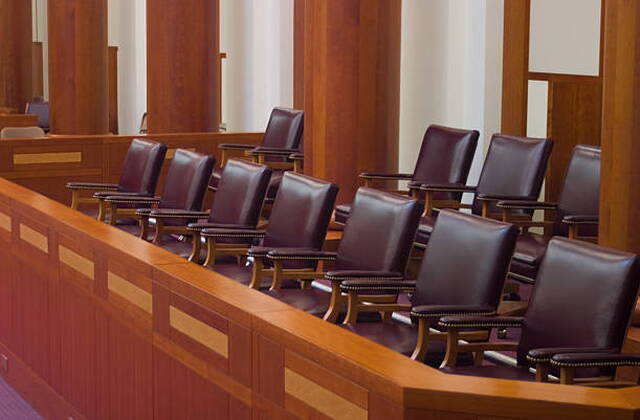
Liberia’s Chief Justice raises a valid concern about jury tampering, whether committed by a trial judge, government or defense counsel, the court, or a litigant. Liberia must address this issue to preserve public trust and maintain a fair, transparent, and credible justice system that protects the factual and legal rights of all parties. However, jury tampering, including bribing jurors to secure a favorable verdict in a criminal or civil case, does not, by itself, provide sufficient legal grounds to abolish the right to trial by jury.
By Frederick A.B. Jayweh, Counsellor-At-Law
Article 20(a) of Liberia’s 1986 Constitution expressly guarantees and protects the right to trial by jury. In summary, Chapter III, Article 20(a) provides:
No person shall be deprived of life, liberty, security of the person, property, privilege or any other right except as the outcome of a hearing judgment consistent with the provisions laid down in this Constitution and in accordance with due process of law. Justice shall be done without sale, denial or delay; and in all cases not arising in courts of record, under courts martial and upon impeachment, The parties have the right to a jury trial— Constitution of Liberia (1986)
Because Article 20(a) establishes a constitutional, rather than merely statutory, right to trial by jury, abolishing that right based on a strong government authority’s belief that Liberia’s jury system is controlled by fraud and easily compromised would require the Liberian people to approve the change by referendum. The proposal also raises factual and legal questions. Bribery involves two principal participants: the person who offers or gives the bribe and the person who solicits or receives it. Under Liberian law, bribery is a second-degree felony punishable by three years’ imprisonment when the accused and others involved in an alleged jury tampering are investigated, prosecuted, and found guilty.
Even when jury bribery is investigated and proven, isolated instances alone do not justify abolishing Liberia’s constitutional right to trial by jury. Because this right is firmly rooted in the Liberian Constitution, it should not be abolished hastily.
Bribery § 12.50: A person commits bribery, is a second-degree felony, by knowingly offering, giving, or agreeing to give another person—or by soliciting, accepting, or agreeing to accept from another person—anything of value in exchange for: (a) the recipient’s official action as a public servant; or (b) the recipient’s breach of a known duty as a public servant. When an investigation establishes probable cause, both the alleged giver and recipient should be promptly arrested, charged, indicted, and prosecuted. Any judge, attorney, litigant, or officer of the court, if convicted of bribery, should be imprisoned. An attorney or trial judge convicted of jury tampering should swiftly have their licenses revoked, be immediately disbarred, and be prohibited from practicing law in Liberia. A convicted litigant should be imprisoned for three years.
Under Liberian law, a prima facie case is established by showing that something of value was offered, given, agreed to be given, solicited, accepted, or agreed to be accepted in exchange for the recipient’s official action or breach of a known legal duty as a public servant, if:
(a) The consideration was a thing of pecuniary value; and
(b) The actor knew that he was offered, given or agreed to be given by, or solicited, accepted from a person having an interest in an imminent or pending:
- (i) investigation, arrest, or judicial or administrative proceeding, or
- (ii) bid, contract, claim or application, and that interest could be affected by the recipient’s performance or non-performance of his official action or
violation of his known legal duty as a public servant.
A recipient’s inability to take the desired action—whether because the recipient has not yet assumed office, lacks jurisdiction, or for any other reason—is not a defense to prosecution under Liberia’s law. Liberia’s laws are unambiguous: both the giver and the recipient of a bribe to compromise a siting jury in a criminal case, violate Penal Law Bribery § 12.50. Bribery when committed, both parties need be promptly arrested, indicted, prosecuted, and sentenced to at least three years’ imprisonment, if the accused is tried and found guilty. The Republic of Liberia, therefore already, has clear and unequivocal laws for addressing jury tampering and so, abolishing trial by jury is not among sanctioned and appropriate remedies under the laws of Liberia.
Republic of Liberia, Plaintiff, v. Samul D. Tweah et al., Defendants: This case raises complex factual and legal issues. After hearing the evidence and receiving the trial judge’s instructions, the petit jury deliberated for several days before returning its verdict in open court. The jury acquitted Samuel D. Tweah and another defendant, convicted several others, and failed to reach a verdict on the remaining defendants. Three jurors later informed the court that the jury had been improperly influenced and that the acquittals of Mr. Samuel D. Tweah and Jefferson Karmo had been compromised. Criminal Court “C”s judge investigated and upheld the Republic of Liberia’s complaint, presented through the Ministry of Justice, seeking to set aside the not-guilty verdicts for Mr. Samuel Tweah and Mr. Jefferson Karmo. The final judgment of Criminal Court “C” that overturned the jury’s verdict, was immediately appealed to the Supreme Court of Liberia. This case is pending before the Supreme Court.
Abolishing the Right to Trial by Jury: In his charge opening the Supreme Court’s October Term, A.D. 2026, the Chief Justice of Liberia recommended abolishing jury trials in civil and criminal cases filed before Liberia’s circuit, specialized and trial courts. Liberia’s Chief Justice contended that the jury system is utterly compromised and vulnerable to bribery, citing Republic of Liberia, Plaintiff v. Samuel D. Tweah, et al., Defendants, in which the judge of Criminal Court “C” investigated and overturned the not-guilty verdicts for Mr. Samuel D. Tweah and Mr. Jefferson Karmo. This case is currently pending before the full bench of the Supreme Court of Liberia and is scheduled to be heard by the Chief Justice and Associate Justices during the October Term, A.D. 2026.
I)Can the right to trial by jury guaranteed by Chapter III, Article 20(a) of the Constitution of Liberia be abolished by legislation or through reform of Liberia’s jury system?
The right to trial by jury guaranteed by Chapter III, Article 20(a) of the Constitution of Liberia cannot be abolished through legislation or jury-system reform merely because a government official believes Liberian juries are compromised and highly vulnerable to bribery aimed at securing favorable verdicts. Abolishing this right would require the Liberian people to vote in a referendum to repeal or amend Chapter III, Article 20(a) of the 1986 Constitution of Liberia. Liberia’s Constitution is the nation’s supreme law, and its provisions take precedence over all legislative and administrative actions. Liberians must therefore safeguard every constitutional provision, as any action to the contrary would undermine the Constitution’s credibility, integrity, and public trust. Liberians and their authorities should avoid undermining confidence in the Republic’s laws and legal system unless compelling circumstances make such action strictly compelling and necessary.
II) By publicly commenting on the case, Republic of Liberia v. Samuel D. Tweah et al. currently pending before the Supreme Court, did Liberia’s Chief Justice disqualify himself from participating in the case with his colleagues?
Jury tampering—whether it occurs during a civil or criminal trial or after a verdict—seriously undermines public trust in Liberia’s judiciary. Bribery, intimidation, coercion, or unauthorized communication with jurors compromises jury impartiality, a cornerstone of free and fair trial. Once established, jury tampering may require the verdict to be set aside and a new trial ordered, regardless of the litigants’ status or prior position in Liberia. If an investigation establishes that a bribe was offered and accepted, both the giver and the recipient should be promptly arrested, indicted, and prosecuted under Liberia’s Penal Law, Bribery § 12.50. Upon conviction, both the giver and the recipient must serve three years in prison.
A convicted attorney or judge must also serve three years in prison and be barred from practicing law in Liberia for five years. But Jury tampering alone, however, does not provide a sufficient factual or legal basis for abolishing trial by jury process in Liberia.
By publicly commenting on the case, Republic of Liberia v. Samuel D. Tweah et al. while this case remains pending before the Supreme Court, did Liberia’s Chief Justice disqualified himself? Yes. Judges must decide cases impartially, based solely on the evidence and the law, free from bias, personal interest, or outside influence, to ensure fairness and maintain public confidence in the judiciary of Liberia.
By hastily commenting on the case before its resolution, Liberia’s Chief Justice disqualified himself from hearing and deciding this case alongside the Associate Justices of the Supreme Court of Liberia.
When Is Recusal Required? Under U.S. law, particularly 28 U.S.C. § 455, a judge must disqualify and recuse him/herself when:
- Financial or property interests involving a party, attorney, witness, or the case’s outcome.
- Close personal or family ties involving a party, attorney, or witness.
- Previous involvement in the case as an attorney, investigator, or decisionmaker.
- Bias or prejudgment regarding the facts or legal issues.
- Ex parte communications involving undisclosed contact with one side.
- Other conflicts that could reasonably cause the public to question the judge’s impartiality.
By commenting hastily on the case, Republic of Liberia, Plaintiff v. Samuel D. Tweah et al., Defendants, Liberia’s Chief Justice created a conflict requiring his recusal.






Discussion about this post